There are times when the pulse of the economy is not visible from tall buildings or large numbers in the market, but rather from something that moves every day: signals transferring from one device to another, planes taking off, and goods continuously flowing through transportation networks.
In Morocco, these movements are beginning to form a clearer picture of the service sector's condition. A recent survey by the High Commission for Planning (HCP) shows that 66 percent of operators in the non-financial service market reported increased activity during the second quarter of 2026. Only 8 percent reported a decline.
This figure is interesting because the growth does not rely on just one area. The HCP noted that the increase in activity is primarily driven by telecommunications, air transport, as well as warehousing and transportation support services. It is as if several different paths are moving in the same direction, creating a broader economic flow.
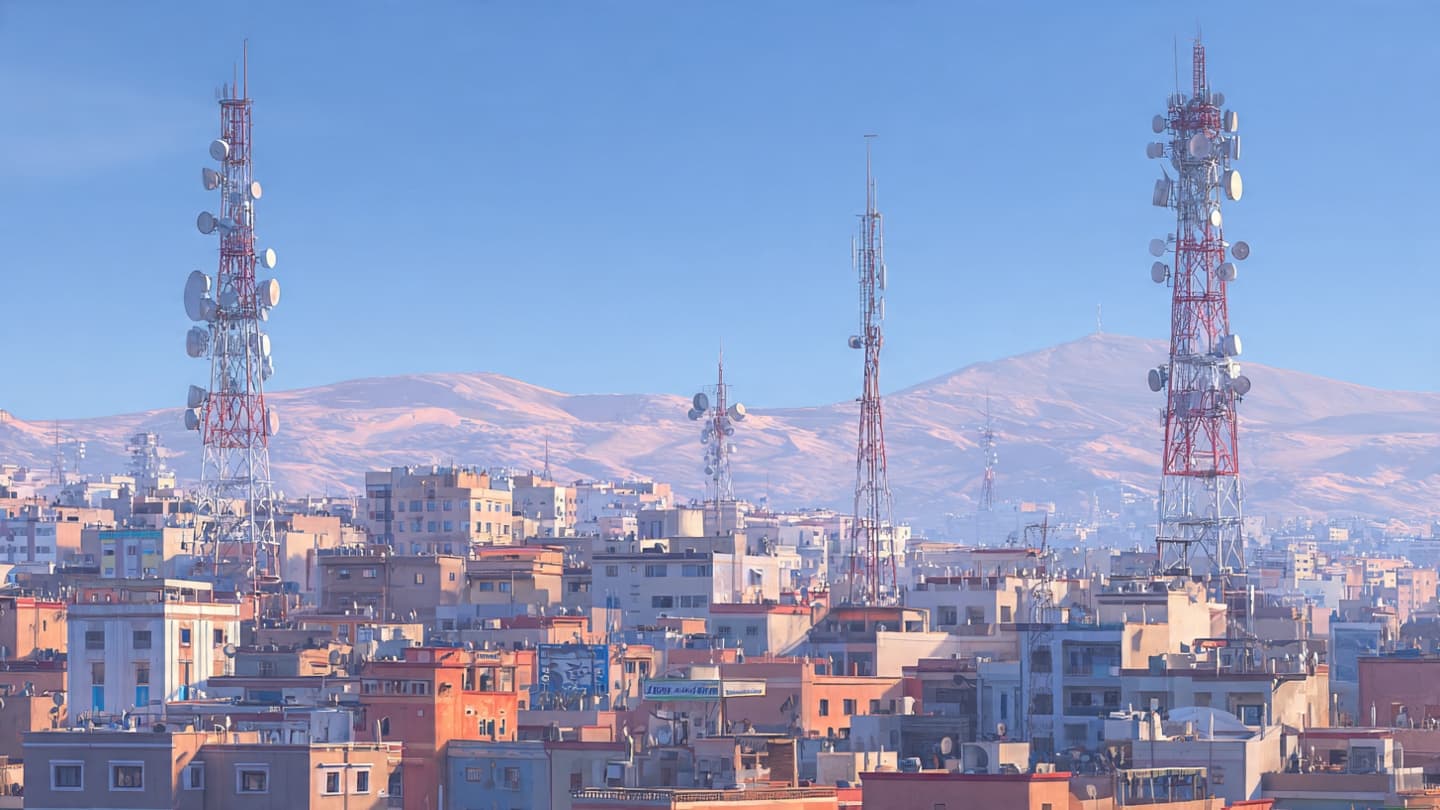
Telecommunications has an increasingly important position in modern economic life. As communication becomes faster and more connected, business activities no longer fully depend on physical distance. Information, services, transactions, and coordination can move almost simultaneously with the economic activities that follow.
Meanwhile, air transport brings another dimension. Planes are not just tools for moving people from one city to another. They encompass the movement of tourists, workers, business operators, high-value goods, and the connections between domestic and international markets. As flight activities increase, various supporting services around them also gain space to operate.
HCP data also shows that warehousing and transportation support activities are part of strengthening the sector. Behind a seemingly simple journey or shipment lies a long network that includes storage, goods management, land transportation, and various administrative services.
Interestingly, the conditions of the second quarter come after a relatively weaker start to the year. In the first quarter of 2026, 50 percent of surveyed operators reported a decline in activity, while 24 percent noted an increase. Telecommunications and air transport at that time were among the sectors experiencing weakness.
The shift from the first quarter to the second quarter illustrates that the service sector can move quite quickly in response to changes in demand and economic activity. These figures are not just statistical records, but also a kind of trace of a journey of an economy that is seeking its rhythm.
Now, attention turns to the third quarter. Operators are not only looking at what has happened but also trying to read what might come next. Among telecommunications networks, airports, warehouses, and transportation routes, Morocco's service economy continues to form increasingly tight connections.
Image Disclaimer: The visuals used are AI-based conceptual illustrations for editorial purposes and are not direct documentation photos of the reported economic activities.
Sources:
Morocco World News High Commission for Planning (HCP)
Published by Banx Network. This article is part of the Banx decentralized media programme, powered by the BXE token on the XRP Ledger.