Basel, Switzerland— Switzerland remembered the Schweizerhalle chemical disaster anniversary on October 31, 2026, as federal and cantonal officials re-evaluated chemical spill risk protocols that were born from that night.
The disaster happened on November 1, 1986. A warehouse at Sandoz chemical plant near Basel caught fire. Firefighters sprayed water. That water mixed with pesticides and mercury and ran into the Rhine. The river turned red. Fish died for hundreds of kilometers. Drinking water for millions was threatened. It was Switzerland’s worst environmental accident.
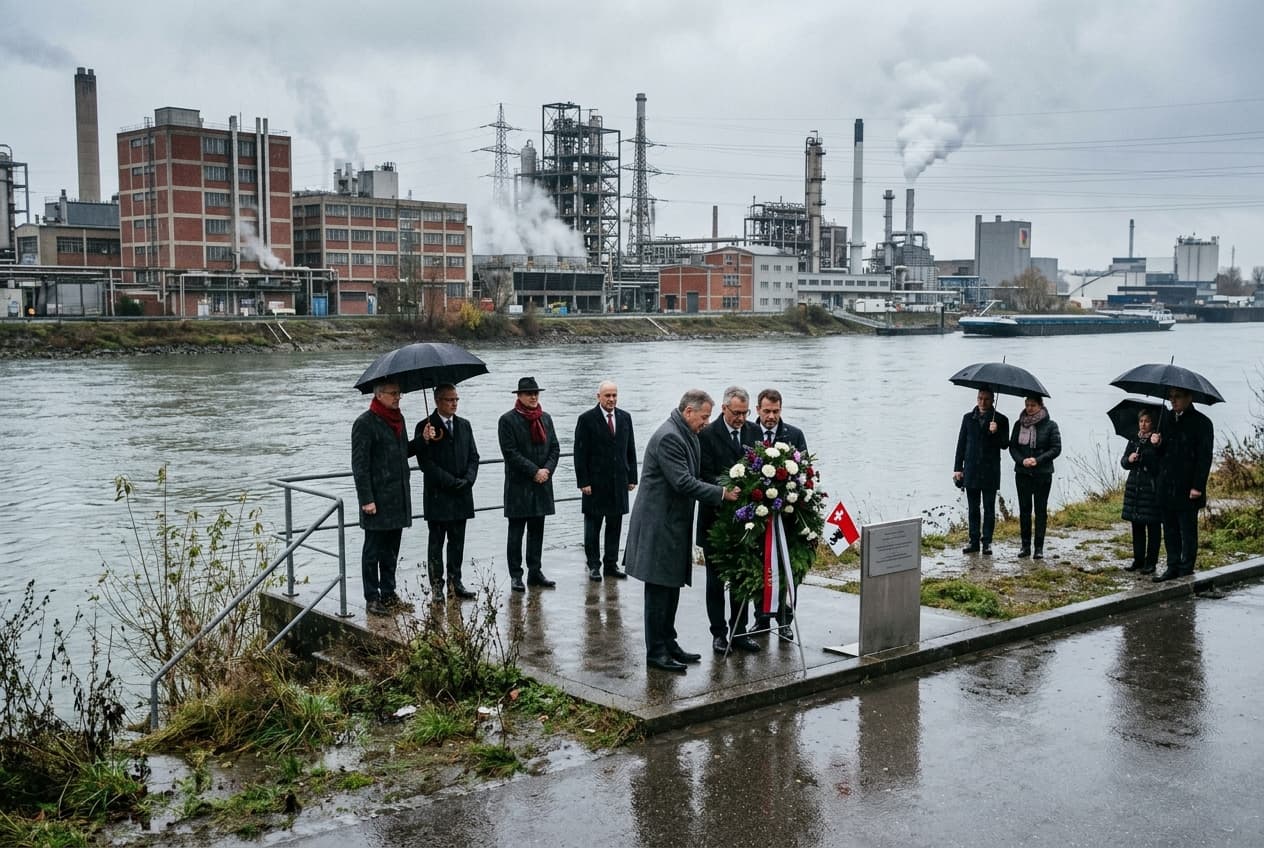
A ceremony was held at the site in Schweizerhalle this morning. Former firefighters, Sandoz workers and Rhine fishermen stood in rain. A minute of silence was held at 12:15 a.m., the time the fire was first reported 40 years ago minus a day. A wreath was laid near the Rhine bank.
The Federal Office for the Environment said chemical storage rules have changed radically since 1986. Retention basins are now mandatory. Water used in firefighting must be contained. Companies must report inventories. But officials admitted gaps remain. Many smaller warehouses are not inspected often enough.
The canton of Basel-Landschaft said it is reviewing 12 high-risk sites along the Rhine this year. It said climate change raises risk. More intense rain can overwhelm retention basins. Hotter summers increase fire risk. One inspector said many safety plans were written for the climate of the 1990s, not today.
Environmental groups said memory is fading. Greenpeace Switzerland said the Rhine looks clean now, but chemical sediments remain in floodplains. It said new chemicals, like PFAS, are not covered by old protocols. It called for full public disclosure of chemical stockpiles, which companies resist.
Sandoz no longer exists as it did. Its successor, Novartis and Clariant, funded a memorial and river monitoring. A company spokesperson said lessons were learned and that safety spending increased tenfold. Fishermen said they still remember the smell that night.
The federal government said a new chemical risk ordinance will be drafted by next spring. It will include mandatory containment volume doubling and real-time river sensors. Industry groups said costs would be high.
By afternoon, the ceremony ended. Rain kept falling on the Rhine. The river looked calm. Officials left. The protocols were still under review.
Published by Banx Network. This article is part of the Banx decentralized media programme, powered by the BXE token on the XRP Ledger.