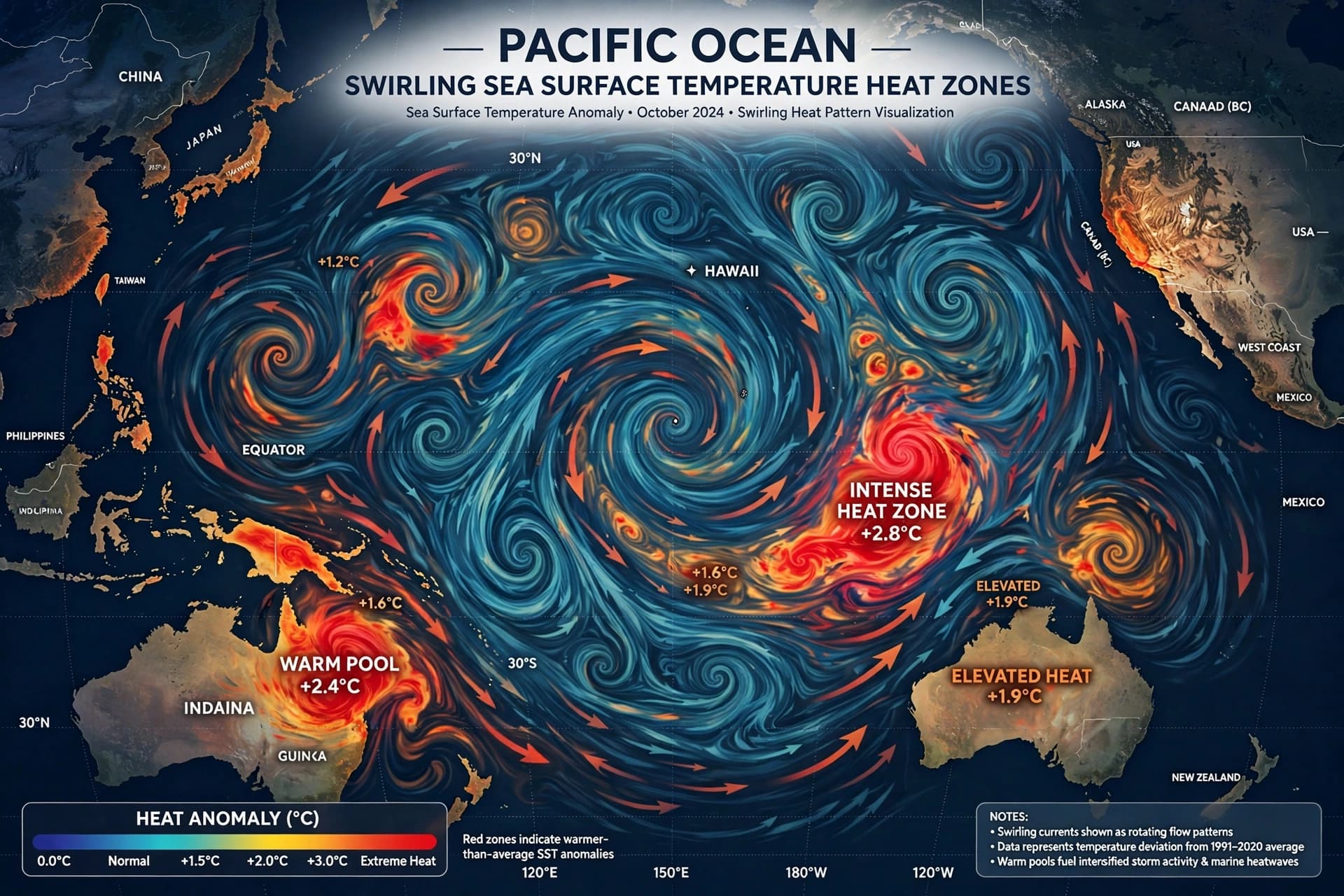
In the vast expanse of the Pacific Ocean, where currents weave the fabric of global weather, a powerful force has awakened. The 2026 El Niño event has surged into record-breaking territory, with sea surface temperatures surpassing previous historical highs. This "super" El Niño, as meteorologists have termed it, is not merely a statistical anomaly but a profound shift in the planet’s climate rhythm. It serves as a stark reminder of the ocean’s capacity to influence life on land, from droughts to deluges. Nature speaks in waves.
The National Oceanic and Atmospheric Administration (NOAA) reports that the temperature rise at the heart of the phenomenon has exceeded 3.0 degrees Celsius above average, breaking records set during the formidable events of 1997 and 2015. This intensity is driven by a combination of natural variability and the underlying trend of human-induced global warming. Science measures the change. Data reveals the scale.
For communities around the world, the implications are immediate and severe. Regions accustomed to dry seasons may face unprecedented rainfall and flooding, while others brace for intensified heatwaves and wildfires. Farmers in Southeast Asia and Australia watch their crops with anxiety, knowing that water scarcity could threaten livelihoods. Uncertainty tests resilience. Adaptation is survival.
In the Americas, the impact is equally significant. The southern United States may experience wetter conditions, raising concerns about storm severity and infrastructure stress. Meanwhile, South America faces the dual threat of heavy rains in some areas and drought in others. Weather connects us all. Vulnerability is shared.
Scientists emphasize that this event is a clear signal of the changing climate system. While El Niño is a natural cycle, its increasing strength and frequency are linked to broader environmental shifts. Understanding these patterns is crucial for future planning. Knowledge empowers action. Preparation prevents disaster.
Governments and international agencies are mobilizing resources to mitigate the impacts. Early warning systems and humanitarian aid are being deployed to vulnerable regions. Cooperation across borders is essential for effective response. Unity strengthens defense. Compassion drives aid.
For individuals, staying informed and prepared is the best defense. Monitoring local weather alerts and having emergency plans in place can save lives and property. Community solidarity plays a vital role in recovery. Neighbors help neighbors. Hope persists in action.
In the end, the record-breaking El Niño is a call to attention. It highlights the urgent need for climate resilience and sustainable practices. As the ocean continues to warm, the hope is for a world that adapts with wisdom and care. Balance is the goal.
AI Image Disclaimer: The visual representations included here are AI-generated illustrations designed to depict oceanic phenomena and climate themes, not actual satellite imagery or specific data visualizations from NOAA.
Sources: The Guardian CNN NOAA Al Jazeera
Published by Banx Network. This article is part of the Banx decentralized media programme, powered by the BXE token on the XRP Ledger.