There are moments when even a familiar old friend surprises us — when the radiant face we think we know reveals a hidden nuance or a secret smile. In much the same way, the Sun, our steadfast companion in the sky, has offered humanity a glimpse of its mysterious choreography through a striking new space time‑lapse. This footage, gently pieced together from observations in space, uncovers rare eruptions that seem at once familiar and astonishing, like an ancient dance finally caught in motion.
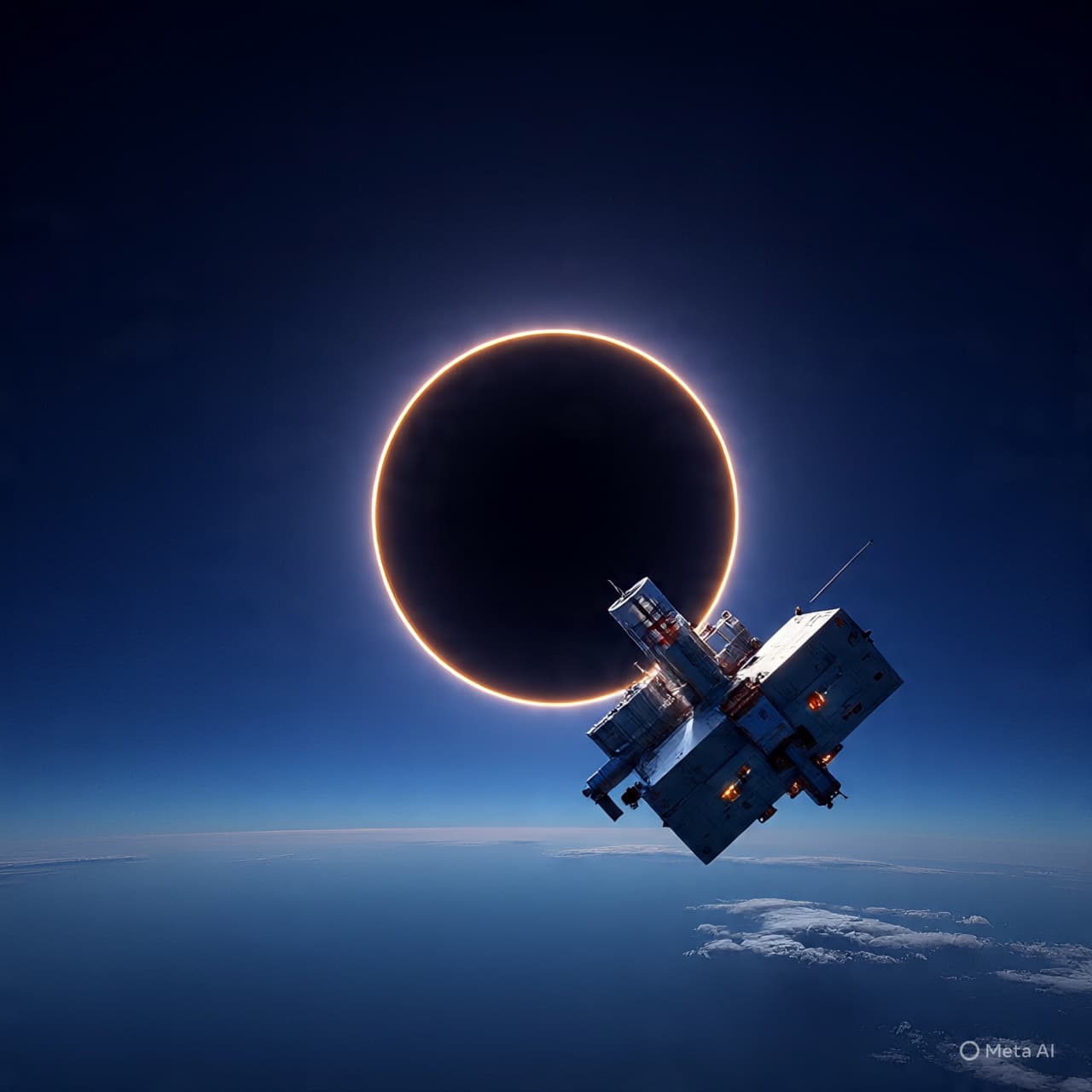
In these sequences, observers see not just bursts of light, but the Sun’s glowing corona — its outer atmosphere — whispering with the subtle warmth and motion that usually eludes even our best instruments. Only through ingenious methods, such as the “artificial eclipse” created by spacecraft flying in precise formation, can scientists dim the Sun’s overpowering glare and reveal the fainter gilded glow of its inner corona. Within those delicate rays, towering eruptive prominences rise and arc out into space, carried by magnetic forces and cosmic motion.
These solar prominence eruptions, though cooler than the searing corona surrounding them, are nonetheless vast and powerful. They extend thousands of kilometers into space, tracing curving bridges of superheated plasma that appear like fiery blossoms blooming and fading against the blackness beyond. Such displays are uncommon in how clearly and completely they have been captured, and they remind us that our nearest star still holds mysteries worth exploring with patience and curiosity.
At the same time, the Sun’s activity — including rare strong solar flares and related radiation storms — underscores how dynamic this everyday light source truly is. In recent days, energetic eruptions have sent streams of charged particles outward, stirring intense geomagnetic responses and spectacular auroras on Earth. These phenomena show that while the Sun fuels life, it also shapes the space environment in ways we continue to learn and adapt to.
In closing, the new time‑lapse of the Sun’s rare eruptions captures more than a sequence of moments. It reflects the quiet unfolding of cosmic forces and reminds us that even familiar skies hold wonders beyond routine glance. As scientists delve deeper into these views, each image and frame contributes to a fuller understanding of the star that sustains life on our world.
AI Image Disclaimer (rotated wording) Illustrations were produced with AI and serve as conceptual depictions.
Sources SciTechDaily Live Science Space.com NASA/Space Weather Database (as reported) International science news reporting
Published by Banx Network. This article is part of the Banx decentralized media programme, powered by the BXE token on the XRP Ledger.