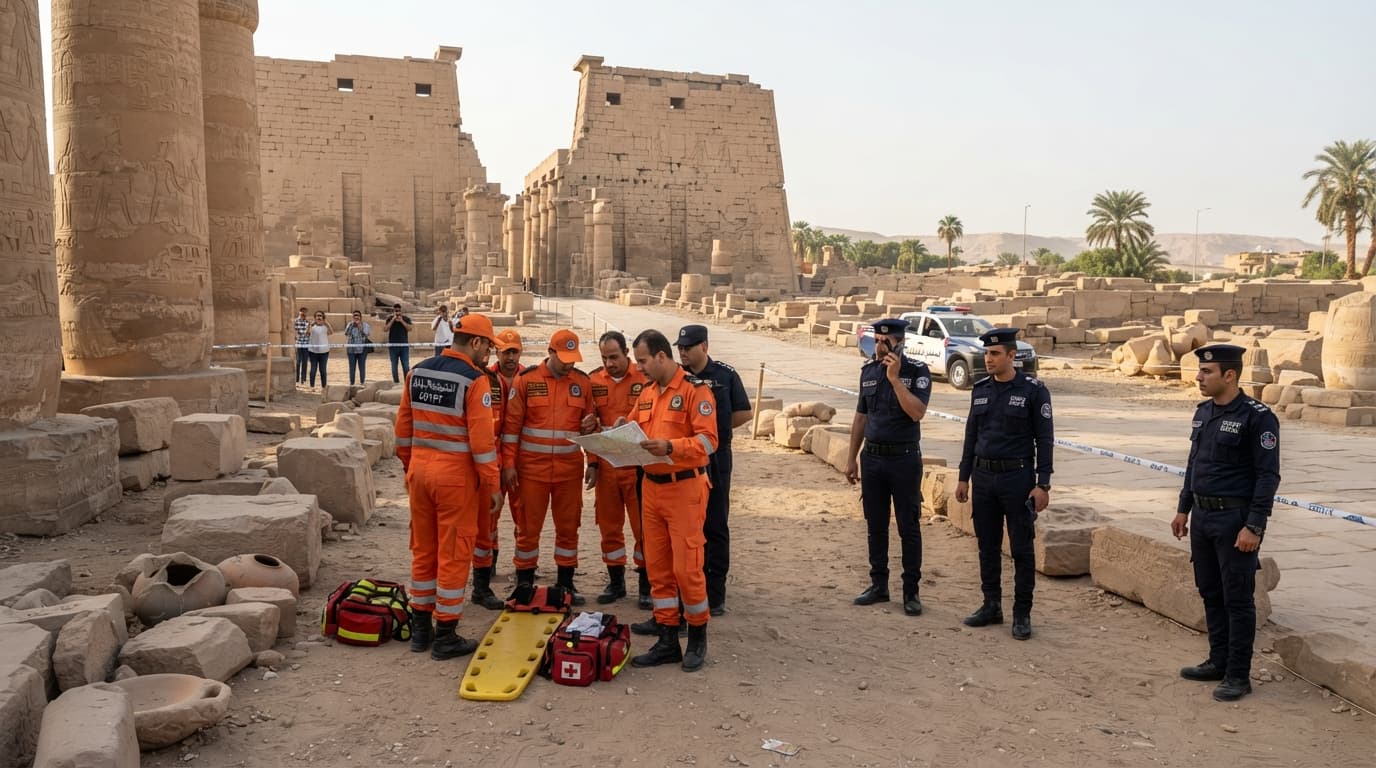
Cairo, Egypt—A sudden structural wall collapse at a historic heritage site in Egypt on Sunday afternoon killed a restoration worker during ongoing preservation operations. The heavy stone masonry wall gave way without warning inside an ancient courtyard sector, burying the laborer beneath tons of fractured blocks and loose mortar. Fellow restoration technicians immediately dropped their tools and attempted to clear the rubble by hand while shouting for emergency assistance. Civil protection forces and police rescue teams arrived at the archaeological zone within minutes, deploying manual excavation tools to prevent further damage to surrounding antiquities.
Ambulances and paramedic units stationed nearby rushed to the site entrance, preparing trauma equipment as rescue squads worked frantically to reach the trapped worker. Excavation specialists utilized wooden shoring props to stabilize adjacent weakening arches before lifting the heavy stone slabs off the victim. Medical personnel confirmed at the scene that the worker had succumbed to massive crush trauma during the collapse.
"The intrinsic instability of aged mortar bonding combined with heavy vibration from nearby restoration equipment triggered an unexpected shear failure along the interior wall," explained antiquities ministry site engineer Tarek Mahmoud at the perimeter.
Forensic investigators and public prosecutor's office officials cordoned off the courtyard to examine the collapsed masonry and review engineering safety logs for the restoration project. Ministry of tourism and antiquities representatives suspended all manual labor activities across the historical complex pending a comprehensive structural engineering audit. Forensic medical vans transported the victim's remains to the municipal morgue for official identification and post-mortem procedures.
Labor welfare inspectors gathered equipment maintenance records and interviewed surviving members of the preservation crew to establish whether safety protocols were fully observed. The heritage zone remains closed to researchers and visitors while stabilization engineers evaluate the remaining walls.
Published by Banx Network. This article is part of the Banx decentralized media programme, powered by the BXE token on the XRP Ledger.