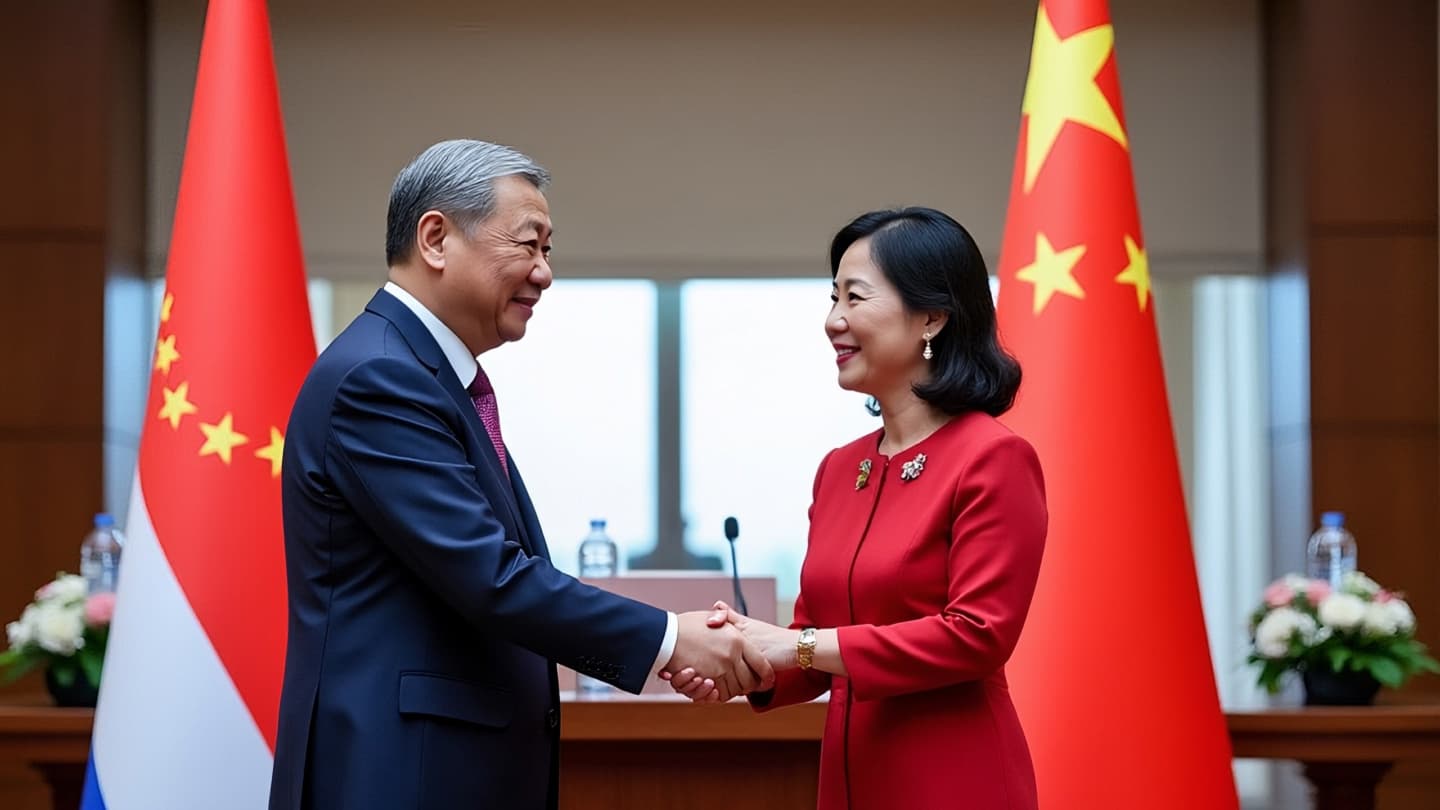
Opening: In the intricate web of international diplomacy, meetings often occur in the margins of larger events, where informal exchanges can pave the way for future cooperation. At the World Jurists Forum 2026, a significant encounter took place between the Secretary-General of ASEAN and China’s Vice Minister of Education. This dialogue, though brief, underscores the growing importance of educational collaboration in strengthening regional ties. It reflects a shared commitment to fostering understanding and development through knowledge exchange, highlighting the soft power dynamics that shape modern international relations.
Body: The meeting focused on enhancing cooperation in higher education, vocational training, and digital literacy. Both parties expressed interest in expanding student exchange programs and joint research initiatives, recognizing the role of education in driving economic growth and social stability. For ASEAN, a diverse bloc of ten nations, partnering with China offers access to resources and expertise that can help bridge developmental gaps among member states.
China’s Belt and Road Initiative has increasingly included educational components, aiming to build people-to-people connections alongside infrastructure projects. The Vice Minister’s presence at the forum signals Beijing’s intent to deepen these cultural and academic links. By engaging with ASEAN leaders, China seeks to reinforce its position as a key partner in regional development, balancing economic influence with soft power outreach.
For ASEAN, the engagement is part of a broader strategy to maintain centrality in regional affairs while navigating the complex geopolitical landscape. Balancing relationships with major powers like China and the United States requires careful diplomacy. Educational cooperation offers a neutral ground for collaboration, less susceptible to political tensions than trade or security issues. It allows for meaningful progress without compromising strategic autonomy.
The World Jurists Forum provided a fitting backdrop for this discussion, emphasizing the rule of law and institutional integrity. Education is foundational to these principles, cultivating informed citizens and capable professionals. By aligning educational goals with legal and governance frameworks, both sides aim to create a more resilient and cohesive regional community. This holistic approach recognizes that development is multifaceted.
Specific areas of interest include technology transfer and green skills training. As the region transitions toward sustainable economies, there is a growing demand for expertise in renewable energy and environmental management. Joint programs could help equip the next generation of workers with the skills needed for this transition. Such initiatives align with global sustainability goals and regional development plans.
Challenges remain, including differences in educational standards and language barriers. However, the willingness to engage in dialogue suggests a commitment to overcoming these obstacles. Establishing clear frameworks for recognition of qualifications and credit transfers will be crucial for the success of exchange programs. Technical working groups are likely to be formed to address these practical details.
The meeting also touched on digital education, a field that has expanded rapidly in recent years. Sharing best practices in online learning platforms and digital infrastructure can help democratize access to quality education. This is particularly relevant for remote areas in ASEAN countries, where physical infrastructure may be lacking. Digital collaboration offers a pathway to inclusivity.
As the forum concluded, the sense of momentum was palpable. While no binding agreements were signed, the exchange of ideas laid the groundwork for future partnerships. The commitment to continued dialogue ensures that education remains a priority in ASEAN-China relations. It is a small but significant step toward deeper regional integration.
Closing: The Secretary-General of ASEAN and China’s Vice Minister of Education met at the World Jurists Forum 2026 to discuss enhanced educational cooperation. The dialogue highlighted mutual interests in student exchanges, vocational training, and digital literacy. This engagement strengthens regional ties through soft power and collaborative development.
AI Image Disclaimer: The images associated with this article are AI-generated interpretations designed to visualize the context of diplomatic meetings and educational collaboration.
Sources: ASEAN Official Website Xinhua News Agency The Diplomat South China Morning Post
Published by Banx Network. This article is part of the Banx decentralized media programme, powered by the BXE token on the XRP Ledger.