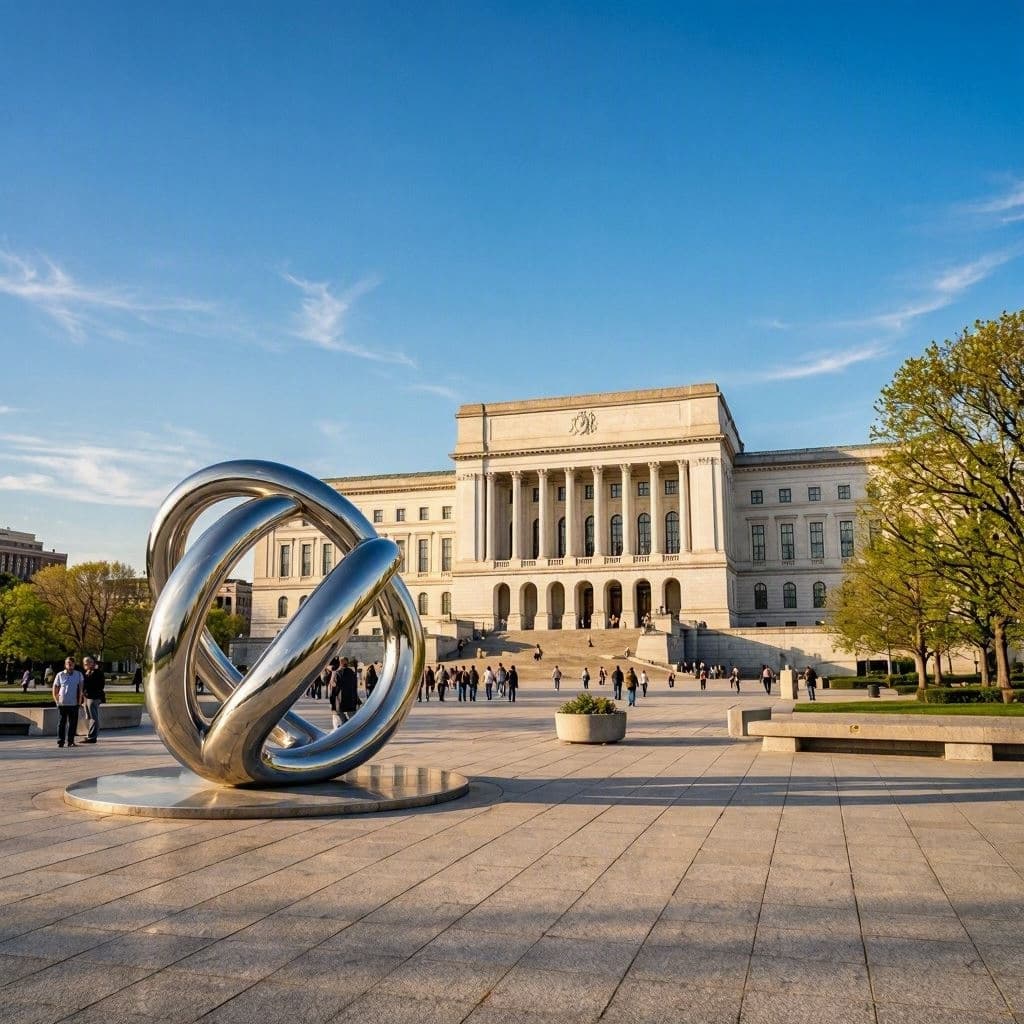
In the hallowed grounds of Washington, D.C., where history is etched in stone and memory, a new chapter of cultural debate has begun. Former President Donald Trump has issued a directive to the Smithsonian Institution, calling for the removal of a decades-old modernist sculpture known as "Infinity" and its replacement with a monumental statue of George Washington. The request, framed as a restoration of classical values, has sparked a conversation about art, heritage, and the role of public institutions in shaping national identity.
The sculpture in question, a large stainless steel Möbius strip standing outside the National Museum of American History, has long been a subject of mixed reactions. While some view it as a symbol of endless possibility and modern innovation, others, including the former president, have described it as "strange" and out of place among the nation’s historic landmarks. Trump’s proposal suggests replacing it with a 30-foot-tall "Colossus" of the first president, aiming to create a more traditional and imposing tribute to the Founding Fathers.
The Smithsonian, an independent trust established by Congress, operates with a degree of autonomy from political influence. Its mission is to preserve and interpret history through scholarly rigor and artistic merit. The institution’s leadership has historically resisted direct political mandates regarding its collections and exhibits, emphasizing the importance of curatorial independence. This latest request tests the boundaries of that independence, raising questions about who decides what constitutes appropriate public art.
Supporters of the proposal argue that public spaces should reflect the values and heroes of the nation in a way that is accessible and inspiring to all citizens. They see the change as a corrective measure, aligning the museum’s exterior with the patriotic themes housed within. For them, a statue of Washington serves as a tangible connection to the roots of American democracy, offering a sense of continuity and pride.
Critics, however, view the move as an erosion of artistic freedom and historical complexity. They argue that modern art, even when abstract, plays a vital role in challenging viewers and reflecting the evolving nature of society. Removing such works in favor of traditional monuments may simplify the narrative of American history, ignoring the diverse voices and perspectives that contribute to the national story.
The timeline proposed by Trump—just days to make the change—adds a layer of urgency and controversy. Such a rapid turnaround is logistically challenging and raises concerns about due process and proper evaluation. The Smithsonian has not yet issued a formal response, but insiders suggest that any decision will involve careful consideration of legal, ethical, and artistic implications.
As the debate unfolds, it highlights the ongoing tension between political vision and institutional integrity. Art in public spaces is never neutral; it reflects the values of those who commission it and those who resist it. In this case, the "Infinity" sculpture becomes a focal point for broader discussions about memory, power, and the meaning of heritage in a changing America.
AI Image Disclaimer: The visual representations in this article are AI-generated illustrations designed to convey the themes of public art and historical monuments.
Sources: The New York Times, Fox News, The Hill
Published by Banx Network. This article is part of the Banx decentralized media programme, powered by the BXE token on the XRP Ledger.