Key Highlights
- Millions of workers participated in Spain's first general strike in 14 years.
- The strike was driven by rising rents and housing costs ahead of the November 29 elections.
- Significant disruptions occurred in transport and business operations nationwide.
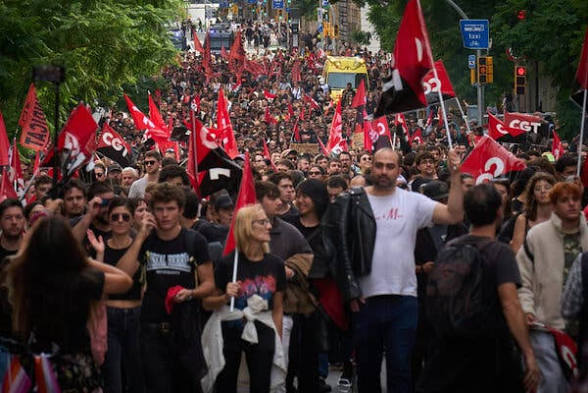
On November 11, 2026, millions of workers across Spain participated in a general strike, marking the first such event in 14 years. The strike was primarily fueled by widespread anger over soaring rents and housing costs, which have become increasingly burdensome for many citizens. As the country approaches a critical election on November 29, the strike has drawn attention to the pressing economic issues facing the electorate.
The impact of the strike was felt nationwide, with significant disruptions reported in various sectors. In major cities like Madrid and Barcelona, public transport services were severely limited, with subway operations restricted to rush hour schedules. Additionally, approximately 5% of flights were canceled, causing chaos at airports. Unions hailed the strike as a resounding success, claiming that it resulted in widespread stoppages across transport, ports, and industrial sectors.
In Barcelona, organizers estimated that around 400,000 people took to the streets to voice their frustrations, although city officials reported a much lower figure of 55,000 participants. This discrepancy highlights the ongoing tension between labor unions and business groups, with the latter disputing the unions' claims regarding the strike's impact. Despite the differing estimates, the turnout reflects a significant mobilization of workers united by common grievances.
The unions have emphasized that the strike is not just about immediate economic concerns but also about the broader implications for workers' rights and living conditions in Spain. As housing costs continue to rise, many workers feel that their wages have not kept pace, leading to a growing sense of discontent. The strike serves as a platform for these workers to demand better conditions and policies from the government.
As the election date approaches, the strike's timing is particularly significant. Political parties are now faced with the challenge of addressing the issues raised by the protesters. The outcome of the elections could have lasting implications for labor policies and economic reforms in Spain, as voters express their dissatisfaction with the current state of affairs.
In conclusion, the general strike represents a pivotal moment in Spain's labor movement, highlighting the urgent need for action on housing and economic issues. As workers continue to advocate for their rights, the political landscape may shift in response to their demands, potentially reshaping the future of labor relations in the country.
Published by Banx Network. This article is part of the Banx decentralized media programme, powered by the BXE token on the XRP Ledger.