Key Highlights
- GDP Growth:South Korea's GDP increased by 1% in Q3 2026.
- Export Surge:Exports exceeded $800 billion in the first nine months of 2026.
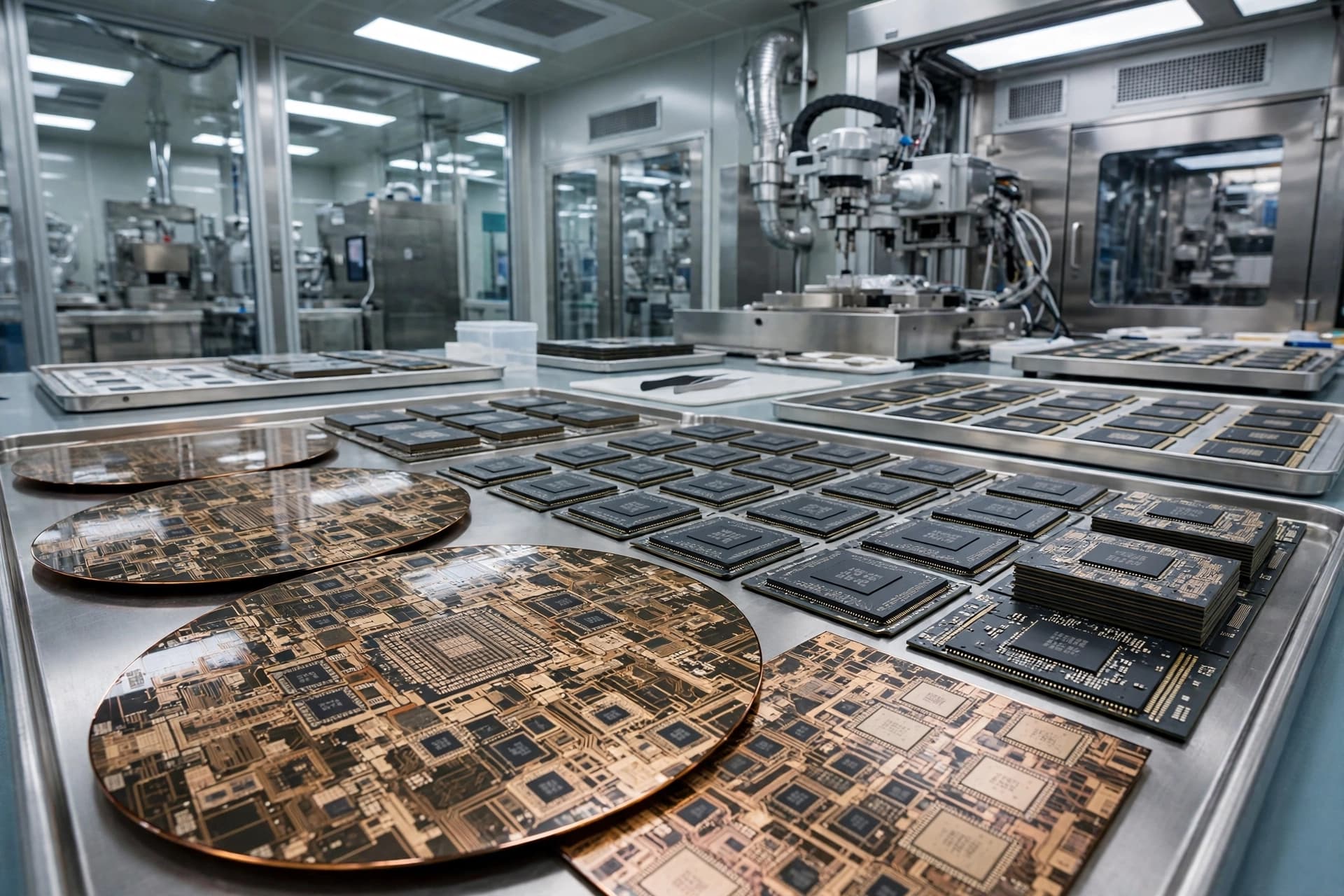
- Investment Growth:Facilities investment rose by 4.1%, driven by semiconductor manufacturing.
South Korea's economic landscape is increasingly intertwined with the global demand for artificial intelligence (AI), particularly in the semiconductor sector. As AI technologies proliferate, the need for advanced chips, memory products, and specialized manufacturing equipment has surged. South Korean companies, which are pivotal in the semiconductor supply chain, are experiencing a significant boost in economic momentum due to this heightened demand.
On October 26, 2026, Reuters reported that South Korea's gross domestic product (GDP) grew by 1% in the third quarter compared to the previous quarter. This growth marks an acceleration from the 0.6% increase recorded in the second quarter and surpasses economists' expectations of 0.7%, according to preliminary data from the Bank of Korea. Year-over-year, the economy expanded by 3.4%, driven by robust exports and increased investment in production equipment, highlighting the critical role of technology manufacturing in the nation's economic performance.
The semiconductor industry emerged as a key driver of this growth, contributing approximately half of the quarter's economic expansion, as noted by estimates from the Bank of Korea. This underscores the profound impact that advancements in a single high-value sector can have on national economic indicators, especially when its products are integral to global technology investments.
During the third quarter, exports rose by 2.3%, bolstered by strong demand for chips, machinery, and electrical equipment. Additionally, facilities investment surged by 4.1%, primarily fueled by spending on semiconductor manufacturing equipment. These figures indicate that South Korean companies are not only increasing their sales but are also investing in expanding or upgrading their production capabilities to meet the growing demand.
South Korea's export performance has reached a remarkable milestone, with exports surpassing $800 billion during the January-to-September period, eclipsing the previous full-year record. If this momentum continues, the country could be on track to approach $1 trillion in annual exports. However, the final outcome will depend on various factors, including global demand, pricing, exchange rates, and economic conditions in major overseas markets.
Despite these positive growth figures, the overall economic picture is more nuanced. Private consumption experienced a decline of 0.2% in the third quarter, marking its first contraction in nearly four years. Contributing factors included falling stock markets and labor disputes at major automakers, which have negatively impacted economic sentiment. This disparity between strong technology exports and weaker household spending suggests that the benefits of an export-driven expansion may not be evenly distributed across the economy.
In response to these dynamics, the Bank of Korea has maintained interest rates following previous increases in July and September. Policymakers face the challenge of balancing strong export activity with domestic demand, inflation, and household financial pressures. Increased production does not necessarily translate into higher consumer spending, particularly when households remain cautious about their financial outlook.
For businesses, ongoing investments in AI could present opportunities in semiconductor manufacturing, equipment, logistics, and industrial services. However, a heavy reliance on a single global growth engine poses risks, as semiconductor demand can fluctuate, technology investments may slow, and international trade conditions can change rapidly.
The third-quarter results for South Korea thus offer both an encouraging signal and a reminder of the complexities inherent in the economy. The AI boom is generating substantial demand for the country's technology sectors, but a sustainable recovery will also hinge on fostering broader domestic confidence and consumer activity. The coming quarters will reveal whether the strong performance in industrial sectors can translate into more widespread economic benefits.
Published by Banx Network. This article is part of the Banx decentralized media programme, powered by the BXE token on the XRP Ledger.