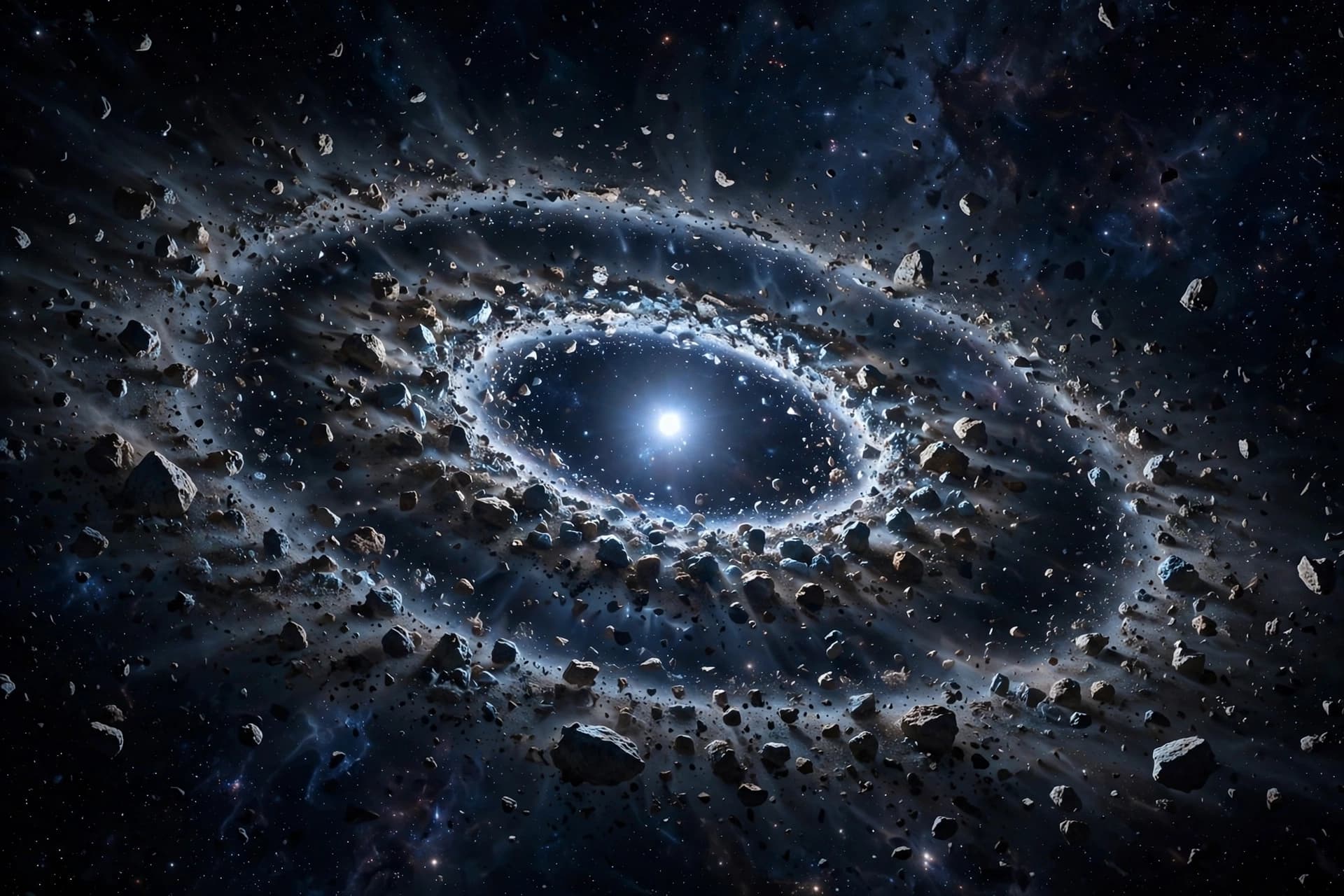
There is a particular kind of stillness that follows a death, and in the cosmos, that stillness has a shape. Around a white dwarf called J1328−1450, some 1,600 light-years away, astronomers have found the remains of a planetary system that did not end cleanly. Two rings of debris circle the dead star, separated by a clear gap, and within that gap, something is still moving—the husks of planets that survived the death of their sun, now orbiting through the graveyard of their neighbors .
The discovery, published in Nature Astronomy, is the first known example of a white dwarf surrounded by a double debris disc. All previously known debris discs around dead stars were single, flat, rotating rings. This system breaks that pattern, and the break is telling. The gap between the rings is likely maintained by the gravitational influence of two surviving planetary bodies—one estimated to be no larger than a typical asteroid, the other somewhere between the size of the Moon and Pluto .
The chemistry of the debris adds another layer. Observations with the Very Large Telescope detected calcium, oxygen, magnesium, and iron, elements that suggest the destroyed planets were rocky, much like the inner planets of our own solar system. The inner ring is rich in magnesium; the outer ring largely lacks it. That divergence indicates that at least two of the consumed planets had very different compositions, a diversity that echoes the varied rocky worlds of our own solar neighborhood .
What makes this system a warning rather than merely a curiosity is the timeline it implies. In roughly five billion years, our Sun will exhaust the hydrogen in its core and expand into a red giant, swallowing Mercury, Venus, and likely Earth. The outer layers will disperse, leaving behind a white dwarf and a disk of wreckage. The question is what, if anything, survives that cataclysm. J1328−1450 offers one possible answer: some planets, or their fragments, can endure .
The researchers are careful about what the system can tell us. It is a snapshot of a process, not a prophecy. But it is a rare glimpse of the violent, chaotic way planetary systems meet their end, and it hints that the afterlife of a star can be far more complex than a single ring of dust. The surviving bodies, if that is what they are, are not thriving worlds. They are gravekeepers, orbiting through the remains of their siblings .
There is a strange comfort in this, or perhaps a strange unease. The solar system we inhabit is temporary, and the fate that awaits it has already unfolded elsewhere. The planets that survive will not be the ones we know. They will be fragments, or small bodies that happened to be in the right place at the right time, circling a dead star in a double ring of dust. The universe has a way of continuing, but it does not always continue in the forms we recognize.
For now, the white dwarf J1328−1450 sits in its quiet corner of space, its debris rings turning slowly, its surviving companions moving through the wreckage. Astronomers will keep watching, and the data will accumulate. But the system has already said what it came to say: sometimes dead is not the end, but it is not the same as alive, either .
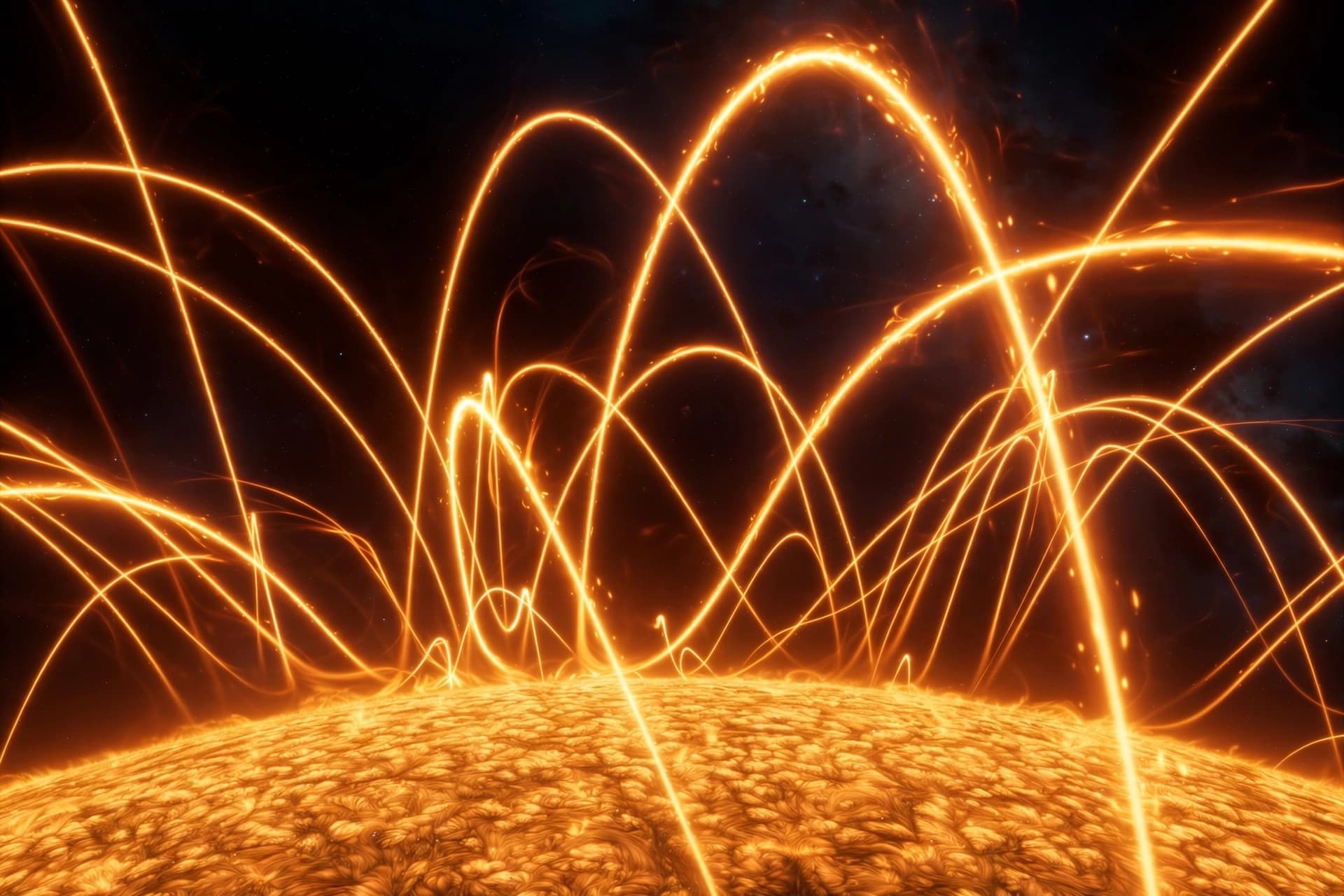
Image note: The visuals accompanying this article were generated by artificial intelligence and do not depict actual telescope imagery of J1328−1450.
Sources: Space.com, Nautilus, Nature Astronomy, European Southern Observatory
Published by Banx Network. This article is part of the Banx decentralized media programme, powered by the BXE token on the XRP Ledger.