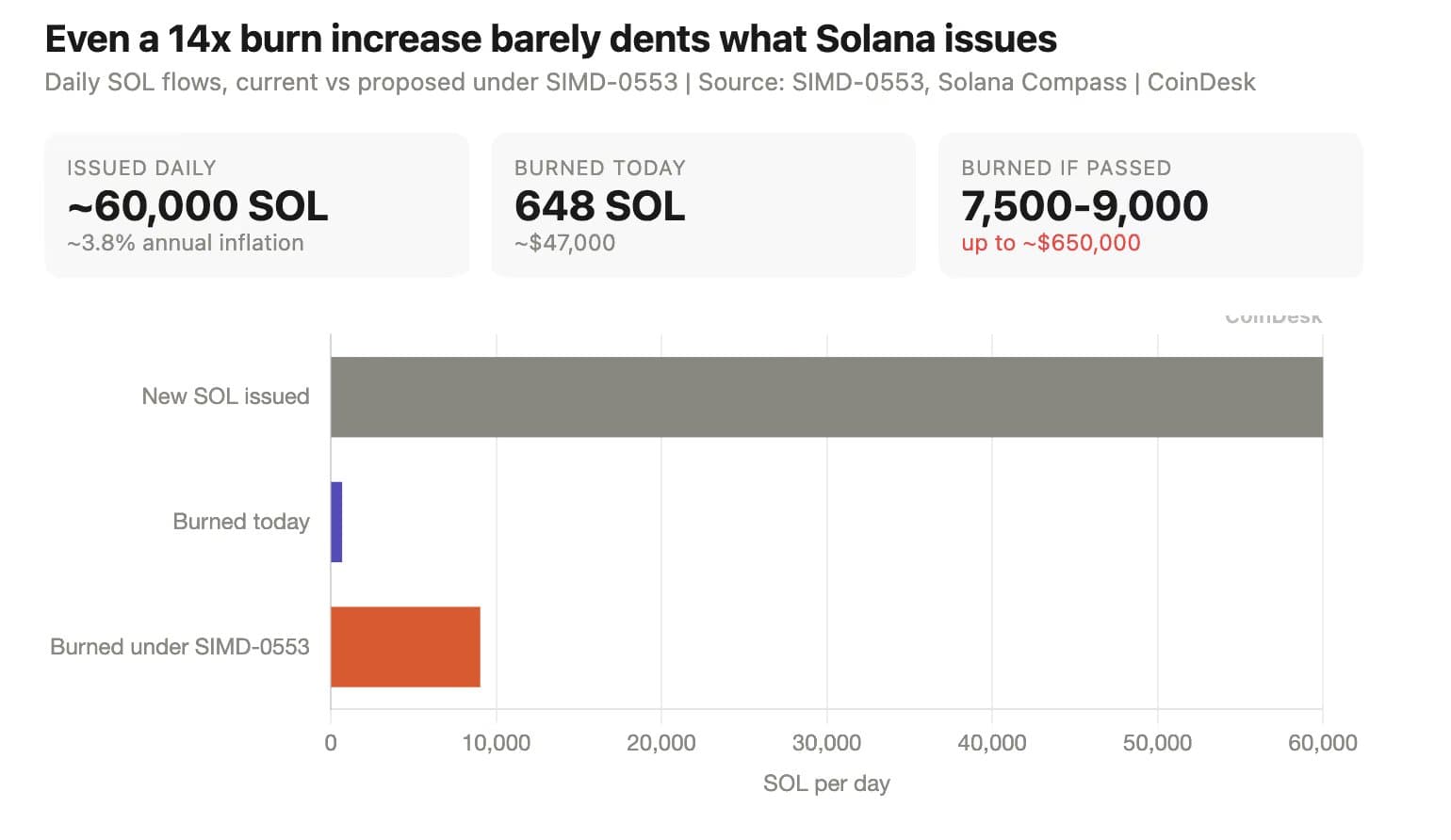
The Solana ecosystem is debating a governance proposal that would increase the amount of SOL permanently removed from circulation through transaction fee burns. Supporters argue the measure could strengthen the network's long-term tokenomics by reducing supply growth, while opponents believe the existing economic model already provides an effective balance between validators, users and network sustainability. Token burning permanently removes cryptocurrency from circulation by sending it to an unusable blockchain address. In theory, reducing available supply can increase scarcity if demand remains constant or grows over time. Solana already burns a portion of transaction fees, but the latest proposal seeks to raise the percentage destroyed, increasing the deflationary effect as network activity expands. Advocates believe a higher burn rate could benefit long-term holders by slowing net token issuance while reinforcing confidence in Solana's economic design. They argue that as decentralized finance, gaming, payments and tokenized assets continue growing on the network, increased transaction volumes would naturally lead to greater token destruction without negatively affecting users. Critics, however, caution that validator incentives must remain sustainable. Validators secure the blockchain by processing transactions and maintaining network integrity, earning rewards partly through fees. Excessive burning could reduce available revenue, potentially affecting decentralization if smaller operators struggle to remain profitable. Governance participants therefore continue evaluating how any changes might influence security and long-term ecosystem health. The discussion reflects Solana's maturing governance process, where community members actively debate technical upgrades and economic policy before implementation. Developers, validators, investors and ecosystem participants all contribute to the decision-making process through transparent governance mechanisms designed to balance competing interests. Solana has experienced rapid growth over the past several years, becoming one of the leading smart contract platforms supporting decentralized finance, stablecoins, tokenized assets and consumer applications. As activity increases, governance proposals addressing network economics are expected to become more frequent. Regardless of the proposal's outcome, the debate demonstrates how blockchain communities continue refining their economic models through open participation rather than centralized decision-making. The final decision could shape Solana's long-term monetary policy while providing insight into how decentralized networks adapt to growing adoption and evolving market conditions.
Published by Banx Network. This article is part of the Banx decentralized media programme, powered by the BXE token on the XRP Ledger.