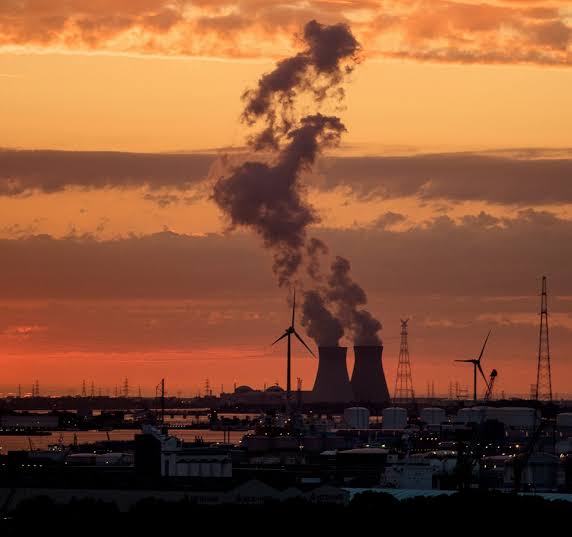
Where rivers wend their way to the yawning embrace of the sea, a quiet alchemy unfolds: freshwater mingles with saltwater, and unseen forces arise in that fluid meeting. For centuries, this blend has carried nutrients, life, and motion — but only recently have scientists learned to listen for a subtler song: a whisper of energy behind the dance of ions between two waters of different salinity. This “blue energy,” nestled in the pulse between fresh and salt, has long promised a source of renewable power, but elusive challenges have kept it largely on the horizon rather than in the grid.
At the École Polytechnique Fédérale de Lausanne (EPFL) in Switzerland, researchers have been tracing a new path. Where traditional membranes struggled to let ions flow fast without losing the very selectivity that makes electricity possible, engineers sought a gentle way to smooth that passage rather than force it. Their solution is poetic in its simplicity: coat nanopores — tiny channels etched at scales billionths of a meter wide — with microscopic bubbles made of lipid molecules, the same kind found in cell walls.
In these narrow channels, saltwater’s charged particles have always wanted to move toward fresh water, but friction and resistance kept them trudging painfully slowly. The bubble‑like coating changes that. By attracting a wafer‑thin film of water against the pore walls, the bubbles help prevent ions from scraping along the surface, reducing friction and allowing them to glide more freely. It’s a bit like greasing a well‑worn path with dew at dawn — subtle, nearly invisible, yet transformative in easing the journey.
When the team arranged a lattice of a thousand of these lipid‑enhanced nanopores and tested them under conditions that mimic where rivers meet the ocean, the result was a notable increase in power generation — roughly two to three times higher than some polymer membranes tested previously. While still early in development, these membranes showcase how a deeper understanding of the microscopic world can reshape the macroscopic — here, the way natural differences in salt might help light streets or charge devices in the future.
To many observers, blue energy isn’t merely a power technology; it’s a poetic reflection of nature’s generosity. Where currents flow and gradients exist, nature offers potential, waiting for human ingenuity to translate it into use. The challenge has always been to do so without imposing heavy, costly machinery or disrupting ecosystems. By harnessing nanofluidics — the science of fluid behavior at billionth‑scale dimensions — scientists are charting a course that might respect both the environment and humanity’s growing thirst for sustainable power.
At its heart, this advance reminds us of the unseen forces all around us. Before this work, engineers wondered: can we make blue energy practical? The tentative answer now emerging is gently affirmative — not through brute force but through a refined embrace of tiny bubbles that open a smoother path for ions, and perhaps, a smoother path toward a less carbon‑intensive tomorrow.
AI Image Disclaimer “Illustrations were produced with AI and serve as conceptual depictions.”
📰 Sources Based on Source Role SciTechDaily Phys.org Make Industry Wikipedia background Additional blue energy progress coverage
Published by Banx Network. This article is part of the Banx decentralized media programme, powered by the BXE token on the XRP Ledger.