
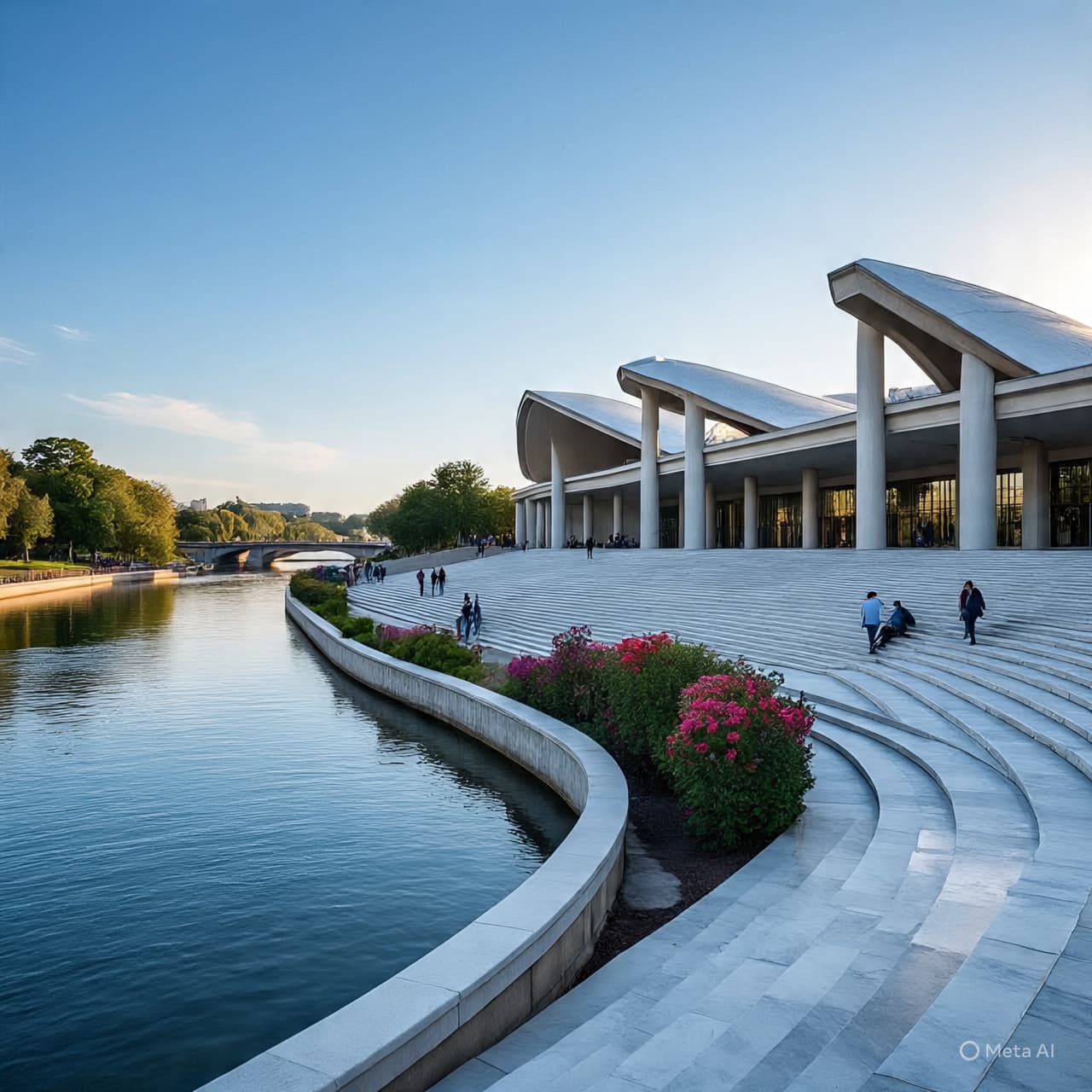
Key Highlights
- Shanghai Grand Opera House:A new cultural landmark designed by Snøhetta.
- Central Bank of Iraq:Zaha Hadid's only realized design in Baghdad.
- Lucas Museum:A futuristic art museum in Los Angeles.
As we approach 2026, the architectural landscape is set to undergo a significant transformation with a series of innovative projects that promise to redefine urban experiences across the globe. These structures are not merely buildings; they are reflections of cultural aspirations and community identities, designed to foster interaction and engagement among citizens.
In Shanghai, the Shanghai Grand Opera House is emerging as a striking new cultural beacon along the Huangpu River. Designed by the renowned Norwegian architecture firm Snøhetta, this venue is characterized by its sweeping curves and a public spiral staircase that invites visitors to explore. The design emphasizes the integration of performance art with public life, creating a space where artistic expression and everyday experiences converge. This project symbolizes a modern approach to architecture that prioritizes community engagement and accessibility.
Meanwhile, in Baghdad, the anticipation builds for the Central Bank of Iraq’s new headquarters, which is the only realized design by the late Zaha Hadid in her native city. The building's flowing, sculptural form stands as a testament to resilience and renewal, marking a significant architectural milestone in a city that has faced numerous challenges throughout its history. This project not only highlights Hadid's innovative design philosophy but also serves as a symbol of hope and progress for the Iraqi people.
Los Angeles is also set to welcome the Lucas Museum of Narrative Art, a visionary project conceived by MAD Architects and supported by filmmaker George Lucas. This futuristic museum, designed to appear as if it is floating above Exposition Park, aims to become a new hub for storytelling and cultural exchange. Its organic form and innovative design are expected to attract visitors from around the world, further enriching the cultural fabric of the city.
Infrastructure projects are equally noteworthy as they promise to enhance urban mobility and connectivity. The Metro Tunnel project in Melbourne, one of Australia’s largest transport initiatives in decades, is designed to transform daily commuting into a more engaging experience. The new stations will connect underground spaces to the vibrant life above, reflecting a commitment to creating a more integrated urban environment.
In Barcelona, the iconic Sagrada Família, designed by Antoni Gaudí, is nearing completion after more than a century of construction. Its towering spires and intricate façades are a testament to the enduring legacy of craftsmanship and imagination, drawing millions of visitors each year. As this architectural marvel approaches its final phases, it continues to inspire awe and admiration.
Beyond these prominent projects, cities around the world are witnessing a renaissance in architectural design. In Abidjan, Ivory Coast, Tour F is set to become one of West Africa’s tallest buildings, symbolizing economic ambition and modern identity. In Birmingham, England, the development of 1 Beorma Place will contribute to a revitalized urban skyline, combining offices, residences, and retail spaces in a single location.
These architectural endeavors reflect a broader global conversation about the role of cities in our lives. They challenge the notion that urban spaces should be purely functional, advocating instead for environments that are expressive, inclusive, and responsive to the cultural narratives that shape human experiences. As these structures open their doors in 2026, they will not only redefine skylines but also create spaces where communities can gather, reflect, and envision the future together.
Published by Banx Network. This article is part of the Banx decentralized media programme, powered by the BXE token on the XRP Ledger.



