There are moments in Earth’s long memory when silence follows thunder. Not the kind of thunder that rolls across a rainy afternoon, but the kind that reshapes horizons and writes its signature into stone. Six million years ago, in what is now Brazil, such a moment may have unfolded — swift, incandescent, and transformative.
Geologists studying unusual circular formations and shock-altered minerals have identified evidence suggesting that a large celestial object struck this region during the late Miocene epoch. The impact, estimated to have occurred roughly six million years ago, would not have been subtle. An asteroid traveling at tens of thousands of kilometers per hour carries energy beyond imagination. Upon contact, rock behaves like liquid, air ignites with heat, and the ground briefly becomes a wave.
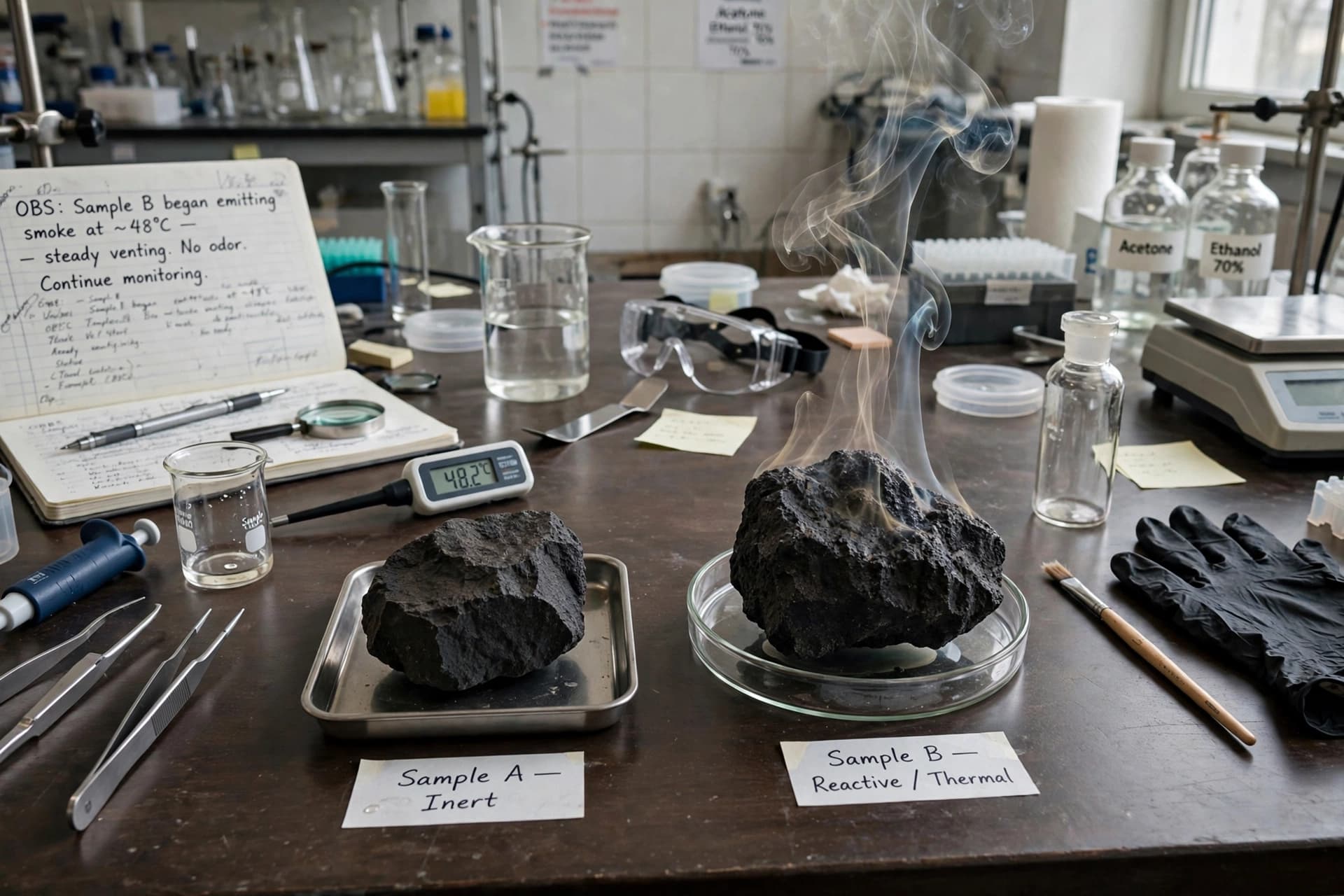
What remains today is quieter — a vast circular scar, softened by time, eroded by rain, and partially hidden beneath vegetation and sediment. Yet beneath that calm exterior lies unmistakable proof: fractured quartz grains, high-pressure mineral transformations, and geological deformation patterns that speak of sudden violence rather than gradual change.
Scientists believe the asteroid may have measured several hundred meters across, large enough to carve a crater kilometers wide. The immediate aftermath would have included seismic shocks radiating outward, forest fires ignited by thermal radiation, and a plume of debris thrown high into the atmosphere. Locally, ecosystems would have been altered in an instant. Regionally, the environmental effects might have lingered for years.
Unlike the extinction-level impact that ended the age of dinosaurs, this collision did not reset global life. Yet it offers something equally valuable: a reminder that Earth’s story is punctuated not only by slow tectonic drift and patient erosion, but also by rare and decisive encounters from beyond.
Researchers continue to analyze rock samples and satellite imagery, refining estimates of the crater’s age and scale. Each data point adds clarity, not drama. Science moves carefully, verifying shock metamorphism, mapping subsurface structures, and comparing findings with known impact sites around the world.
In the broader context, such discoveries deepen our understanding of planetary risk. Impacts are statistically rare on human timescales, yet they remain part of Earth’s natural history. Studying ancient collisions allows scientists to model future scenarios and refine detection systems for near-Earth objects.
Time has gentled the site in Brazil. What was once an explosion brighter than the sun is now pasture, forest, and layered rock. But beneath the soil, the memory remains — a circular whisper in the crust, reminding us that the sky and the ground have always been in conversation.
In the end, this six-million-year-old event is not merely about destruction. It is about continuity. The Earth absorbed the blow, reshaped itself, and carried on. Life adapted. Landscapes evolved. And long after the dust settled, the planet continued its quiet orbit, holding within it the record of a single, incandescent moment.
AI Image Disclaimer Illustrations were produced with AI and serve as conceptual depictions.
Source Check (Credible Media Coverage Identified): National Geographic BBC Science Live Science Science News Nature Geoscience
Published by Banx Network. This article is part of the Banx decentralized media programme, powered by the BXE token on the XRP Ledger.