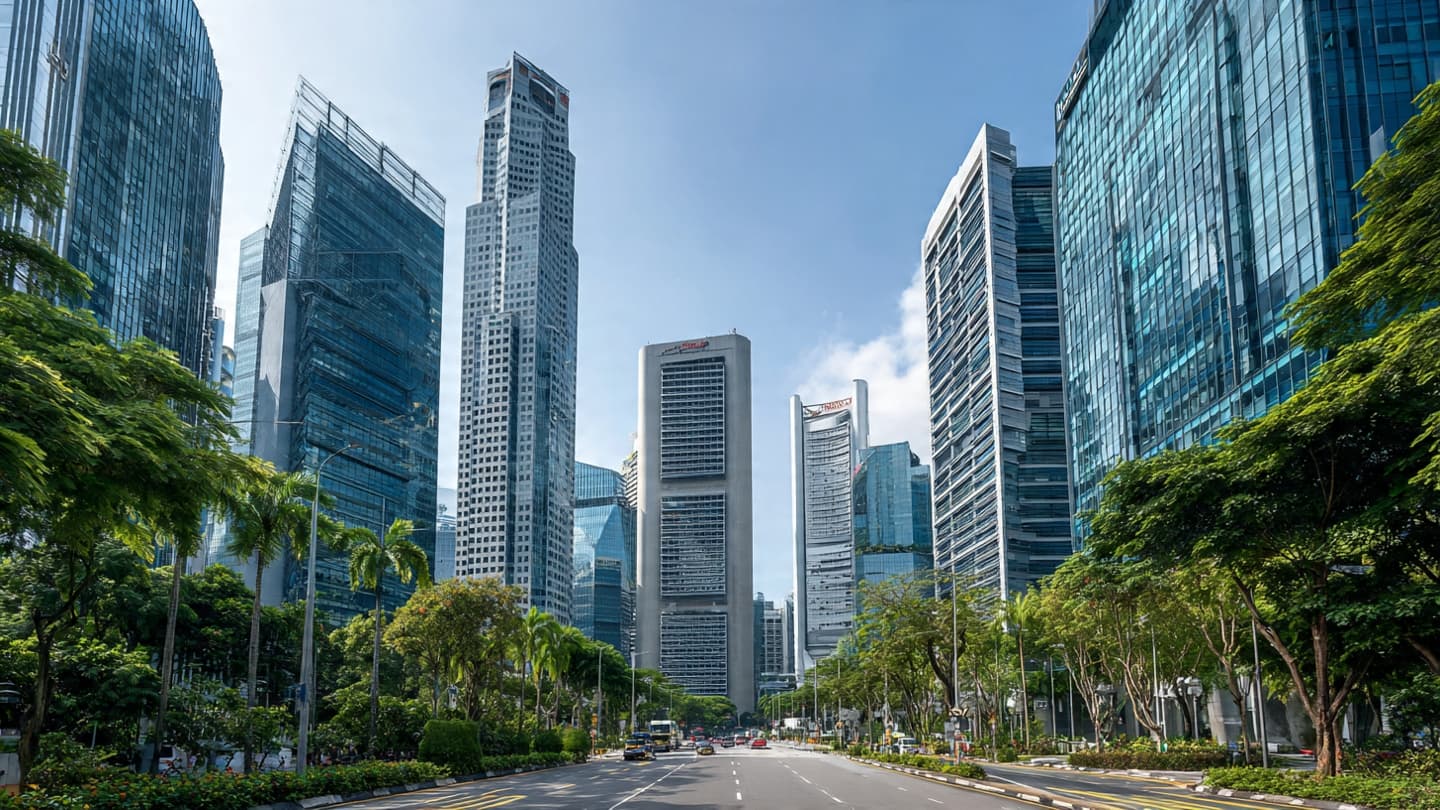
Singapore has long built its financial identity around a simple combination: capital that can move easily, institutions that inspire confidence, and a city designed to connect markets across Asia. Now, as competition for investment and financial talent intensifies, the city-state is preparing another adjustment.
Singapore plans to introduce new tax incentives for fund managers and improve access to work visas for international financial professionals, according to Reuters. The measures are intended to reinforce the country's position as a major center for asset management.
The planned tax measures would exempt certain profits earned by fund managers from tax, including managers overseeing single-family offices. Further details are expected to be announced in the country's 2027 budget, while the Monetary Authority of Singapore is also preparing support for hedge funds willing to establish or expand operations there.
Talent is another part of the equation. Singapore plans to broaden access to its Overseas Networks & Expertise Pass, which allows qualified foreign professionals to work across multiple companies for as long as five years. The aim is to make it easier for financial institutions to attract and retain people whose expertise can move between firms and investment strategies.
The measures arrive as Asian financial centers compete more directly for the same pool of capital and professionals. Hong Kong has also been considering tax incentives for fund managers, increasing the pressure on Singapore to maintain an environment where international firms feel comfortable placing both operations and people.
Singapore's asset-management industry has grown steadily. Reuters reported that the sector expanded at an average annual rate of 7.5% over the previous five years, reaching nearly S$7 trillion. That scale gives the city a substantial foundation, but also means that maintaining competitiveness requires continual attention to costs, regulation, infrastructure, and talent.
There is an interesting balance in that strategy. Financial centers compete by making themselves attractive, but they also depend on qualities that cannot be created through tax policy alone. Legal certainty, professional networks, transport connections, technological infrastructure, and a deep pool of financial expertise all contribute to the sense of permanence that large investors seek.
Singapore's recent economic performance provides another backdrop. The city-state raised its 2026 growth forecast to between 4.5% and 5.5% after stronger-than-expected second-quarter growth, with investment associated with artificial intelligence contributing to the expansion.
That connection between finance and technology is increasingly important. Funds, technology companies, data centers, and financial institutions are becoming parts of the same economic ecosystem, creating demand for both capital and specialized professionals. Singapore's financial strategy is consequently being shaped by changes occurring well beyond traditional banking.
For now, the city-state is preparing to keep its doors open as competition evolves. Tax treatment, visa access, financial infrastructure, and investment opportunities are being adjusted together, creating another chapter in Singapore's long effort to remain one of Asia's principal destinations for global capital.
AI Image Disclaimer
These visuals were created with AI tools for illustrative purposes and do not depict actual Singapore financial institutions or events.
Sources
Reuters — Singapore to offer tax, visa incentives for fund sector to rival Hong Kong — August 19, 2026.
Reuters — Singapore raises 2026 growth forecast on AI boom after robust Q2 GDP — August 11, 2026.
Published by Banx Network. This article is part of the Banx decentralized media programme, powered by the BXE token on the XRP Ledger.