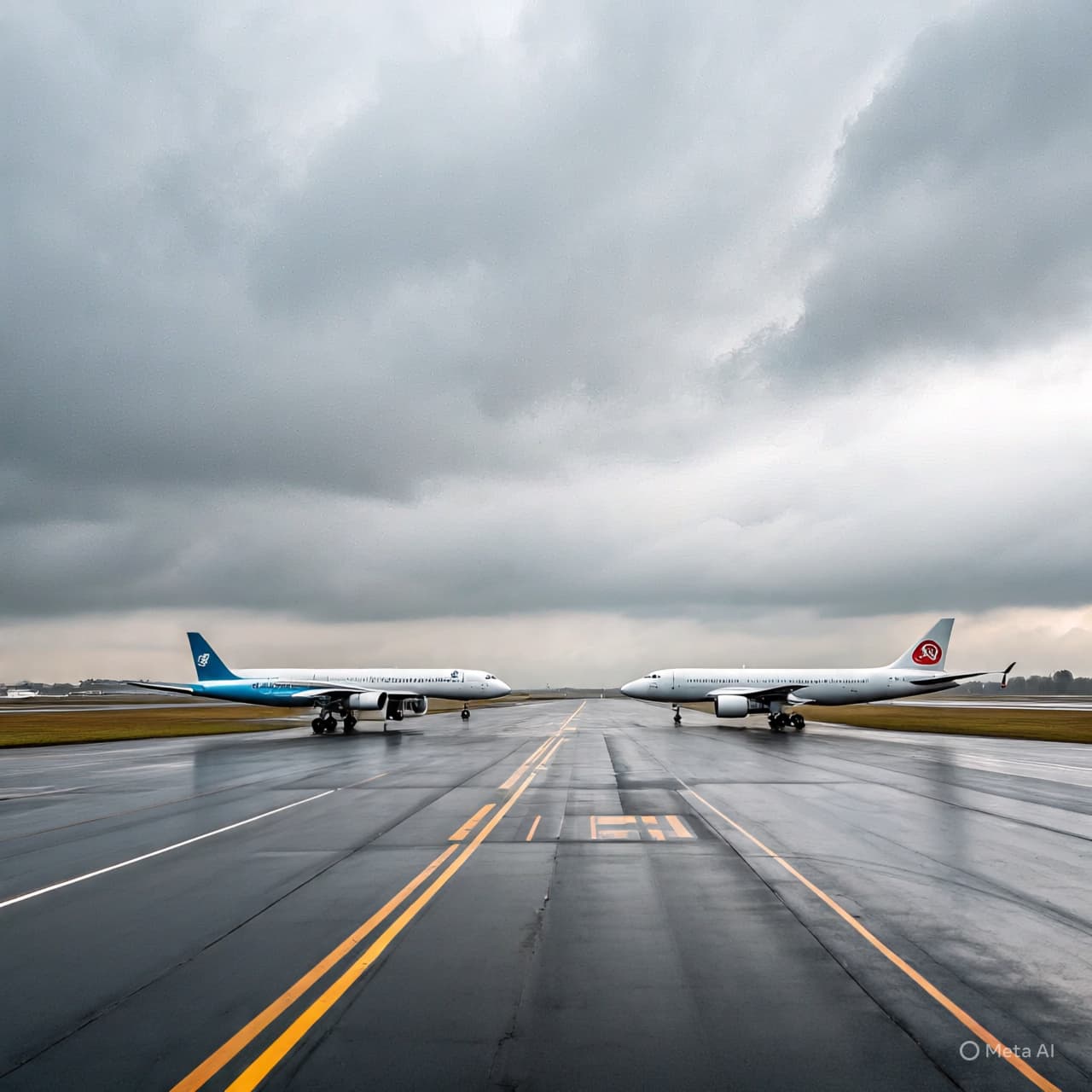
There is a peculiar tension when something as light and untethered as a balloon can halt steel birds from taking flight. Over the skies of Vilnius, reports of multiple balloons drifting toward the airport forced authorities to temporarily ground air traffic, leaving tarmacs silent and passengers waiting in hushed limbo. Then, just as dawn approached, the airport resumed operations, as if the sky had cleared itself of its quiet mystery.
The disruption began late Saturday evening. The airport’s operator announced that the airspace would be closed “due to a possible series of balloons heading toward Vilnius Airport,” affecting both arriving and departing flights. In the dark hours that followed, nearly thirty flights were canceled or diverted, and about 6,000 passengers felt the ripple of uncertainty.
By 4:50 a.m. local time Sunday, air traffic was restored, though lingering delays would follow because aircraft and crews had been displaced. ([Reuters][1]) The airport operator noted that schedules would take time to rebalance.
Officials said the National Crisis Management authority identified about 13 balloons heading toward the airport, though the origin, control, or intent of these objects remained unclear. Some notices described the objects as “hot air balloon flights.”
This episode is not isolated. Across Europe in recent weeks, drone and aerial incursions have triggered airport disruptions in cities like Copenhagen and Munich. ([Reuters][1]) Lithuania itself has already imposed a 90-kilometer no-fly zone along its border with Belarus to address drone threats.
For passengers stranded overnight, the disruption meant uncertainty: diverted flights, canceled departures, and in one instance, a flight from Copenhagen being sent back. In the aftermath, airport operations will need to recalibrate, and the broader question lingers: how to safeguard skies when threats come from above—silent, slow, unexpected.
Vilnius Airport in Lithuania reopened early Sunday after a suspension triggered by reports of balloons entering its airspace. The halt affected about 30 flights and 6,000 passengers, with diversions to neighboring countries and delays expected through the day. Authorities say 13 balloons were involved, but their origin remains unknown.
Source: Reuters
Published by Banx Network. This article is part of the Banx decentralized media programme, powered by the BXE token on the XRP Ledger.