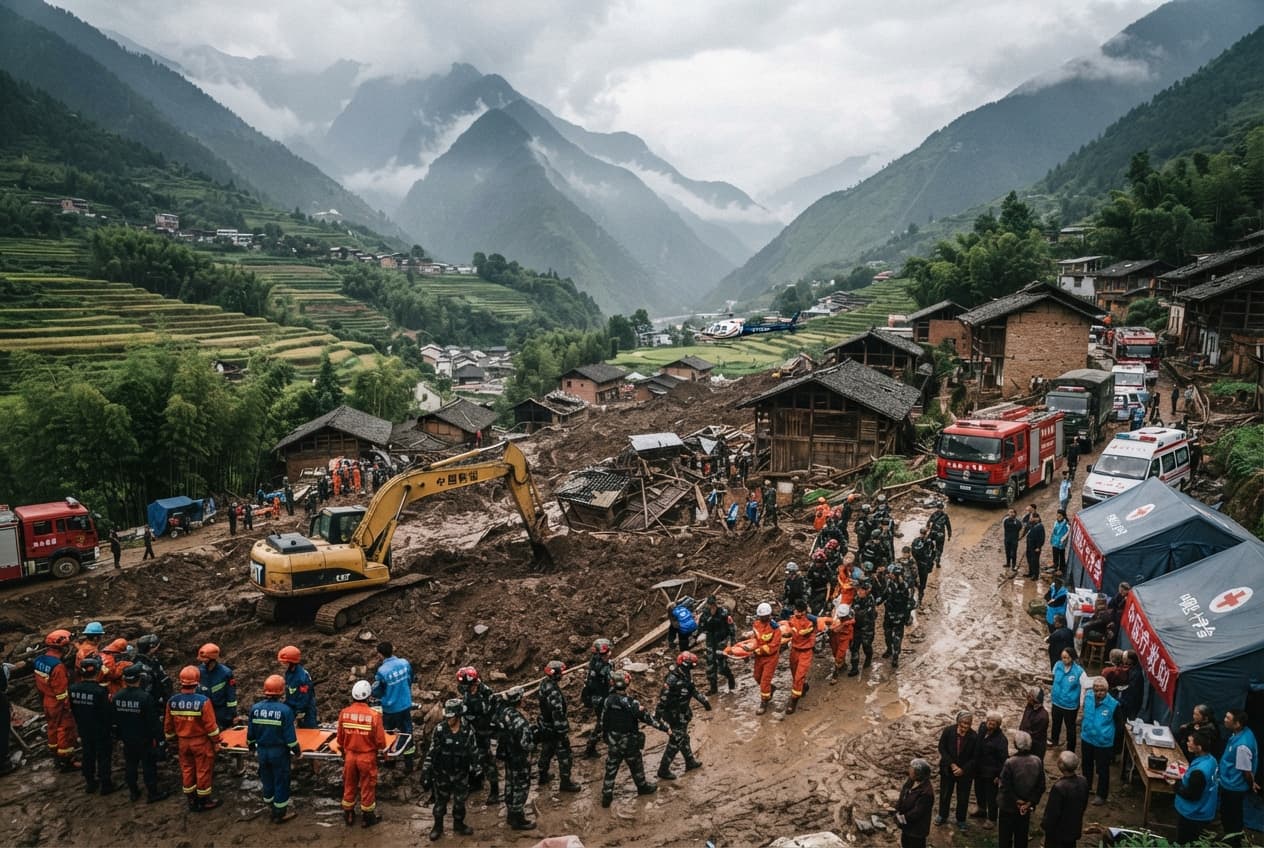
Chengdu, China—The mountain ridge gave way under the sheer weight of millions of tons of saturated soil. Hours of relentless cloudburst activity transformed dry gullies into raging torrents of mud and rock. A wall of debris smashed through the sleeping hamlet just before dawn, flattening several residential structures instantly. Villagers woke to the deafening roar of snapping timber and grinding boulders crashing down the slope. Power and communication lines severed simultaneously, isolating the valley from outside contact. Thick fog blanketed the disaster zone, hampering initial visual assessments from local authorities.
Provincial emergency command centers dispatched hundreds of armed police and professional rescue technicians to the remote gorge. Rescue dogs picked their way across unstable mounds of gray silt searching for buried survivors. Two villagers were pulled lifeless from the debris field by teams wielding heavy shovels and manual pry bars. Five others remained unaccounted for as daylight revealed the full scope of the devastation below the peak. Heavy engineering machinery could not reach the site immediately because access roads were entirely choked with mud.
Local officials established temporary relief camps at a nearby primary school located on higher ground. Surviving residents huddled under thermal blankets, staring blankly at bowls of hot rice handed out by volunteers. Medical workers administered tetanus shots and treated minor lacerations among the dazed evacuees. Provincial leaders faced mounting criticism regarding the lack of automated early-warning sensors in vulnerable high-altitude ravines. State media broadcast continuous updates urging downstream communities to remain vigilant against secondary geological shifts.
Helicopters dropped emergency food rations, bottled water, and satellite communication kits to the cut-off rescue teams. Engineers worked frantically to clear blocked culverts and stabilize threatening mud banks above the river channel. Rain continued to fall intermittently, turning the recovery zone into a treacherous swamp of thick red clay. Search operations slowed down significantly as night descended and temperatures dropped across the mountain pass. Families of the missing waited anxiously near the police perimeter line for any official updates.
The economic toll on local agriculture remains catastrophic, with terrace fields buried under meters of sterile rock debris. Officials warned that deforested slopes from previous commercial logging operations severely worsened the mudslide severity. Geological monitoring units will maintain round-the-clock surveillance on unstable upper sections throughout the coming week. The scars carved into the mountain ridge serve as a grim reminder of extreme weather vulnerabilities. Recovery efforts will resume at first light with additional heavy excavation units.
Published by Banx Network. This article is part of the Banx decentralized media programme, powered by the BXE token on the XRP Ledger.