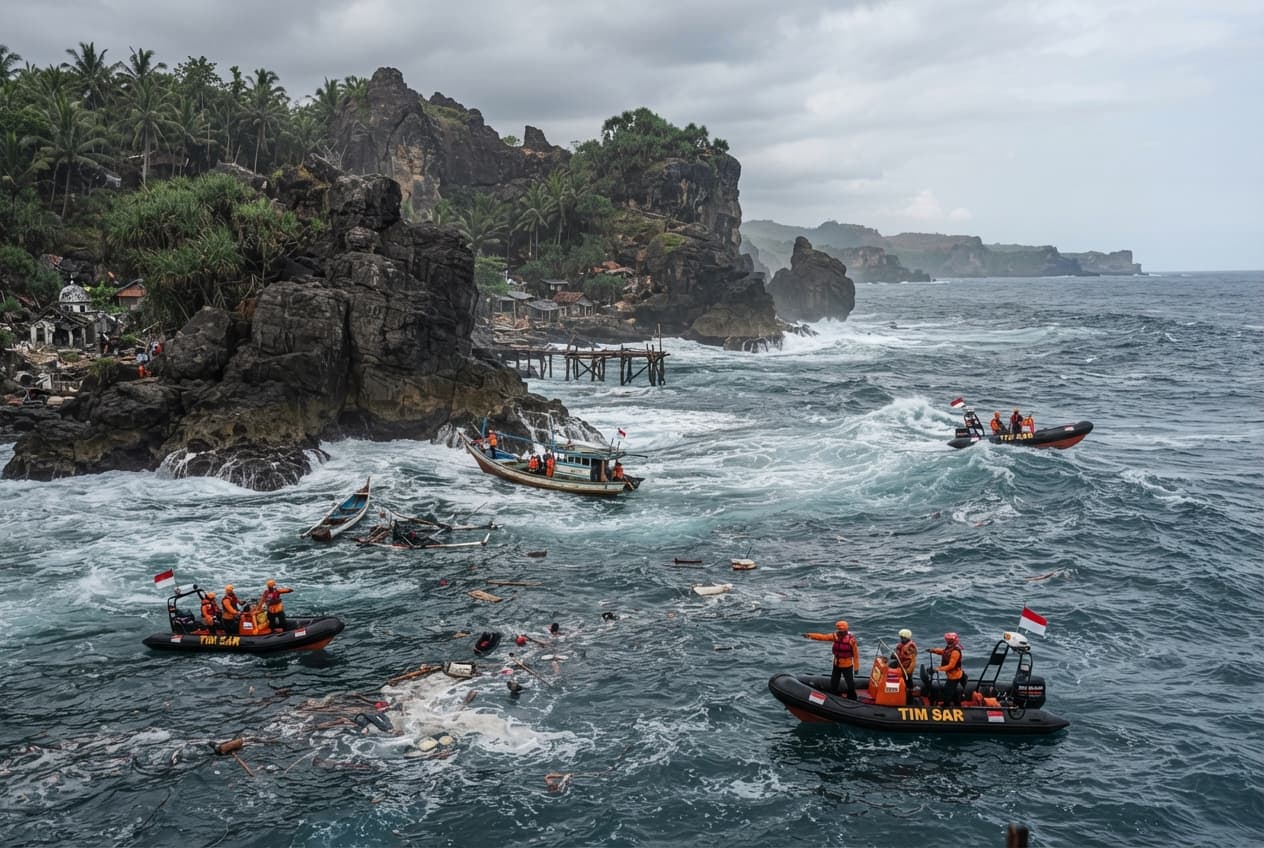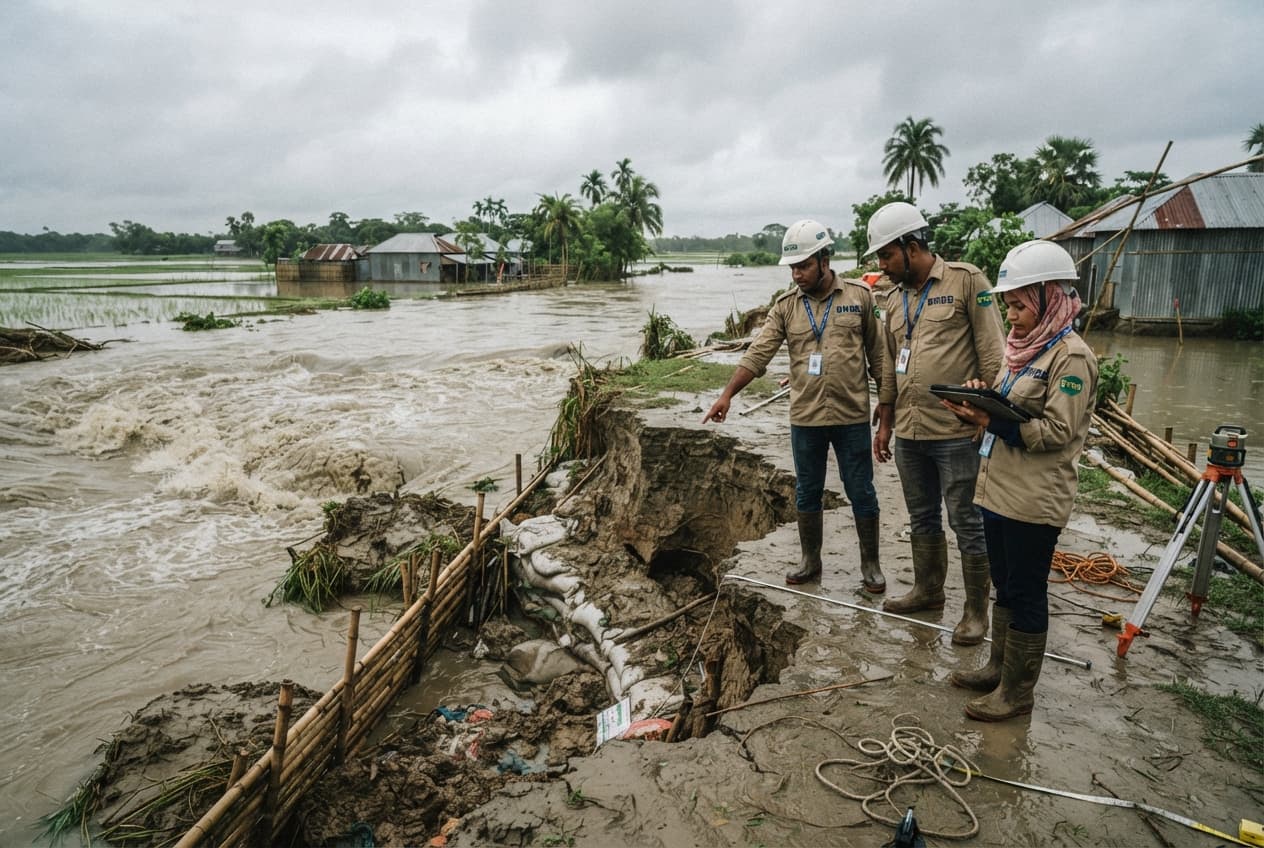
Sylhet, Bangladesh—The earthen barrier gave way with a thunderous roar shortly after midnight. Raging river water poured through a fifty-meter gash, swallowing adjacent paddy fields instantly. Mud-brick homes near the bank dissolved like sugar within minutes of the initial breach. Villagers woke to water surging across their sleeping platforms in total darkness. Families scrambled onto tin roofs, flashing mobile phone lights toward the distant highway. Local ferry operators rushed small wooden boats into the current to rescue stranded children.
Civil defense response units arrived at dawn with mechanized rescue skiffs and emergency food crates. One elderly resident was found lifeless, trapped inside a collapsed homestead submerged by the deluge. Hundreds of families remained marooned on elevated roadway embankments awaiting official evacuation assistance. Medical teams set up temporary vaccination booths to distribute water purification tablets against waterborne diseases. Local health officials expressed grave concern over potential cholera outbreaks among the displaced population.
Engineers inspected the collapsed dike section, identifying years of unchecked sand extraction as the root cause. Commercial dredging operations had hollowed out the structural integrity of the base earthen layers. Local farmers had submitted multiple petitions warning administrative offices about widening erosion cracks. Government ministers promised an immediate criminal investigation into corporate lease violations and contractor negligence. Temporary sandbag operations began upstream to stem the torrential inflow pouring toward other settlements.
Relief distribution faced severe bottlenecks as floodwaters washed out the only concrete bridge access route. Military helicopters dropped packages of dry rice, lentils, and potable water to isolated pockets of survivors. Displaced villagers constructed makeshift plastic tents along the highway shoulder using bamboo poles and tarps. Livestock owners hauled surviving cattle onto narrow patches of high ground, sharing meager fodder supplies. The economic foundation of the agrarian community lies completely ruined beneath the silt.
Floodwaters continue pressing outward against secondary improvised dikes built by desperate residents. Regional authorities struggle to coordinate shelter logistics for thousands of newly homeless individuals. The river remains dangerously swollen, fed by relentless upstream rainfall cascading across the border. Repair crews wait on standby for water levels to drop before driving steel sheet piles. The rural landscape resembles a vast, muddy inland sea under the oppressive autumn humidity.
Published by Banx Network. This article is part of the Banx decentralized media programme, powered by the BXE token on the XRP Ledger.