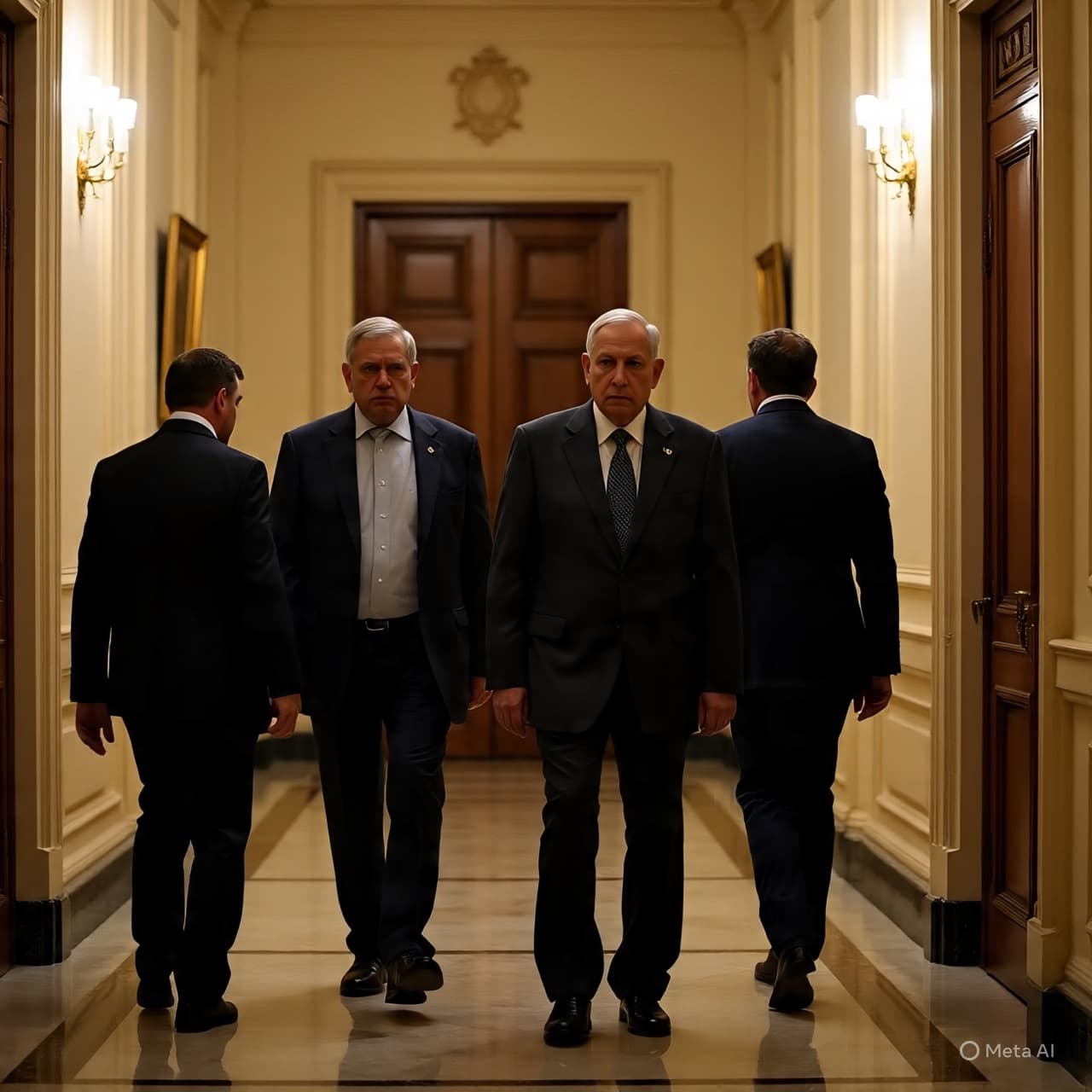
The early light in Washington spills across the city’s streets, brushing the facades of government buildings with a quiet urgency. Inside, negotiators and aides move through halls lined with history, aware that a single meeting could ripple far beyond these corridors. The anticipated encounter between Israeli Prime Minister Benjamin Netanyahu and former U.S. President Donald Trump has been moved forward to Wednesday, a subtle yet telling signal of the high stakes and fragile timing.
The rescheduling reflects more than calendar conflicts; it mirrors the anxiety of diplomats and analysts who fear that Trump may be reconsidering previously stated “red lines” in ongoing negotiations. For Netanyahu, whose political future is intertwined with international diplomacy and domestic perception, the meeting represents both opportunity and peril. Every gesture, every carefully measured word, carries the weight of decades of alliances and regional tensions.
Observers note that the accelerating pace of discussions underscores the complexity of current Middle East dynamics. Netanyahu seeks reassurance of unwavering support from Washington, while Trump, navigating his own political calculus, weighs the optics of endorsement against the fluid realities of policy. The corridor outside the Oval Office has become a metaphor for the precarious balance between personal influence and institutional responsibility, where timing can shape outcomes as decisively as strategy.
Amid the shuffle of schedules and guarded statements, the world watches. Beyond the windows of the negotiation rooms, ordinary citizens remain acutely aware that such high-level meetings often set the tone for conflict resolution, aid flows, and broader regional stability. The Wednesday encounter promises clarity—or at least a momentary alignment—but the shadows of doubt linger, reminding all that even carefully constructed red lines can shift under pressure.
AI Image Disclaimer
“Visuals are AI-generated and serve as conceptual representations.”
Sources
Associated Press Reuters The Guardian
Published by Banx Network. This article is part of the Banx decentralized media programme, powered by the BXE token on the XRP Ledger.

.jpg&w=3840&q=75 "Same-Sex Couple Sue Slovakia Over Refusal to Register Their Marriage")