Glaciers are often perceived as static monuments of ice, slow-moving and eternal. Yet, they are dynamic entities, capable of sudden and dramatic change. Recently, a glacier collapse unleashed a spectacular surge of blue ice, a vivid reminder of the power and fragility of these frozen giants. The event, captured in stunning detail, offers both awe and concern, illustrating the rapid transformations occurring in our polar regions. It is a moment where beauty and urgency intersect, demanding our attention and reflection.
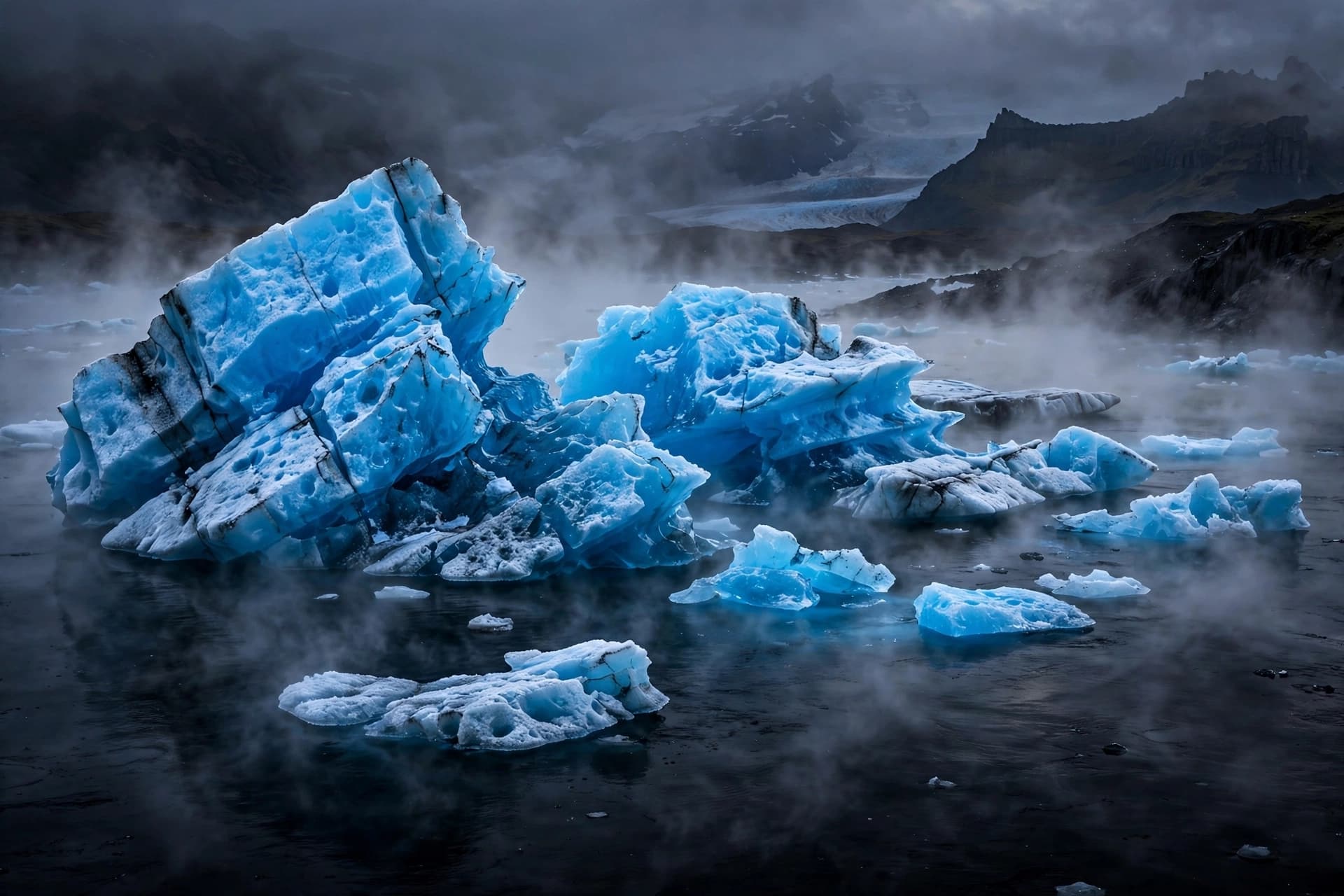
The collapse occurred when a large section of the glacier calved, breaking away from the main body and crashing into the water below. The resulting surge of ice fragments created a mesmerizing display of deep blue hues, a color caused by the dense compression of ice that absorbs longer wavelengths of light. This phenomenon, while visually striking, is a sign of structural instability driven by warming temperatures and changing environmental conditions.
Such events are becoming more frequent as global temperatures rise. Glaciers are losing mass at an accelerated rate, leading to increased calving and surging. The blue ice surge serves as a visible indicator of this loss, transforming solid ice into floating debris. For scientists, these collapses provide valuable data on glacier dynamics, helping to refine models of sea-level rise and ice sheet behavior.
The impact of such collapses extends beyond the immediate location. The influx of fresh water and ice into the ocean can affect local marine ecosystems, altering salinity and temperature gradients. Additionally, the sudden release of energy can generate waves that impact coastal areas. Understanding these processes is crucial for predicting future changes and mitigating risks to communities living near glacial regions.
For observers, the sight of the blue ice surge is a powerful emotional experience. It evokes a sense of wonder at the natural world’s beauty, mixed with sadness for its decline. This duality is central to the current climate conversation, where aesthetic appreciation often drives awareness and action. The image of the surging ice becomes a symbol of what is at stake, motivating efforts to protect these fragile environments.
Research teams are using drones and satellite imagery to monitor these events in real-time. This technology allows for safe observation of dangerous zones and provides high-resolution data on ice movement. By tracking the frequency and scale of collapses, scientists can better understand the triggers behind them, such as meltwater lubrication or ocean undercutting. This knowledge is essential for developing effective conservation strategies.
The story of the glacier is also a story of time. Ice that formed thousands of years ago is now melting in moments, releasing trapped air and history into the atmosphere. Each collapse is a loss of archival record, a chapter of Earth’s climate history disappearing forever. Preserving what remains requires urgent global cooperation and commitment to reducing greenhouse gas emissions.
The dramatic glacier collapse and subsequent blue ice surge are a stark reminder of the changing cryosphere. While visually magnificent, the event underscores the urgent need for climate action. As we witness these transformations, we are called to protect the icy wonders of our planet before they vanish entirely.
AI Image Disclaimer: The images accompanying this article are AI-generated artistic interpretations of glacial calving and ice surges, not actual photographs of the specific event.
Sources: National Geographic The Guardian Climate Glaciology Today
Published by Banx Network. This article is part of the Banx decentralized media programme, powered by the BXE token on the XRP Ledger.