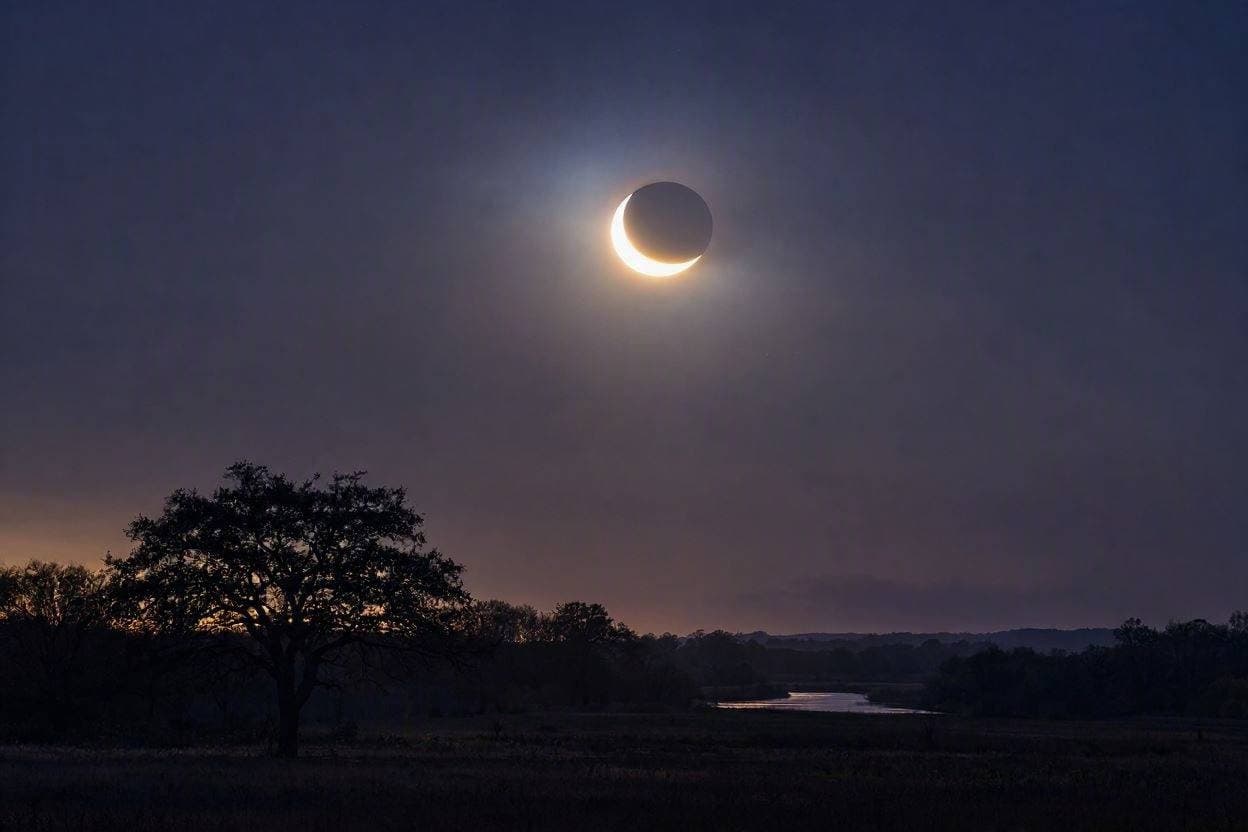
The sky has always been a theater of celestial drama, where the moon and sun engage in an ancient dance that occasionally results in a perfect alignment. On August 12, 2026, this dance will take center stage for parts of North America, though not in the way many might expect. While the path of totality—the narrow band where the sun is completely obscured—will sweep across Greenland, Iceland, and northern Spain, a significant partial eclipse will be visible across much of Canada and the northeastern United States. It is a reminder that even when we are not in the center of the action, we are still part of a grand, shared cosmic event. The sky does not discriminate; it offers its wonders to all who look up, albeit from different angles.
For viewers in the northern U.S. and Canada, the experience will be one of a deepening twilight as the moon takes a substantial bite out of the sun. In places like Alaska, Maine, and parts of the Midwest, the coverage could be significant, creating an eerie, silver-lined atmosphere. The light will change quality, becoming softer and more diffuse, casting strange shadows on the ground. This partial phase is a powerful experience in its own right, offering a tangible connection to the mechanics of our solar system. It invites observers to pause and witness the precision of orbital motion.
Timing is crucial for those hoping to catch a glimpse. The eclipse will occur in the late afternoon or early evening for most North American viewers, depending on their specific location. In the Northeast, the sun may be setting as the maximum coverage occurs, adding a dramatic backdrop to the event. Checking local astronomical charts is essential to know exactly when the peak moment will happen in your area. Missing the peak by even a few minutes can mean missing the most striking visual effects.
Safety remains the paramount concern during any solar event. Looking directly at the sun, even when partially covered, can cause permanent eye damage. Specialized eclipse glasses or indirect viewing methods, such as pinhole projectors, are necessary to observe the phenomenon safely. Standard sunglasses are not sufficient protection. This caution ensures that the wonder of the event is not marred by injury, allowing everyone to enjoy the spectacle with peace of mind.
The cultural significance of eclipses cannot be overstated. Throughout history, they have been seen as omens, miracles, or moments of divine intervention. Today, they serve as opportunities for scientific education and community gathering. Schools, parks, and observatories often host viewing parties, fostering a sense of shared curiosity. These events bring people together, bridging generational and cultural divides through a common awe of the universe.
For those unable to travel to the path of totality in Europe, the partial view in North America is still a worthy pursuit. It serves as a prelude to future total eclipses that will cross the continent, reminding us that patience and observation are rewarded. The sky is always changing, and each event is unique. Capturing this moment, whether through photography or memory, adds to our personal collection of celestial experiences.
The August 12 solar eclipse offers a spectacular view for parts of North America, particularly in the north and east. While it may not be total, the partial eclipse is a significant astronomical event worth observing. With proper safety precautions and timing, viewers can enjoy a memorable glimpse into the workings of our solar system.
AI Image Disclaimer: The visual elements accompanying this report are AI-generated interpretations designed to reflect the astronomical and atmospheric context of the story.
Sources: NASA National Solar Observatory Timeanddate.com
Published by Banx Network. This article is part of the Banx decentralized media programme, powered by the BXE token on the XRP Ledger.