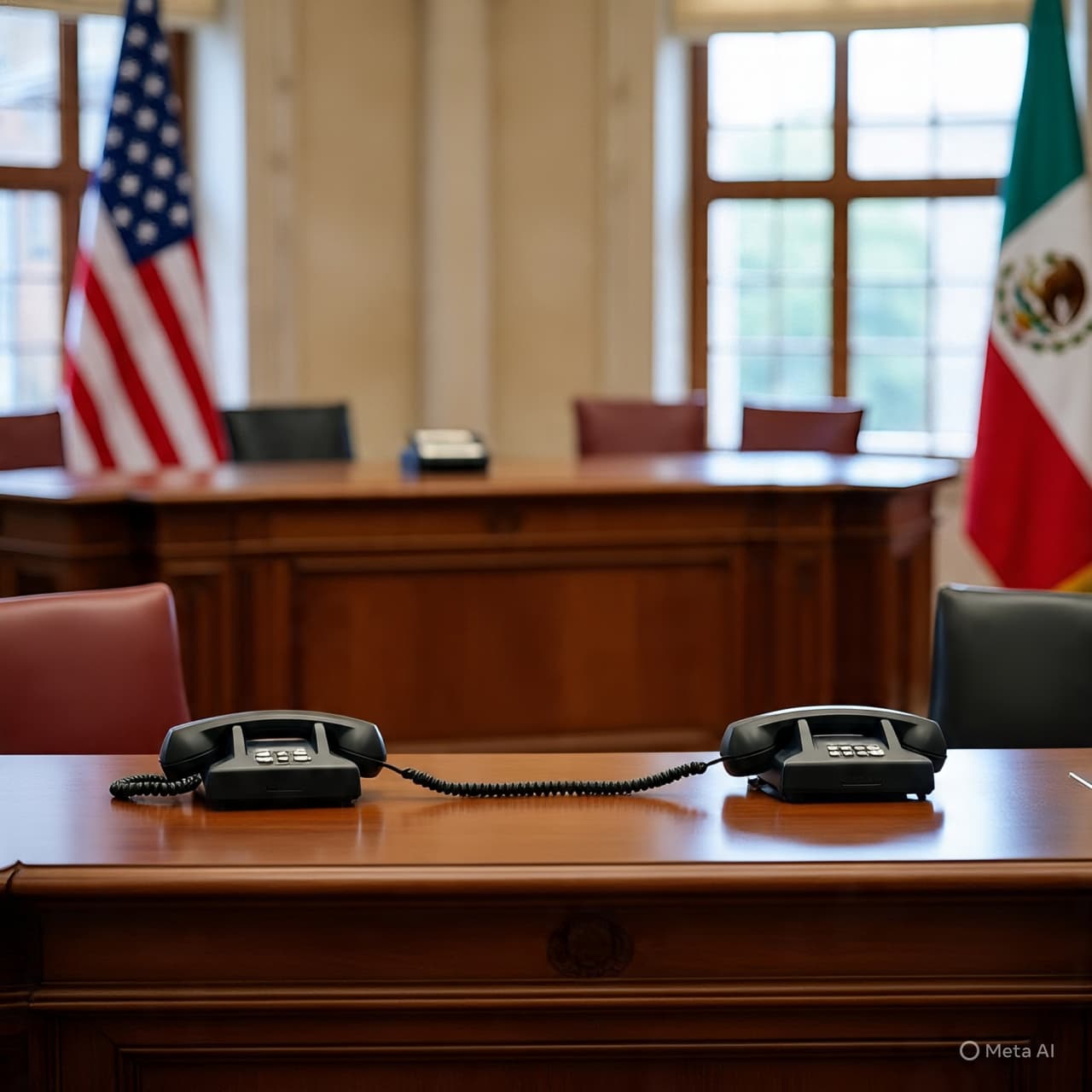
On a brisk January morning, as winter sunlight gilded the Washington skyline, two diplomats found themselves on a quiet yet consequential phone line stretching southward across a shared border. U.S. Secretary of State Marco Rubio and Mexico’s Foreign Secretary Juan Ramón de la Fuente spoke by telephone this past Sunday — not about ceremony or cut‑and‑dry protocol, but about a challenge that has shadowed both nations for decades: the power and reach of violent criminal networks that span hillsides, highways, and neighborhoods from Mexico into the United States. In the soft rhythm of diplomatic language, they sought a thread of cooperation in a landscape marked by urgency and tension.
Officials from both capitals characterized the conversation as frank and purposeful. Rubio emphasized the need for “stronger cooperation to dismantle Mexico’s violent narcoterrorists networks and stop the trafficking of fentanyl and weapons,” according to an official statement. He reiterated the United States’ commitment to fighting narcoterrorism and pressed for tangible results that could protect communities on both sides of the border and throughout the hemisphere. Meanwhile, de la Fuente spoke from Mexico City under the directive of President Claudia Sheinbaum, who had instructed her foreign minister to engage with Rubio’s office following controversial comments by U.S. leadership about cartels and potential military action.
The backdrop to this diplomatic exchange is a region in flux. President Donald Trump’s recent remarks suggesting that the United States might “start hitting land” to strike at cartels stirred concerns in Mexico about sovereignty and cross‑border military involvement, prompting calls from Mexican leaders for concerted joint efforts instead of unilateral action. In that climate, the phone call took on a deeper resonance: it was not merely an exchange of talking points, but a gesture toward shared responsibility in confronting a shared threat.
Rubio and de la Fuente’s dialogue touched on the ongoing Border Security and Law Enforcement Cooperation Program — a framework designed to coordinate efforts against smuggling, organized crime and illegal weapons flows. Mexico’s Foreign Ministry stressed that collaboration under this program must adhere to “respect for sovereignty and territorial integrity, shared responsibility, mutual trust, and collaboration without subordination.” In other words, while the two governments seek to deepen coordination, both insist that Mexico’s autonomy remains paramount.
For advocates, analysts, and everyday citizens watching from afar, the call underscored how diplomacy often unfolds in the space between firm words and quieter agreements. Mexico and the United States share more than a border; they share rivers of commerce, culture, and concern for public safety. Drug trafficking, fentanyl production, and the arms that accompany these illicit trades have contributed to crises of addiction and violence that ripple across communities large and small. The conversation between Rubio and de la Fuente was, in that sense, both practical and symbolic — a reminder that bilateral challenges demand bilateral responses.
Even as the call concluded, the work remains ahead. Building cooperation against entrenched criminal networks requires not only diplomatic language and occasional phone calls, but sustained meetings, data exchange, coordinated enforcement, and, perhaps most importantly, trust. In the delicate choreography of global affairs, moments such as this reveal how nations strive — sometimes quietly, sometimes under pressure — to forge pathways toward security and stability, even when the terrain is fraught and the stakes are high.
AI Image Disclaimer Visuals are created with AI tools and are not real photographs; they serve for conceptual depiction only.
Sources Washington Examiner Reuters (coverage on Mexico–U.S. security dialogue) El Heraldo de México Your News Sputnik Mundo
Published by Banx Network. This article is part of the Banx decentralized media programme, powered by the BXE token on the XRP Ledger.