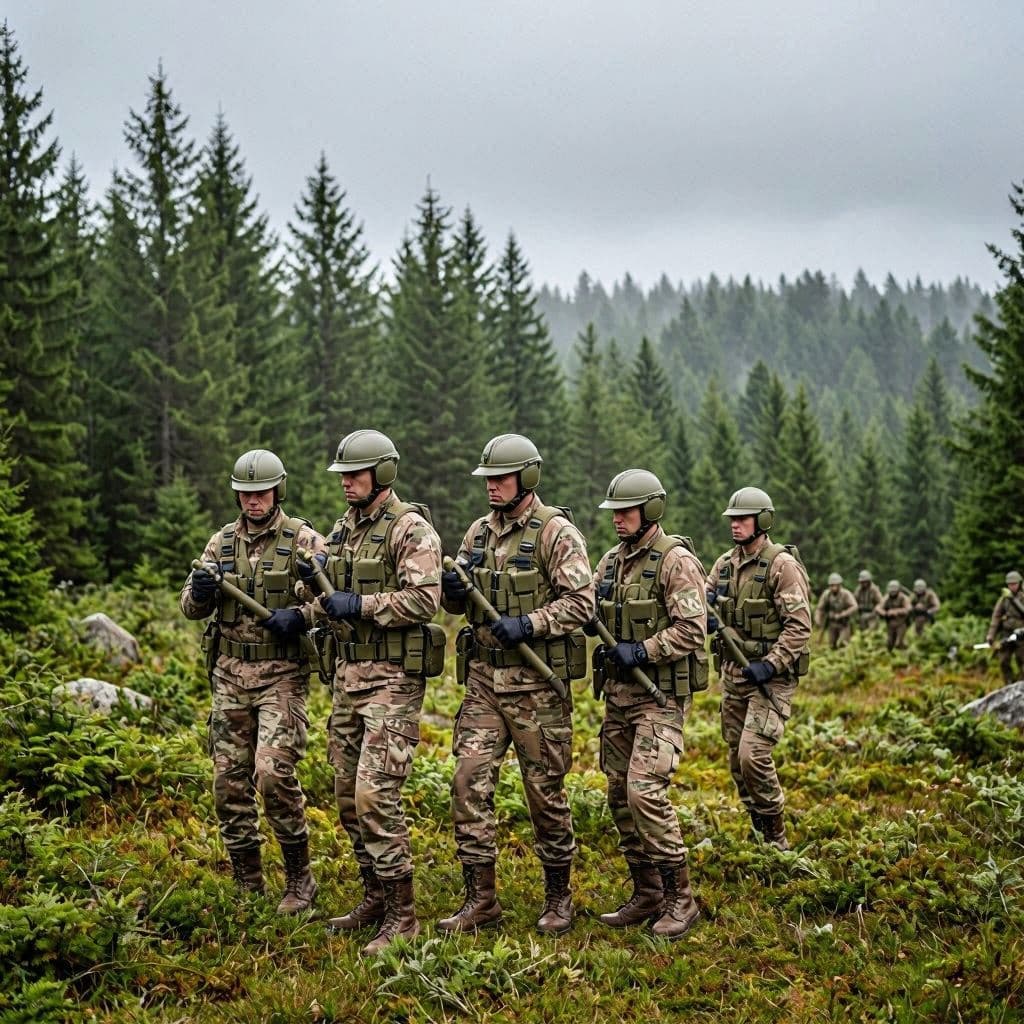
The eastern flank of Europe has long been a region where history’s echoes resonate with particular clarity, a place where the shadows of past conflicts often inform present-day vigilance. Recently, leaders from the Baltic states and Poland have issued a sobering warning: Russia may be preparing a limited military or hybrid provocation against NATO members. This alert is not a call for panic, but a plea for heightened awareness and unity. It invites reflection on the delicate balance of deterrence, the evolving nature of modern warfare, and the enduring importance of collective security in preserving peace.
Body: The warning stems from intelligence assessments suggesting that Moscow may seek to test the resolve of the Western alliance through calibrated actions. These could range from cyberattacks on critical infrastructure to minor border incursions or disinformation campaigns designed to sow discord. Unlike full-scale invasion, such hybrid tactics aim to exploit gray zones in international law, challenging NATO’s response mechanisms without triggering an immediate Article 5 invocation. It is a strategy of ambiguity, intended to confuse and divide.
For Poland and the Baltic nations of Estonia, Latvia, and Lithuania, the threat feels immediate and personal. Having experienced occupation and suppression in the twentieth century, these countries view any Russian aggression as an existential risk. Their governments have invested heavily in defense modernization and host significant NATO troop deployments. Yet, they remain acutely aware that their security depends not just on tanks and jets, but on the political cohesion of the alliance.
NATO’s response has been one of steady reinforcement. Secretary General Jens Stoltenberg and other allies have reaffirmed their commitment to defend every inch of territory. Military exercises have increased in frequency and scale, demonstrating readiness and interoperability. This visible presence serves as a deterrent, signaling that any provocation will be met with a unified and robust response. It is a message of strength through solidarity.
However, the nature of hybrid warfare makes detection and attribution difficult. Cyber operations can be launched anonymously, and disinformation spreads rapidly through social media channels. Distinguishing between criminal activity, state-sponsored hacking, and genuine technical failures requires sophisticated intelligence sharing. Allies are working to improve their cyber defenses and public resilience against misinformation. It is a battle for truth as much as for territory.
The economic implications are also significant. Energy supplies, trade routes, and financial systems are potential targets for disruption. Ensuring the stability of these sectors requires cooperation beyond the military sphere. Governments are diversifying energy sources and strengthening supply chains to reduce vulnerability. Economic resilience is now recognized as a key component of national security.
Public sentiment in the region remains resilient but anxious. Citizens participate in civil defense training and support initiatives to strengthen community bonds. This grassroots preparedness complements official efforts, creating a society that is harder to destabilize. The spirit of resistance is rooted in a deep desire for freedom and self-determination. It is a powerful force that adversaries often underestimate.
Diplomatic channels remain open, even amidst tensions. Dialogue, however strained, is essential for preventing miscalculations. Leaders continue to communicate their red lines clearly, hoping to avoid unintended escalation. The goal is to maintain stability while upholding principles of sovereignty and international law. It is a difficult path, but one that must be navigated with care.
Closing: In the end, the warnings from the Baltics and Poland serve as a reminder of the fragility of peace. They highlight the need for constant vigilance and unwavering unity within NATO. As we face these challenges, the hope is that deterrence will hold, and diplomacy will prevail, ensuring security for all nations in the region.
AI Image Disclaimer: Please note that any accompanying visuals for this narrative are artificially generated interpretations meant to evoke the spirit of the story, not documentary evidence.
Sources: The Guardian Reuters The Telegraph
Published by Banx Network. This article is part of the Banx decentralized media programme, powered by the BXE token on the XRP Ledger.