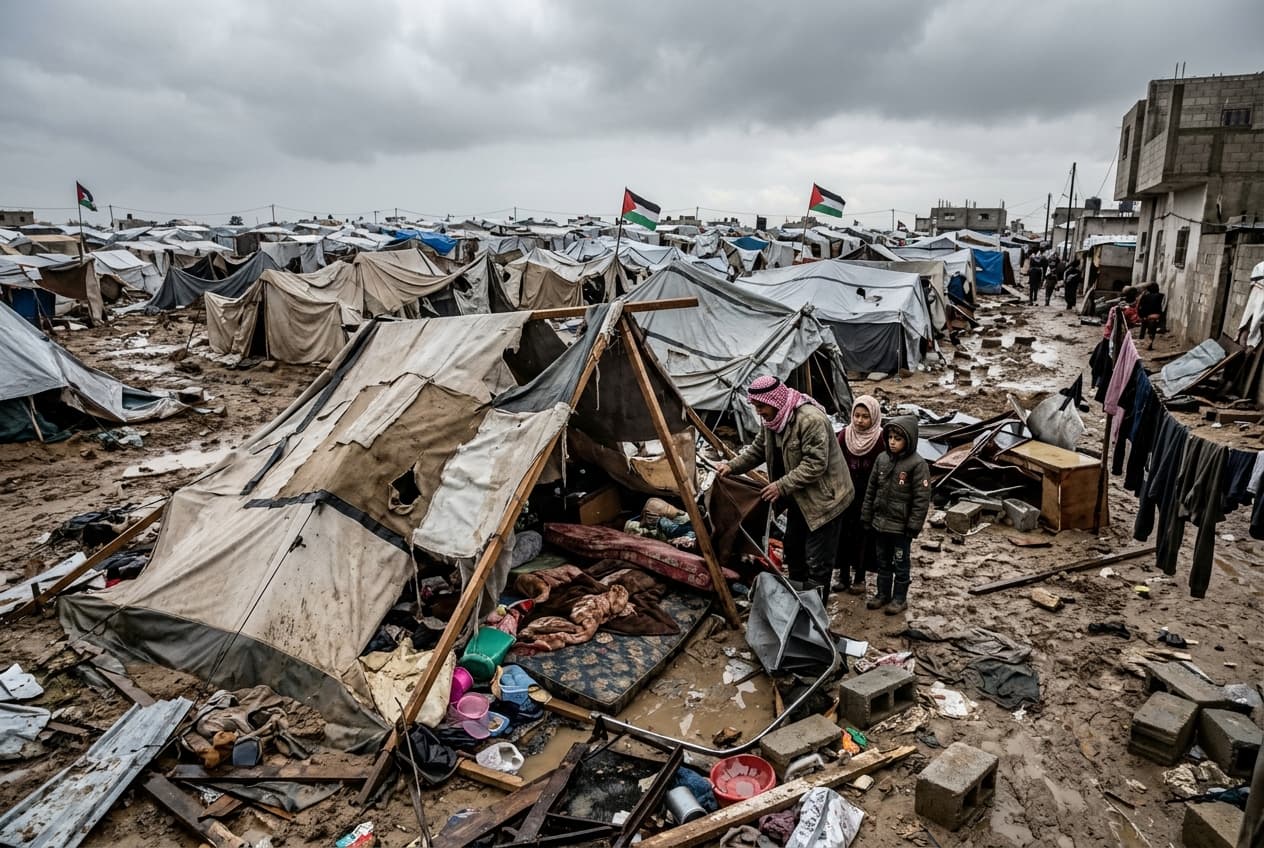
Gaza City, Palestine— Rain flooded the tents and shells kept falling. Displacement camps across Gaza were hit Tuesday by severe weather and ongoing military shelling. Thousands already living with almost nothing lost what little shelter they had.
The storm moved in overnight. Heavy rain and strong winds tore through makeshift camps in Rafah, Khan Younis and Deir al-Balah. Plastic sheets ripped. Mud rose ankle-deep. Families tried to hold poles upright. Children stood in water.
Local medical services said several people were injured when tents collapsed and when shrapnel hit near a camp edge. One clinic reported treating cold exposure and respiratory cases alongside blast injuries. Doctors said they have no dry beds. Fuel for generators is low.
The Palestine Chronicle reported shelling continued in areas close to the camps despite the weather. Artillery fire was heard near the eastern border. Residents said they could not move to safer ground because roads are flooded and blocked by debris. Drones were heard overhead.
"We woke up to water inside the tent and the sound of shelling," a displaced mother of four in Khan Younis said by phone. "There is nowhere dry. We put the children on crates. We have no blankets left."
Aid groups said the situation is collapsing. The ground is saturated. Latrines overflowed. Food distribution was delayed because trucks could not pass. The UN relief agency said more than 1.7 million people remain displaced. Most live in tents or damaged buildings.
Hospitals are stretched. Shifa and Nasser hospitals said they received injured from both the storm and the shelling. Staff said they are working with limited medicine and intermittent power. One doctor said wound infections are rising because patients lie on wet ground.
Weather forecasts show more rain this week. Humanitarian agencies said they need tarpaulins, thermal blankets and drainage equipment urgently. Access remains restricted. Shelling makes repairs dangerous.
By nightfall Tuesday, water was still rising in low camps. Families burned plastic to stay warm.
Published by Banx Network. This article is part of the Banx decentralized media programme, powered by the BXE token on the XRP Ledger.