Deir Ezzor, Syria— Flash floods tore through eastern Syria on November 1, 2026, killing seven people and leaving four missing after heavy rains turned dry wadis into fast-moving torrents.
The rain started overnight. In Deir Ezzor and Hasakah provinces, water rose in less than an hour. Houses built of mud brick collapsed. Cars were pushed off roads. Local councils said several small bridges were washed away, cutting off villages that already have limited access to aid.
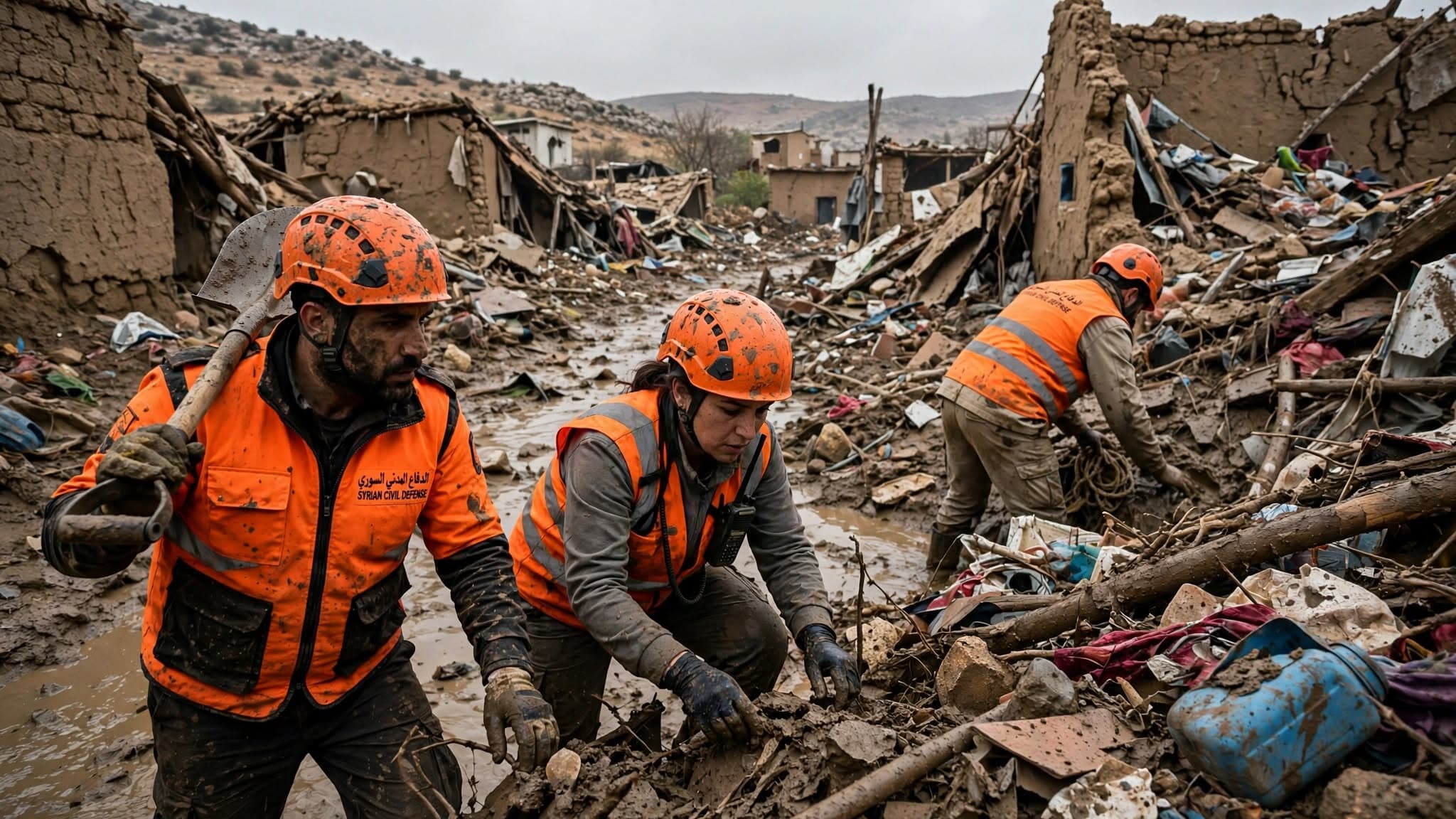
Civil defense volunteers reached the worst-hit areas at dawn. They found bodies caught in debris downstream. Four people, including two children, are still missing. Search teams use shovels and bare hands. Machinery cannot get through the mud.
"We pulled three bodies from one house. The water came while they were sleeping. No warning," a local rescue coordinator said near the Euphrates riverbank. He said water levels reached two meters inside some homes.
Eastern Syria has little flood protection. Years of conflict damaged drainage systems and dams. Deforestation along riverbanks made the ground unstable. When rain hits hard, water has nowhere to go.
The Syrian Red Crescent dispatched teams with blankets and drinking water. The United Nations humanitarian office said it is assessing needs but access remains difficult. Several roads remain blocked by silt and rock.
Families are sheltering in schools and mosques. Power is out in parts of Deir Ezzor city. The local hospital reported injuries from collapsed walls. Doctors said they are low on antibiotics and tetanus shots.
Weather forecasters warned of more showers over the next 24 hours. Authorities told residents near riverbeds to move to higher ground. Local leaders asked for pumps and fuel to clear water.
The search for the four missing continued late Saturday. Officials expect the death toll to rise as more areas become reachable.
Published by Banx Network. This article is part of the Banx decentralized media programme, powered by the BXE token on the XRP Ledger.