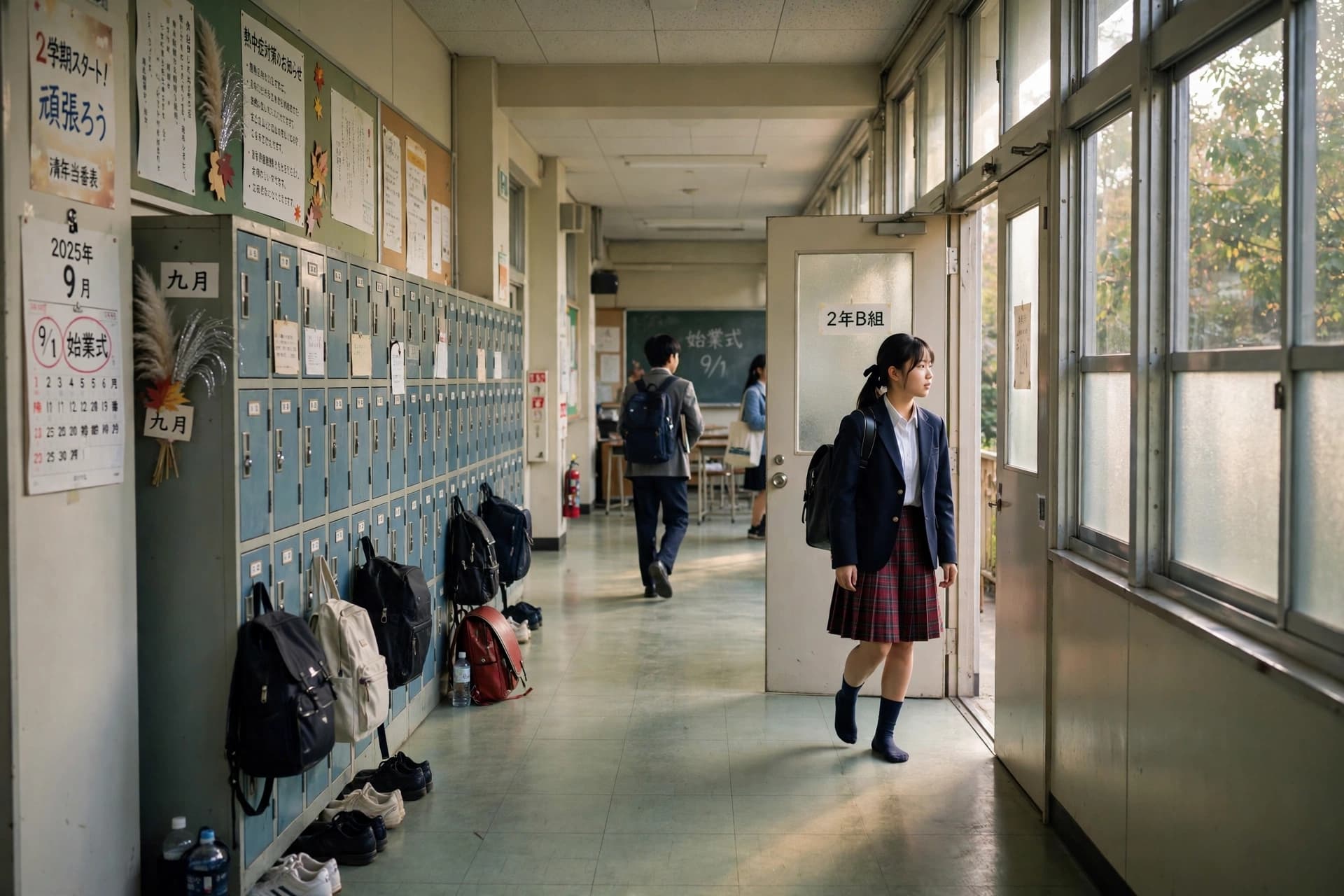
September has long carried a particular rhythm in Japan. Summer holidays end, classrooms become busy again and students return to schedules shaped by lessons, examinations and expectations. But for some young people, the transition back to school can also coincide with periods of profound emotional difficulty, prompting renewed attention to student suicide.
A September 23 report by The Japan Times examined the pattern and the circumstances that can surround it. The article noted that the increase among young people is especially concerning at a time when suicide rates among adults have been declining.
The reasons behind individual cases are never simple. School-related pressure can exist alongside family difficulties, isolation, financial circumstances, bullying, academic expectations or other personal experiences. Treating any single factor as a universal explanation risks overlooking the different realities faced by individual students.
The story of Eri Mametsuka, described in the Japan Times report, illustrates how difficulties can accumulate over time. She experienced poverty, isolation and emotional abuse during childhood before facing serious mental health struggles as a teenager. Her experience is presented as one personal account rather than an explanation for the broader national pattern.
For schools, September therefore represents more than the return of a timetable. Teachers and counselors may find themselves watching for changes in attendance, behavior or social interaction while trying to create environments where students feel able to ask for help.
Japan has also developed suicide-prevention measures and support services, but the effectiveness of any system depends partly on whether young people know where to turn and whether they feel comfortable using those channels. A support system can exist on paper while remaining difficult to reach emotionally for someone who is already isolated.
The September pattern also raises a broader question about how schools measure well-being. Academic performance is visible through grades and examinations, while emotional distress can remain hidden behind ordinary routines. A student who appears quiet, tired or distracted may be experiencing circumstances that classmates and adults cannot immediately see.
For families, the beginning of the school term can similarly become a period of adjustment. Changes in sleeping patterns, expectations and daily structure can place additional pressure on young people who may already be struggling. Open communication and access to professional support can become important parts of navigating that transition.
The discussion does not suggest that September itself causes suicide. Rather, the timing has encouraged researchers, educators and communities to examine what happens around the return to school and why some young people may become especially vulnerable during that period.
As classrooms fill again across Japan, the conversation surrounding student well-being remains closely connected to the quieter parts of school life: whether someone feels heard, whether support is accessible and whether distress can be recognized before it becomes an emergency. Those questions remain important long after the first school bell of September.
Image Disclaimer: These illustrations are AI-generated representations for contextual purposes only. They do not depict actual students, victims or specific incidents.
Sources: The Japan Times Japan suicide-prevention authorities Japanese education authorities
Published by Banx Network. This article is part of the Banx decentralized media programme, powered by the BXE token on the XRP Ledger.