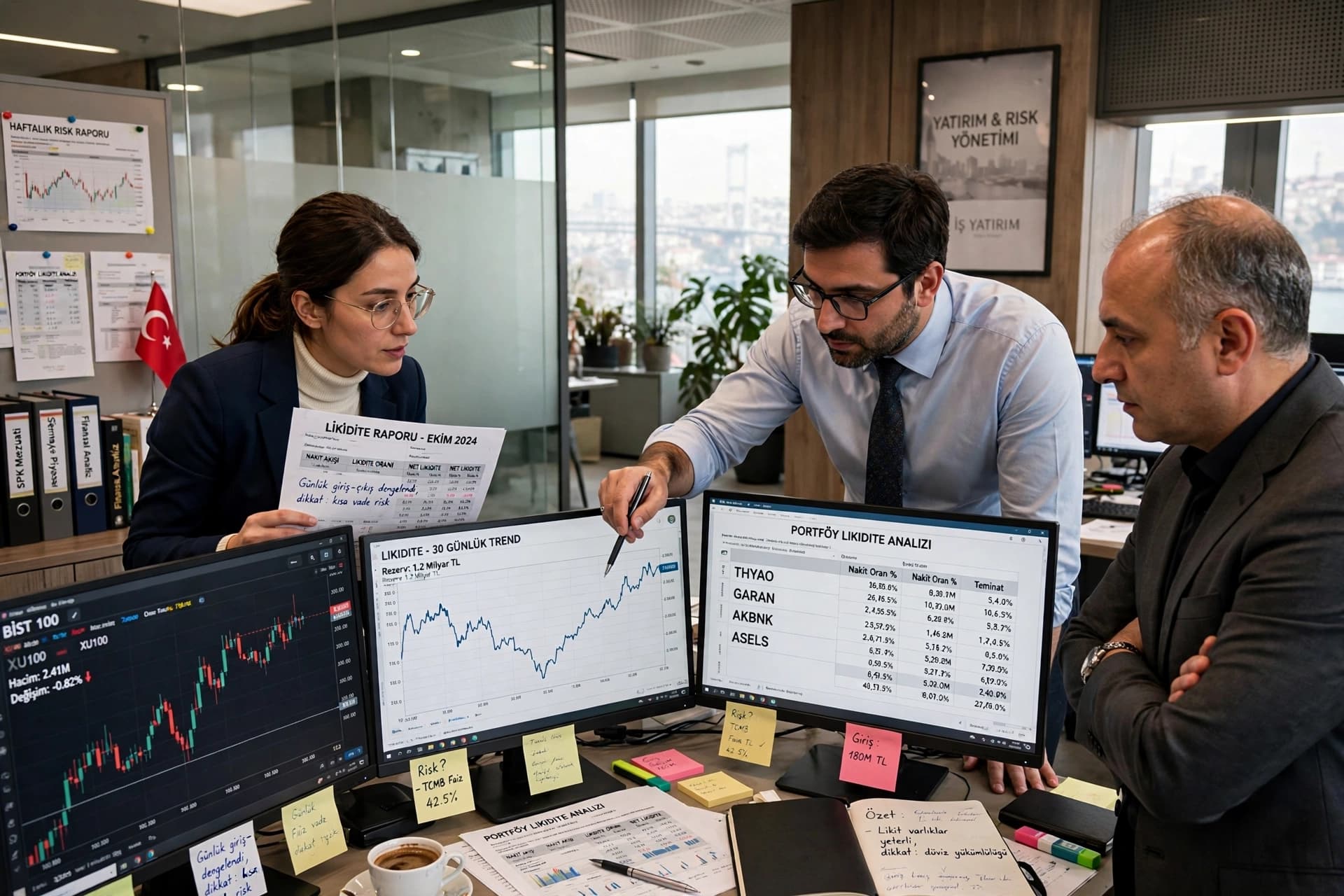
Turkey’s equity market is receiving renewed scrutiny after a sharp selloff exposed pressure inside investment funds and raised questions about liquidity. The BIST-100 index fell more than 8% during the week before regulators intervened, making the episode one of the market’s most significant recent disruptions.
The immediate problem emerged when some investment funds struggled to meet redemption requests. Several funds held significant positions in relatively illiquid stocks, meaning that raising large amounts of cash quickly became difficult when investors sought to withdraw money.
As managers attempted to generate liquidity, they sold more easily traded shares. That created additional pressure on the wider market and helped accelerate the decline in major indexes.
The episode has highlighted the importance of free-float levels and trading volumes in Turkey’s equity market. A relatively small group of large companies accounts for a significant portion of the most active trading, while some smaller companies can have much lower liquidity.
Regulators responded with several measures. The Capital Markets Board ordered the liquidation of 131 investment funds, while authorities also introduced measures intended to support market liquidity and adjust trading conditions. Reuters reported that the funds involved represented more than $18 billion in assets and affected hundreds of thousands of investors.
Borsa Istanbul also announced a major reshuffle of its BIST-100 index. More than a quarter of the companies in the benchmark were scheduled to be removed, with new criteria related to stock volatility, equity size and market classification introduced for companies seeking inclusion in major indexes.
The changes illustrate how market structure can influence what investors experience during periods of stress. When assets are easy to trade, large transactions can generally be absorbed more efficiently. When trading is concentrated or limited, attempts to sell quickly can have a much larger effect on prices.
International index providers have also been monitoring Turkey’s market. Reuters reported that MSCI and FTSE Russell have raised concerns about aspects of market accessibility and liquidity, issues that can influence how global investors evaluate an emerging market.
For investors, the episode has also highlighted a distinction between an asset’s stated value and its ability to be converted into cash. A fund may report a particular valuation for its holdings, yet the practical process of selling those holdings can become more complicated when many investors request withdrawals simultaneously.
Turkey’s authorities are now dealing with both the immediate consequences of the liquidity episode and the broader structural questions it revealed. Changes to index rules, fund supervision and trading arrangements could shape how the country’s equity market develops in the months ahead, while investors continue to watch how easily capital can move through Istanbul’s financial system.
Image Disclaimer: The illustrations are AI-generated representations of financial-market activity and do not depict actual investment funds, traders or regulatory proceedings.
Sources: Reuters Borsa Istanbul Capital Markets Board of Türkiye MSCI FTSE Russell
Published by Banx Network. This article is part of the Banx decentralized media programme, powered by the BXE token on the XRP Ledger.