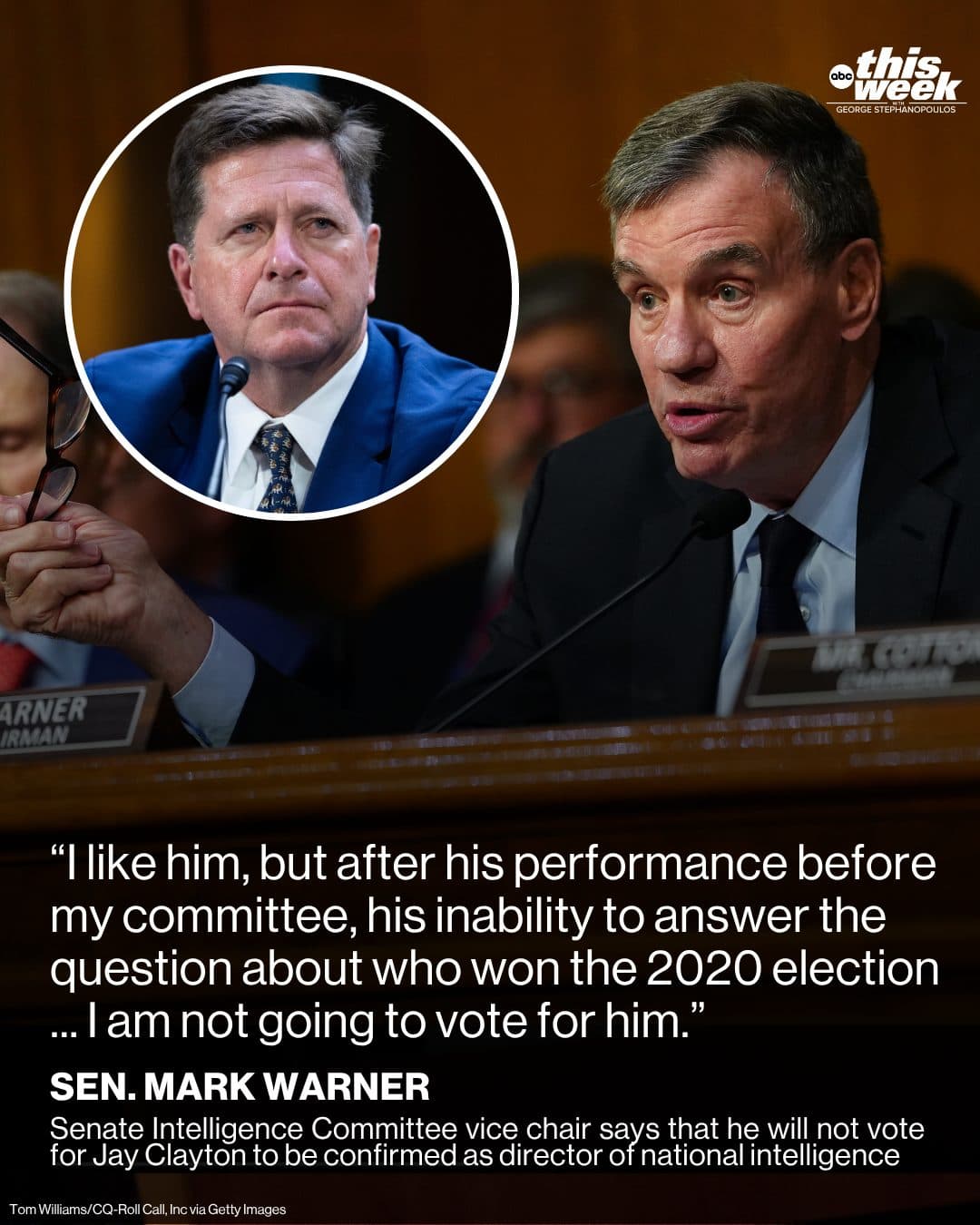
political dispute is emerging in Washington after Senator Mark Warner announced he would not support Jay Clayton’s nomination to serve as Director of National Intelligence. Warner, vice chair of the Senate Intelligence Committee, cited concerns regarding Clayton’s responses during committee proceedings, adding a new challenge to the confirmation process for the high-profile nominee. The disagreement centers on Clayton’s testimony before lawmakers and broader questions surrounding intelligence leadership during a period of heightened geopolitical tensions. As Director of National Intelligence, the position oversees coordination among numerous U.S. intelligence agencies and plays a critical role in advising national leadership on security threats, foreign policy risks, and strategic assessments. Warner’s opposition is significant because of his senior role on the committee responsible for evaluating intelligence matters. His decision signals that Clayton may face increased scrutiny from lawmakers seeking additional clarification on issues raised during the confirmation process. Although a single senator’s opposition does not determine the outcome, it can influence broader debate and shape perceptions among undecided members. Supporters of Clayton argue that his experience in government and legal affairs makes him qualified for the role. They contend that intelligence leadership requires strong management capabilities and strategic oversight rather than unanimous political agreement. Backers also note that confirmation battles have become increasingly contentious as national security positions carry greater political significance. The nomination comes at a time when U.S. intelligence agencies are managing multiple challenges, including cybersecurity threats, geopolitical competition, technological espionage, and ongoing global conflicts. As a result, lawmakers are placing heightened emphasis on leadership qualifications and public accountability during confirmation hearings. Political observers expect additional questioning and debate as the nomination advances through the Senate process. Committee members may seek further clarification on issues raised during earlier testimony before deciding how to vote. The outcome could influence not only the leadership of the intelligence community but also broader discussions surrounding national security oversight. For now, Warner’s announcement highlights the political obstacles facing the nomination and underscores the importance of Senate approval in shaping the future direction of America’s intelligence apparatus.
Published by Banx Network. This article is part of the Banx decentralized media programme, powered by the BXE token on the XRP Ledger.