In the cosmic nursery of the PDS 70 system, a story billions of years in the making is unfolding before our eyes. For the first time, astronomers have captured a complete and detailed view of a gas giant planet forming within its protoplanetary disk. This unprecedented glimpse into the birth of a world offers more than just scientific data; it provides a narrative of creation, showing how chaos coalesces into order. It is a reminder that the planets we know today were once just swirling clouds of dust and gas.
The observations focus on PDS 70c, a young Jupiter-like planet located about 370 light-years from Earth. Using advanced instruments like the Very Large Telescope (VLT) and ALMA, researchers were able to peer through the dense material surrounding the star. They detected a "swirl" of gas and dust accumulating onto the planet, a process known as accretion. This direct imaging confirms theoretical models of how gas giants grow, capturing the moment matter transitions from a disk to a sphere.
The significance of this discovery lies in its clarity. Previous observations had hinted at planet formation, but this study provides a holistic picture of the environment. The team observed not only the planet but also the circumplanetary disk feeding it. This disk is the birthplace of moons, suggesting that PDS 70c may already be forming its own satellite system. It is a snapshot of a solar system in its earliest stages, offering clues about our own origins.
For astronomers, this is a validation of decades of work. The ability to resolve such fine details at such a great distance is a testament to technological advancement. Adaptive optics and interferometry have allowed scientists to correct for atmospheric distortion, revealing structures that were previously invisible. This technical achievement opens new avenues for studying exoplanetary systems, moving from detection to characterization.
The findings also challenge our understanding of planetary migration. PDS 70c is located in a gap cleared by its sibling, PDS 70b, indicating complex gravitational interactions. Studying these dynamics helps explain why some planets end up close to their stars while others remain distant. It adds nuance to the story of how solar systems evolve, showing that each one is unique yet governed by universal laws.
Public interest in such discoveries is driven by the desire to understand our place in the cosmos. Seeing a planet form in real time makes the abstract concept of evolution tangible. It invites viewers to imagine the early Earth, a similar ball of molten rock and gas, slowly cooling and preparing for life. The connection between the distant PDS 70 and our own home is profound and poetic.
As research continues, scientists hope to observe more systems in similar detail. Each new image adds to the catalog of planetary birth, helping to refine models of formation. The journey from dust to planet is slow on human timescales, but rapid in cosmic terms. Capturing it in action is a rare privilege, one that expands our understanding of the universe’s creative power.
The unprecedented view of gas giant formation in the PDS 70 system marks a milestone in astronomy. It provides direct evidence of accretion and moon formation, enriching our knowledge of planetary origins. As we continue to watch these cosmic nurseries, we gain a deeper appreciation for the processes that shape worlds.
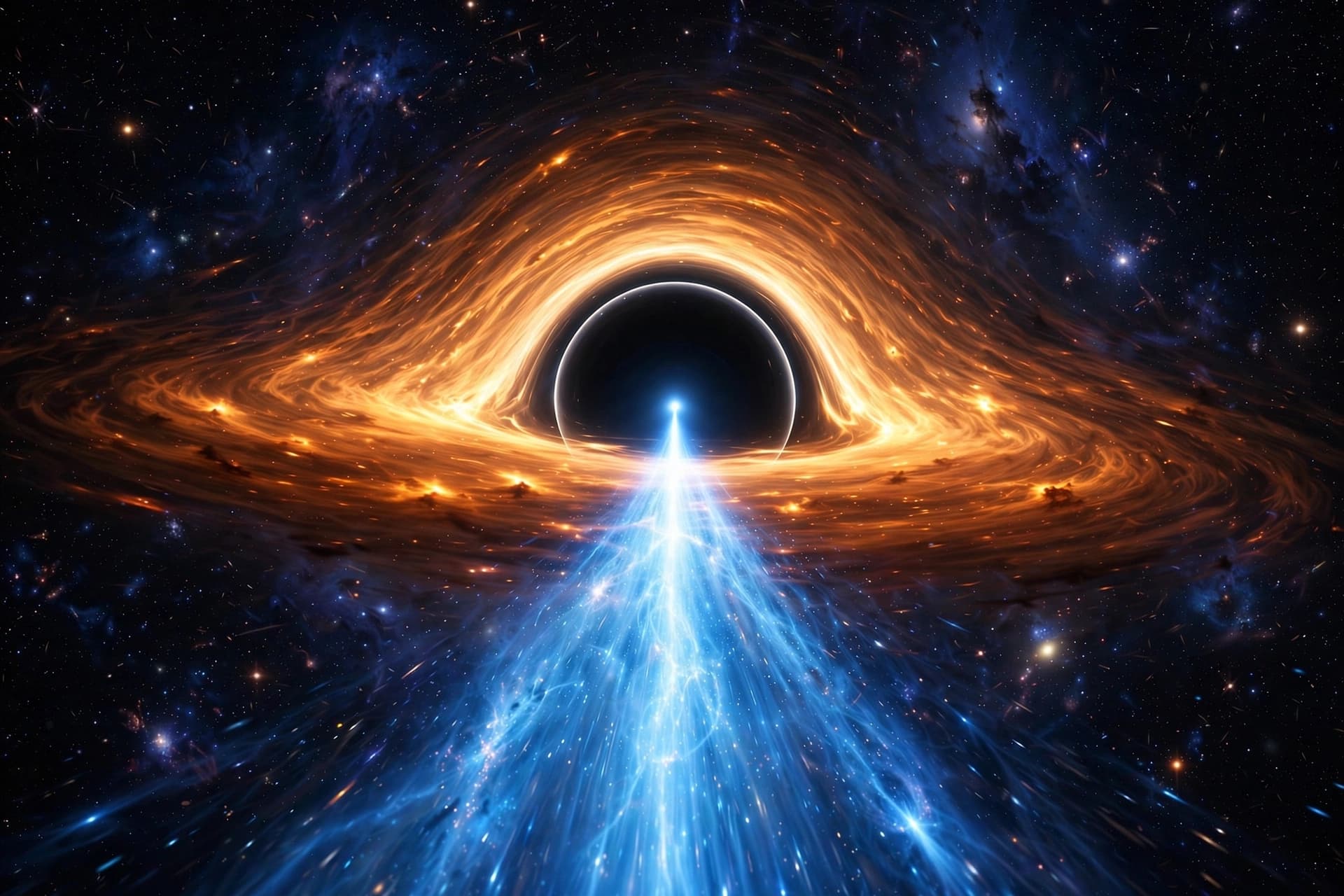
AI Image Disclaimer: The visuals in this article are AI-generated artistic interpretations of protoplanetary disks and forming planets, not actual raw data images from the VLT or ALMA.
Sources: Phys.org Max Planck Institute for Astronomy Nature Astronomy
Published by Banx Network. This article is part of the Banx decentralized media programme, powered by the BXE token on the XRP Ledger.