There is a quiet poetry in the idea that endings can become beginnings—that a star's death might not be a final chapter, but a doorway. For decades, astronomers have understood the life cycle of sun-like stars: they swell into red giants, consume their inner planets, and collapse into white dwarfs, leaving behind a cold, dense ember where a vibrant system once lived. What no one expected was that new worlds might rise from the ashes.
An international team led by researchers at the University of Warwick has identified what they believe is the first known "second-generation" planet—a Jupiter-sized world orbiting a white dwarf called HS 0209+0832, roughly 270 light-years from Earth. The study, published in Nature Astronomy, suggests this planet formed not alongside its star, but from the material the dying star expelled during its red giant phase .
The evidence comes from a chemical fingerprint unlike any seen before. Using archived data from the Hubble Space Telescope and NASA's FUSE mission, researchers detected unusually high concentrations of niobium in the white dwarf's atmosphere—an element that does not exist in normal planetary bodies and forms only in the exotic conditions inside dying stars through the "s-process" of slow neutron capture . The niobium abundance exceeds the Sun's by more than three orders of magnitude, while iron and silicon—common in rocky debris around other white dwarfs—are notably scarce .
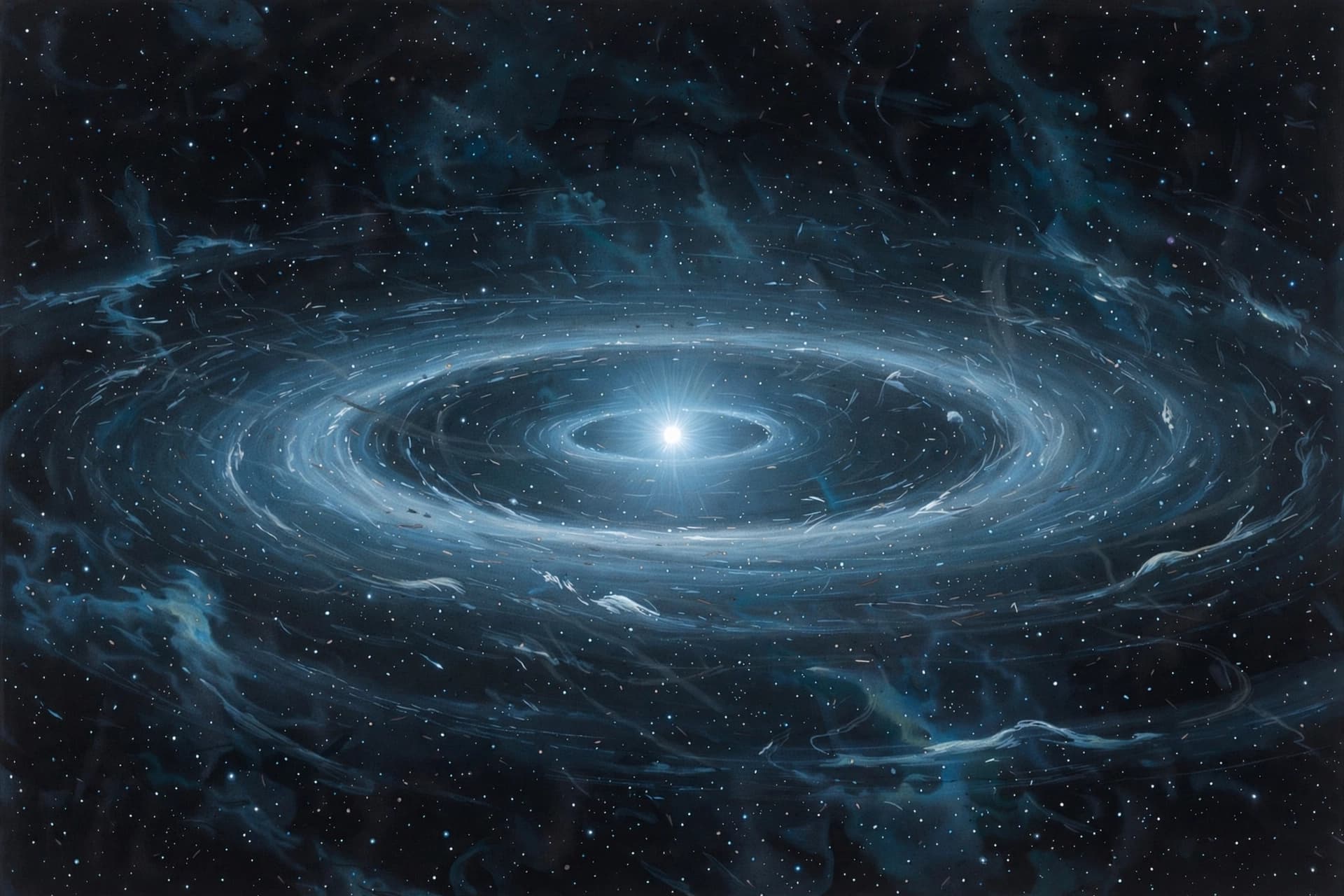
This peculiar chemistry suggests material from a nearby gas giant is being stripped away by the white dwarf's intense radiation and falling onto its surface, creating a comet-like tail that feeds a disk around the star . Additional data from NASA's TESS satellite revealed a faint periodic dimming every 4.4 days, consistent with a planet orbiting at roughly six million kilometers—far closer than Mercury is to the Sun .
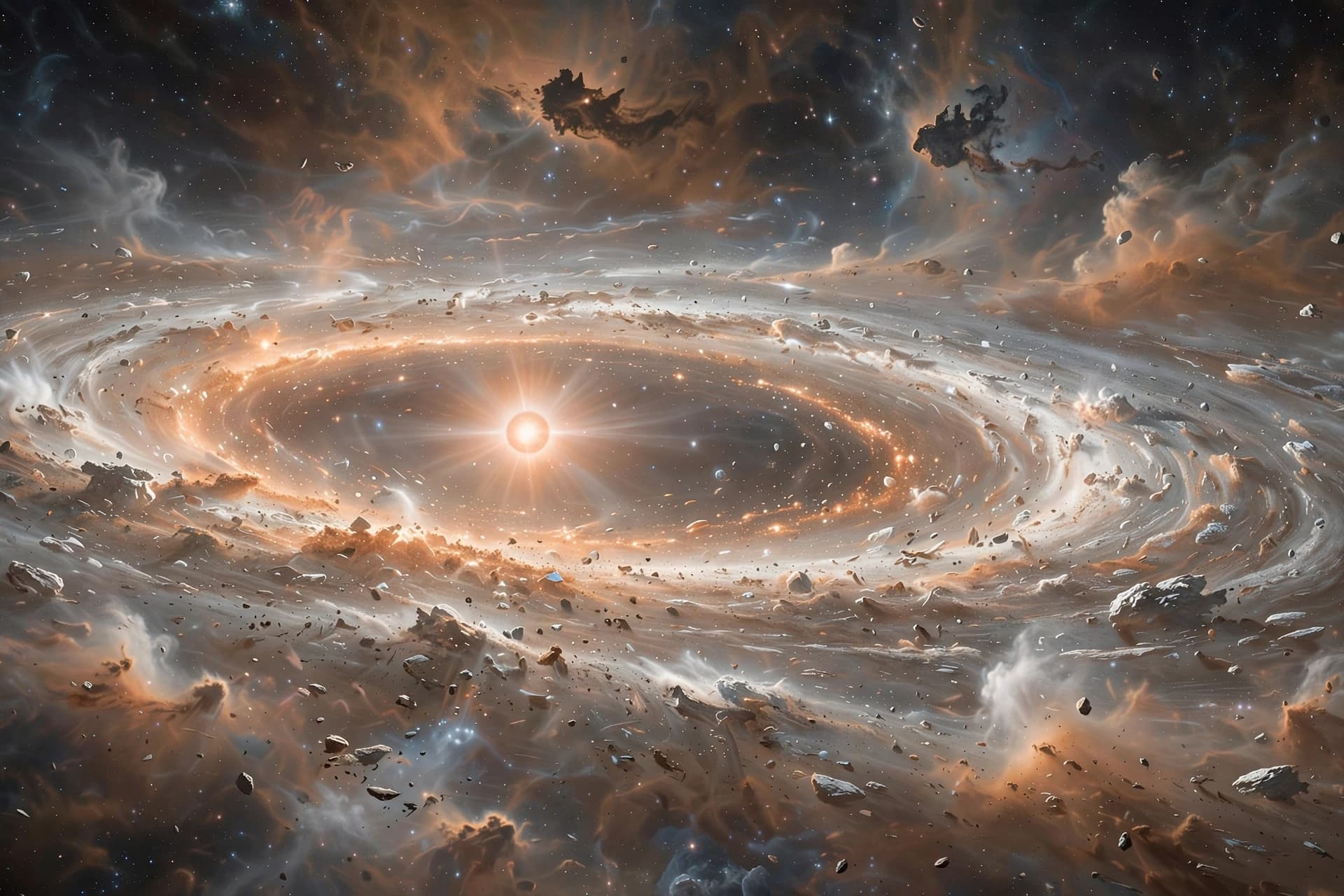
The researchers propose a scenario: when the original star expanded into a red giant, it expelled its outer layers. Some of that material, perhaps captured by the gravity of another body, formed a disk around the newborn white dwarf. Within that disk, a new planet condensed—a world born from the death of its predecessor .
"It shows planets can form close to a star after the red giant phase," said co-author Nicholas Stone of the University of Wisconsin . If confirmed, the discovery would mean that a star's death does not necessarily mark the end of its planetary system. It might mark the beginning of another.
AI Image Disclaimer: The images accompanying this article are generated by artificial intelligence and are intended for illustrative purposes only.
Sources: Nature Astronomy, University of Warwick, NASA, Hubble Space Telescope, TESS, CNN, Gizmodo
Published by Banx Network. This article is part of the Banx decentralized media programme, powered by the BXE token on the XRP Ledger.