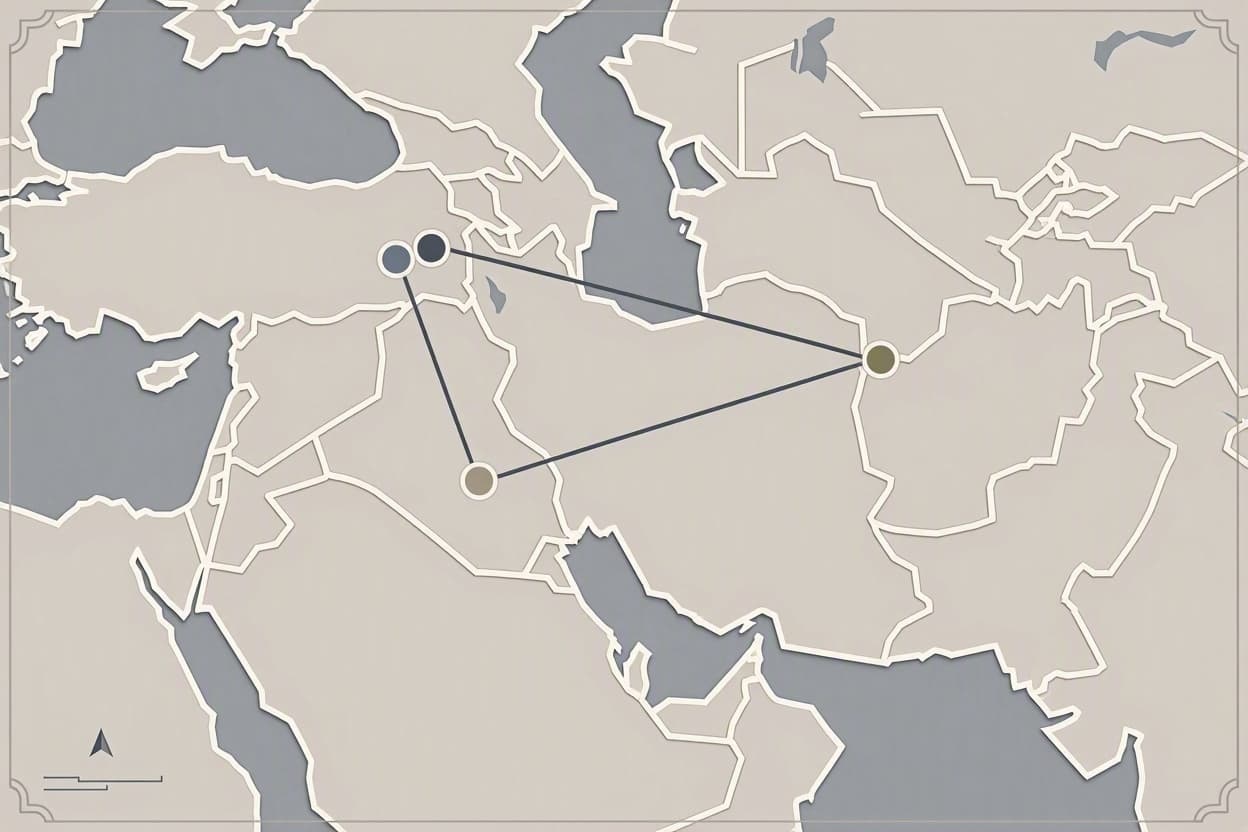
In the hallowed city of Mecca, where millions gather in prayer and reflection, a new chapter of geopolitical strategy is being written. The recently signed Mecca Joint Defense Agreement, uniting Saudi Arabia, Turkey, and Pakistan, has sent ripples through the Middle East. Now, reports suggest that an invitation has been extended to Iran, a regional power with which these nations have often found themselves at odds. This potential inclusion invites contemplation on the shifting sands of alliance and rivalry, suggesting a desire for stability over confrontation in a region long marked by tension.
The Mecca Pact, signed in August 2026, establishes a framework for mutual defense among its signatories. It treats an armed attack on one member as an attack on all, signaling a unified front against external threats. The inclusion of Turkey, a NATO member, alongside Saudi Arabia and Pakistan, creates a formidable bloc of Sunni-majority powers. However, the reported invitation to Iran introduces a complex dynamic, bridging the sectarian divide that has historically fueled conflict in the region.
For Iran, the invitation presents both an opportunity and a dilemma. Acceptance could lead to greater regional integration and a reduction in hostile rhetoric, but it might also require concessions on issues such as nuclear development and proxy activities. Tehran’s response has been cautious, with officials neither confirming nor denying the offer publicly. The silence suggests internal deliberation, weighing the benefits of diplomatic engagement against the constraints of ideological consistency.
Saudi Arabia, under its current leadership, has pursued a policy of de-escalation and diversification. By inviting Iran, Riyadh signals a willingness to engage rather than isolate, reflecting a broader strategy of economic and social transformation. This approach aims to reduce military expenditures and focus on domestic development, recognizing that lasting security requires cooperation with neighbors rather than perpetual confrontation.
Turkey’s role in this tripartite alliance adds another layer of complexity. As a bridge between Europe and Asia, Ankara seeks to balance its Western alliances with its ambitions in the Muslim world. Participation in the Mecca Pact allows Turkey to assert influence in the Middle East while maintaining its strategic autonomy. The invitation to Iran may be seen as a Turkish effort to stabilize its eastern border and foster economic ties.
Pakistan, facing its own security challenges, benefits from the strengthened alliance. The pact provides access to advanced military technology and intelligence sharing, enhancing its defensive capabilities. For Islamabad, the inclusion of Iran could help manage border security and counter militant groups that operate across national lines. It represents a pragmatic approach to neighborhood diplomacy, prioritizing stability over ideology.
Critics argue that the deep-seated mistrust between Iran and the Gulf states makes genuine cooperation difficult. Decades of proxy wars and political rivalry have created scars that are not easily healed. However, proponents believe that the shared interest in regional stability and economic prosperity can overcome historical grievances. The success of the invitation will depend on the willingness of all parties to engage in good faith.
International observers watch closely, aware that a united front among major Middle Eastern powers could reshape global energy markets and security architectures. The United States and European nations have expressed cautious support, hoping that reduced tension will lead to a more predictable region. The outcome of this diplomatic overture will have implications far beyond the borders of the signatory nations.
The reported invitation to Iran to join the Mecca defense pact marks a significant moment in Middle Eastern diplomacy. Whether it leads to a new era of cooperation or remains a symbolic gesture remains to be seen. However, the very act of extending the hand of partnership reflects a growing recognition that security is best achieved through dialogue and inclusion.
AI Image Disclaimer: Please note that any accompanying visuals for this article are AI-generated representations intended for illustrative purposes only.
Sources: The Jerusalem Post Reuters Arab Center Washington DC The Media Line Wikipedia
Published by Banx Network. This article is part of the Banx decentralized media programme, powered by the BXE token on the XRP Ledger.

.jpg&w=3840&q=75 "Same-Sex Couple Sue Slovakia Over Refusal to Register Their Marriage")