In the modern theater of war, the sky is no longer just a backdrop but a critical domain of operations. For Ukraine, the integration of advanced satellite technology has transformed the battlefield from a chaotic fog of uncertainty into a landscape of unprecedented clarity. From commercial internet constellations to high-resolution earth observation, space-based assets have become the nervous system of its defense, enabling coordination and precision that were unimaginable in previous conflicts.
The most visible change has been the reliance on low-earth orbit satellite networks for communication. When terrestrial infrastructure was damaged or destroyed, these systems provided a resilient lifeline, allowing military units and civilians to stay connected. This connectivity is not merely about convenience; it is the foundation of command and control, ensuring that orders reach the front lines and intelligence flows back to decision-makers in real time. The speed of information has become as vital as ammunition.
Beyond communication, satellite imagery has revolutionized situational awareness. Commercial providers now offer frequent, high-quality images that allow analysts to track troop movements, identify supply lines, and assess damage with remarkable accuracy. This transparency reduces the advantage of surprise, forcing adversaries to operate under constant scrutiny. For Ukrainian forces, this means they can anticipate attacks and plan countermeasures with a level of confidence that shifts the strategic balance.
The use of these technologies has also democratized intelligence. In the past, such capabilities were the exclusive domain of major powers with vast resources. Today, open-source data and commercial services allow smaller nations and even civilian volunteers to contribute to the war effort. This decentralization of information creates a networked resistance, where every smartphone and satellite terminal becomes a node in a larger defensive web.
However, this dependence on space assets introduces new vulnerabilities. Satellites are susceptible to electronic warfare, cyberattacks, and physical disruption. The recent incidents involving signal interference highlight the fragility of these systems. As both sides adapt, the battle for spectrum dominance and orbital security has become a silent but intense contest, fought in the invisible realms of radio waves and code.
Despite these challenges, the trajectory is clear. Satellite technology is not just supporting the war effort; it is reshaping the very nature of conflict. It demands new doctrines, new training, and new ethical considerations. For Ukraine, the ability to leverage these tools has been a force multiplier, allowing it to punch above its weight against a larger adversary.
Looking forward, the lessons learned in Ukraine will influence military strategies worldwide. Nations are recognizing that space is no longer a sanctuary but a contested zone. Investment in resilient satellite architectures, anti-jamming technologies, and rapid-launch capabilities will define the next generation of defense planning. The war in Ukraine serves as a living laboratory for these innovations.
As the conflict continues, the role of satellites remains central. They are the eyes that see through the smoke, the ears that hear across the distances, and the voice that connects the isolated. In changing the game for Ukraine, they have also changed the game for everyone, marking the dawn of a new era in warfare where the high ground is truly in the heavens.
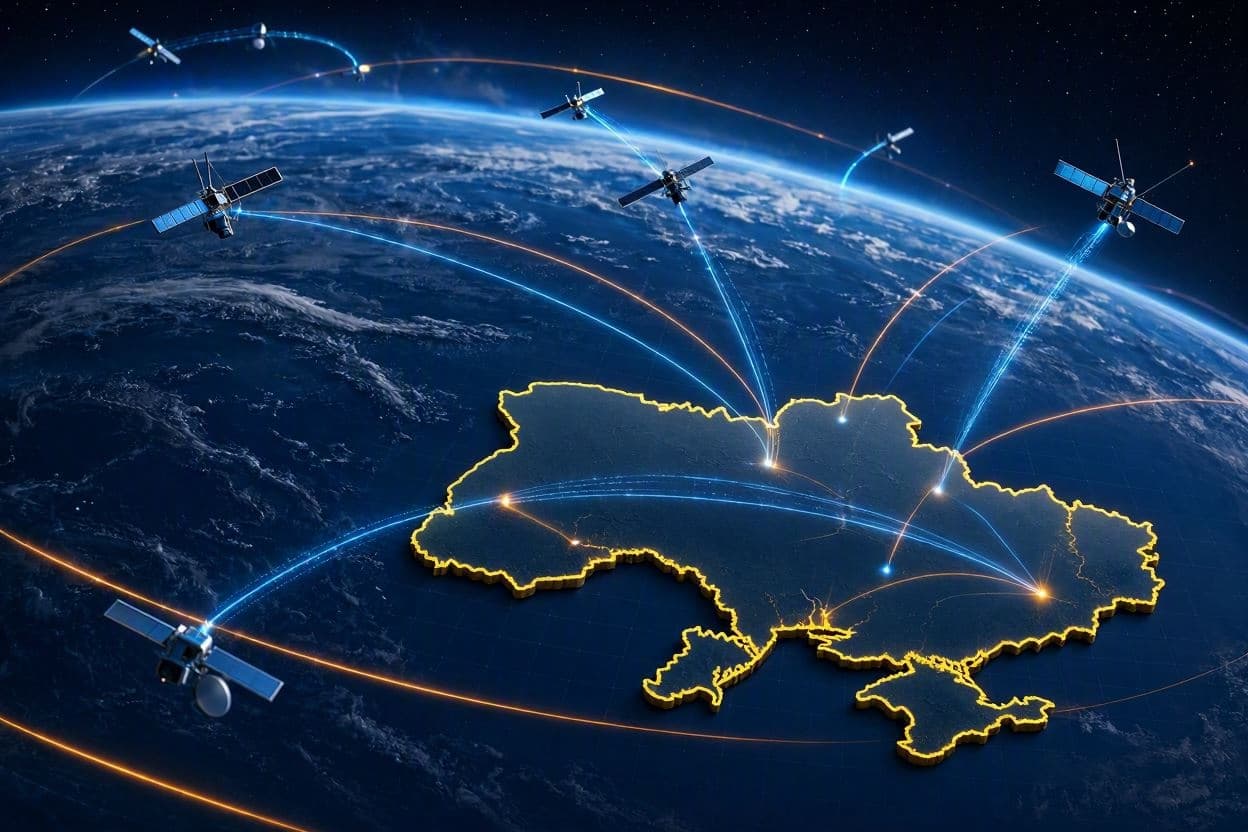
AI Image Disclaimer: The visual elements in this article are AI-generated illustrations depicting satellite networks and digital interfaces, designed to visualize the concept of space-based technology without showing classified or real-time military data.
Sources: Center for Army Lessons Learned, Reuters, The Turing Institute, Space Force
Published by Banx Network. This article is part of the Banx decentralized media programme, powered by the BXE token on the XRP Ledger.