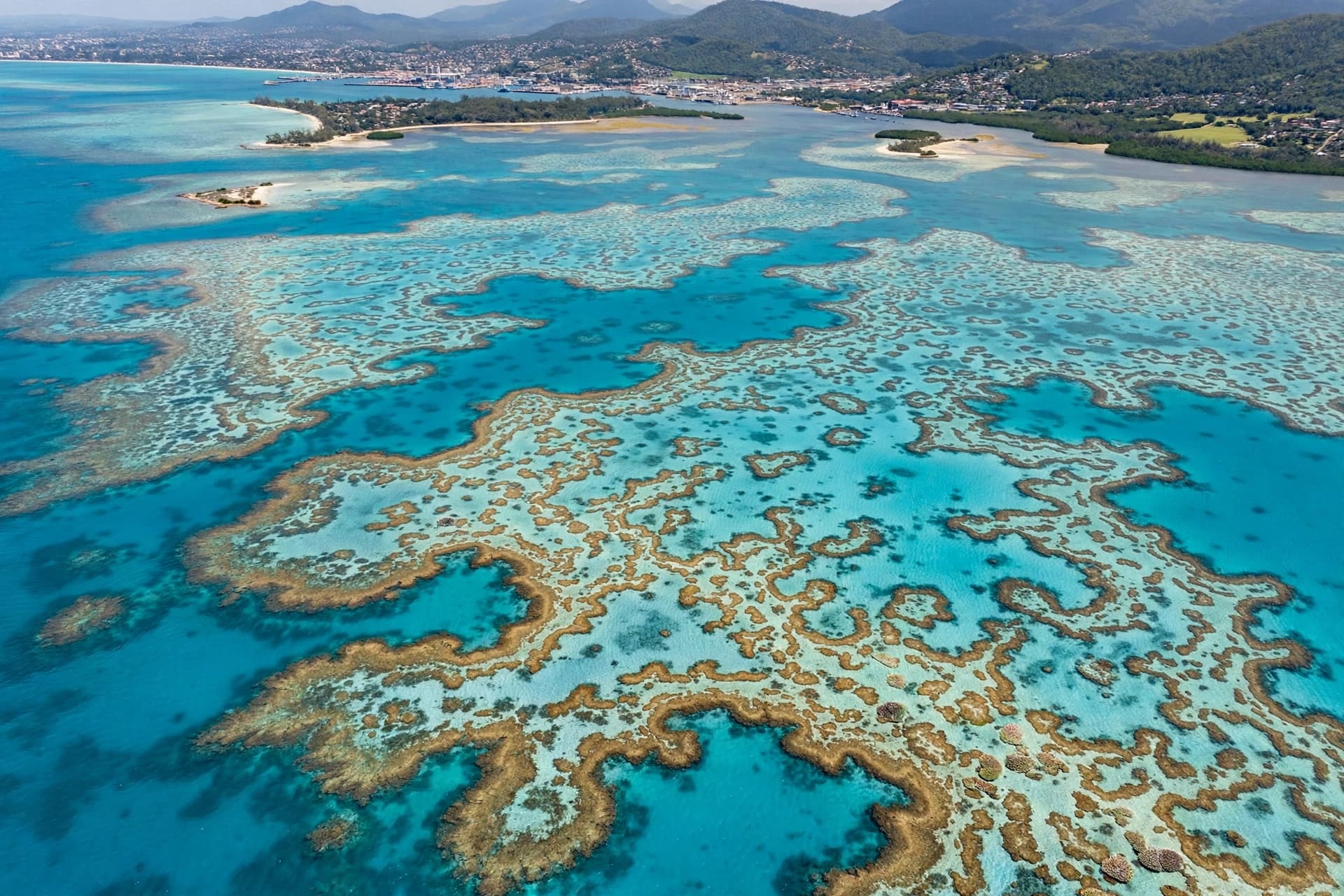
There is a particular kind of protection that does not announce itself, that works quietly at the edge of the sea, asking nothing and giving everything. Salt marshes have long been understood as natural buffers, their dense stems and elevated soils slowing waves before they reach the shore. But the question of how they perform under the most extreme conditions—the storms that matter most—has been harder to answer. A new study published in Nature, conducted in one of the world's largest wave flumes, offers a clearer picture, and the picture is one of surprising resilience.
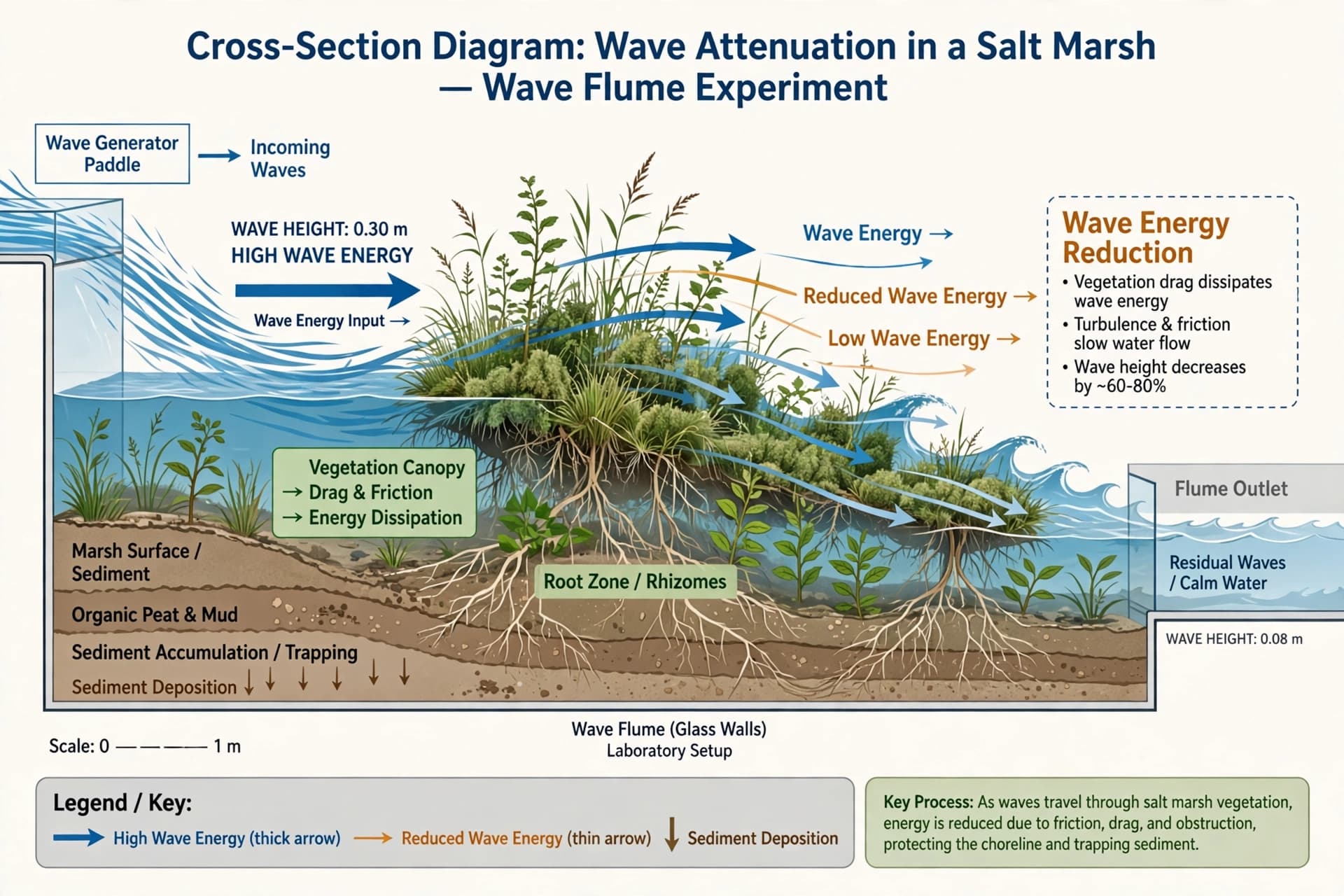
The experiment was audacious in its scale. Researchers from Wageningen University, Deltares, NIOZ, and other Dutch institutions transported intact sections of salt marsh from the Wadden Sea coast to the Delta Flume in Delft, a facility capable of generating artificial waves up to two meters high. More than 300 square meters of marsh, complete with vegetation and sediment, were installed in the flume and subjected to twenty-nine hours of wave action . The goal was to answer a question that had eluded coastal engineers: do marshes continue to function as breakwaters when the waves are at their worst?
The answer, in part, was yes. After twenty-one hours of exposure, the marsh surface had eroded by an average of just seven millimeters. The seabed remained virtually intact even under two-meter waves . The vegetation did not fare as well; above-ground biomass dropped to 20 to 25 percent of its initial level, and stem length decreased by nearly half. But the plants did not disappear. At least one-third remained even after the most extreme conditions, and the marsh continued to attenuate waves throughout the experiment .
The contribution of vegetation to wave attenuation was strongest for smaller waves. At significant wave heights around 0.75 meters, the plants provided between 6 and 22 percent additional attenuation. At two meters, that contribution dropped to 0 to 6 percent . This is not a failure. It is a finding about where marshes are most valuable. When the researchers extrapolated their results to the global scale, using data on storm surges and marsh distribution, they found that at low-energy coastlines—where incoming waves do not exceed about one meter—vegetation can reduce wave energy by more than 10 percent and up to 50 percent. At high-energy coasts, the marsh still helps, but the help is smaller and must be combined with engineered defenses like dikes and seawalls .
There is a practical implication that Dutch water authorities have already begun to apply. In the Koehool–Lauwersmeer dike reinforcement project, the proven erosion resistance of salt marshes has allowed part of the dike revetment to be constructed to a lower strength, saving millions of euros . The marsh is no longer an afterthought in coastal safety assessments. It is a component that can be designed with, not around.
For the researchers, the study is a step toward a more integrated approach to coastal protection. "Until now, salt marshes barely counted when assessing the safety of a dike," said Paul Buring of the Wetterskip Fryslân water authority. "Nobody could say for certain whether a marsh would survive an extreme storm. This full-scale experiment provides that evidence" . The marsh survived. The waves were slowed. And the coast, for now, has an ally it had too often overlooked.
AI Image Disclaimer: The imagery in this article is generated by artificial intelligence and is intended for illustrative purposes only.
Sources: Nature, NIOZ Royal Netherlands Institute for Sea Research, Sina Finance
Published by Banx Network. This article is part of the Banx decentralized media programme, powered by the BXE token on the XRP Ledger.