There is a particular caution that must accompany any claim about the Great Pyramid, a monument that has attracted speculation for centuries and that has, in recent years, become a magnet for claims far more dramatic than the evidence supports. The latest study to draw attention is not a discovery of hidden cities or alien machinery. It is a peer-reviewed paper in Remote Sensing, conducted by researchers from Italian universities, that used synthetic aperture radar and Doppler tomography to examine the pyramid's internal structure without excavation. The paper does contain findings of genuine interest: evidence of previously unknown internal chambers and structural voids within the monument . But the interpretation of those findings has already been distorted beyond recognition.
The technique the researchers used is sophisticated. Synthetic aperture radar sends signals from satellites or ground-based instruments and records their reflections, while Doppler tomography analyzes tiny vibrations and micro-movements generated by background seismic waves. The combination allows a three-dimensional reconstruction of internal structures without drilling or digging . The study confirmed the existence of internal chambers and voids that had not been fully mapped, and it suggested that the pyramid may have once been partially flooded by the Nile, which could explain certain architectural features and the presence of boats without masts near the structure . These are measured claims, presented in a scientific journal, subject to review.
What happened next is a case study in how scientific findings travel. Translations and reinterpretations of the study began circulating online, adding claims that the researchers never made. A viral narrative emerged about eight cylindrical shafts descending 648 meters into the bedrock, connected to massive cubic structures two kilometers wide, suggesting the pyramids were part of an ancient machine or a subterranean city . The scientific journal that published the study has since retracted it, citing serious methodological flaws and statistical errors that undermine its conclusions . The authors disagree with the retraction. The debate about the study's validity is ongoing and legitimate.
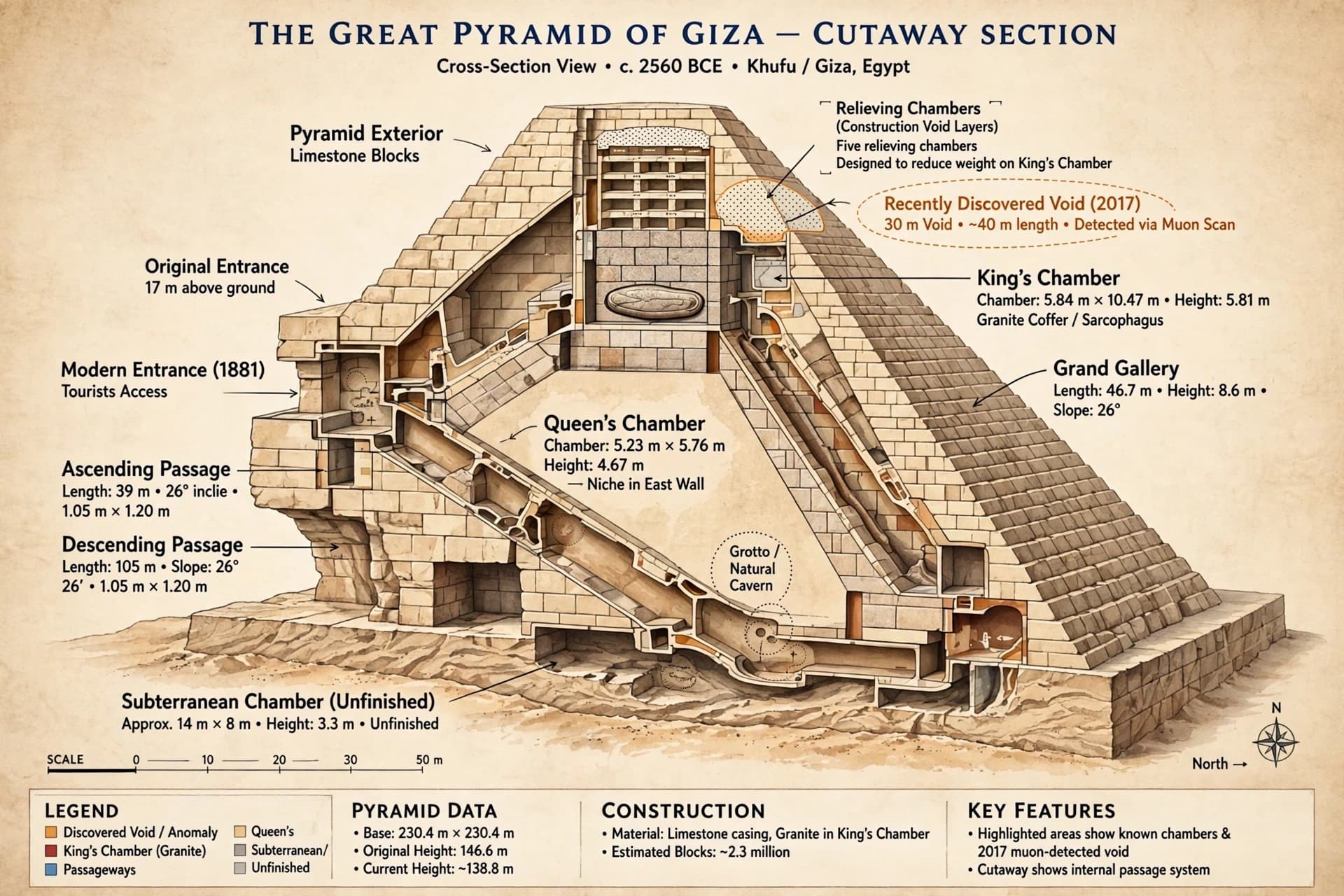
But the retraction does not mean the pyramid has no secrets. It means that one particular study, using one particular method, produced results that are now in dispute. The Great Pyramid has been studied for centuries, and genuine discoveries continue to be made through careful, peer-reviewed work. The ScanPyramids project, for instance, used cosmic-ray muon tomography to identify a previously unknown void above the Grand Gallery, a finding that has been replicated and accepted . That is how archaeological knowledge advances: slowly, with verification, and without the embellishments that viral attention adds.
The lesson here is not that the pyramid is ordinary. It is that extraordinary claims require extraordinary evidence, and that the internet is not a peer review system. The chambers and voids identified in the Remote Sensing paper may point toward a forgotten entrance or internal structure that future research can confirm or refute. Or they may not. What they do not point toward is a hidden city, a second Sphinx, or a machine built by an unknown civilization. Those claims belong to the realm of speculation, and they have already done their damage by attaching themselves to a study that was, at its best, a modest contribution to a long conversation.
For now, the pyramid stands as it has for four and a half millennia, holding its secrets with the patience of stone. The instruments have improved. The questions remain. And the work of distinguishing what is real from what is wished for continues, as it must, one peer-reviewed paper at a time.
---
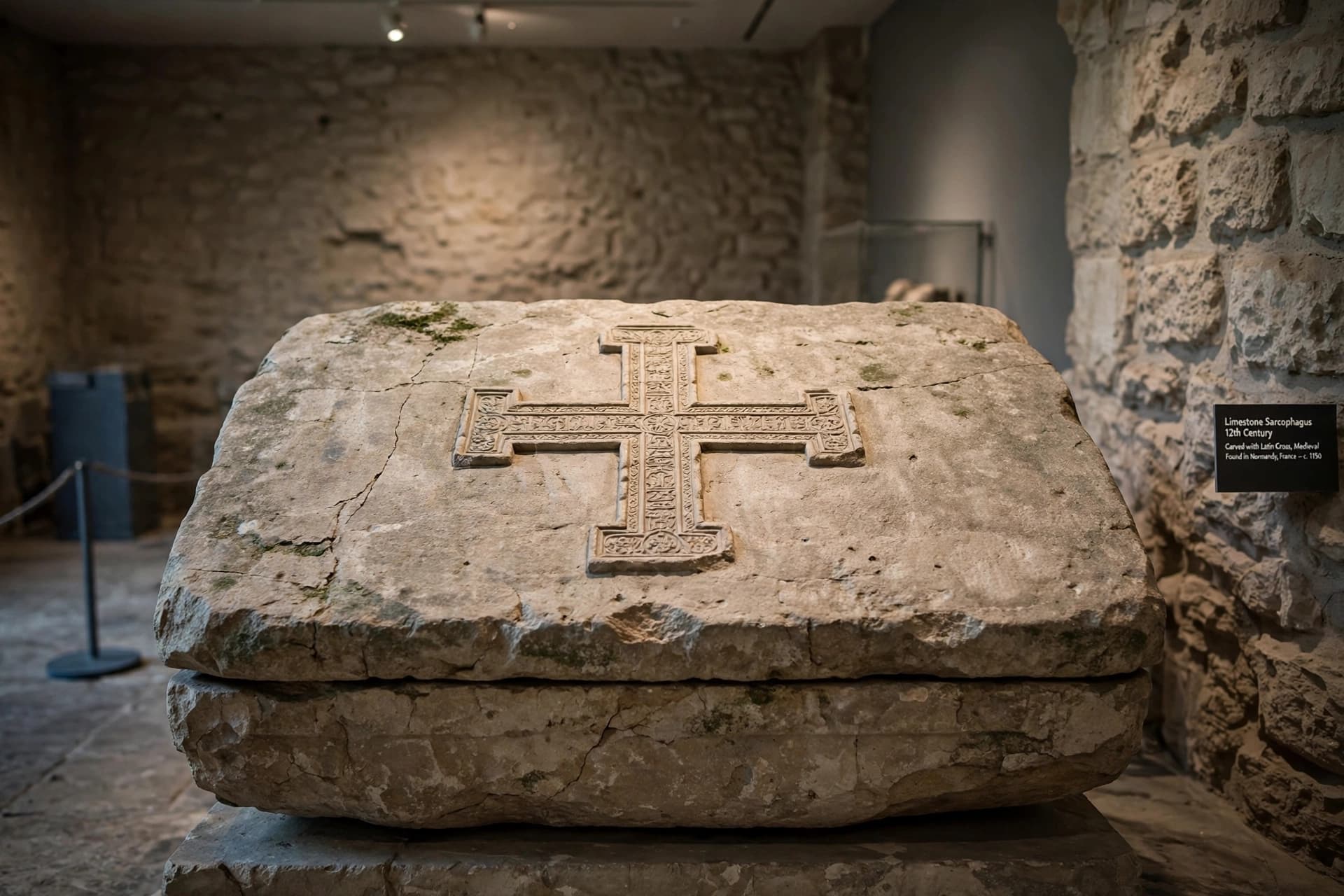
AI Image Disclaimer: The imagery in this article is generated by artificial intelligence and is intended for illustrative purposes only.
Sources: Remote Sensing (retracted study), Azteca Laguna, Retraction Watch (via Czech Television), ScanPyramids Project
Published by Banx Network. This article is part of the Banx decentralized media programme, powered by the BXE token on the XRP Ledger.