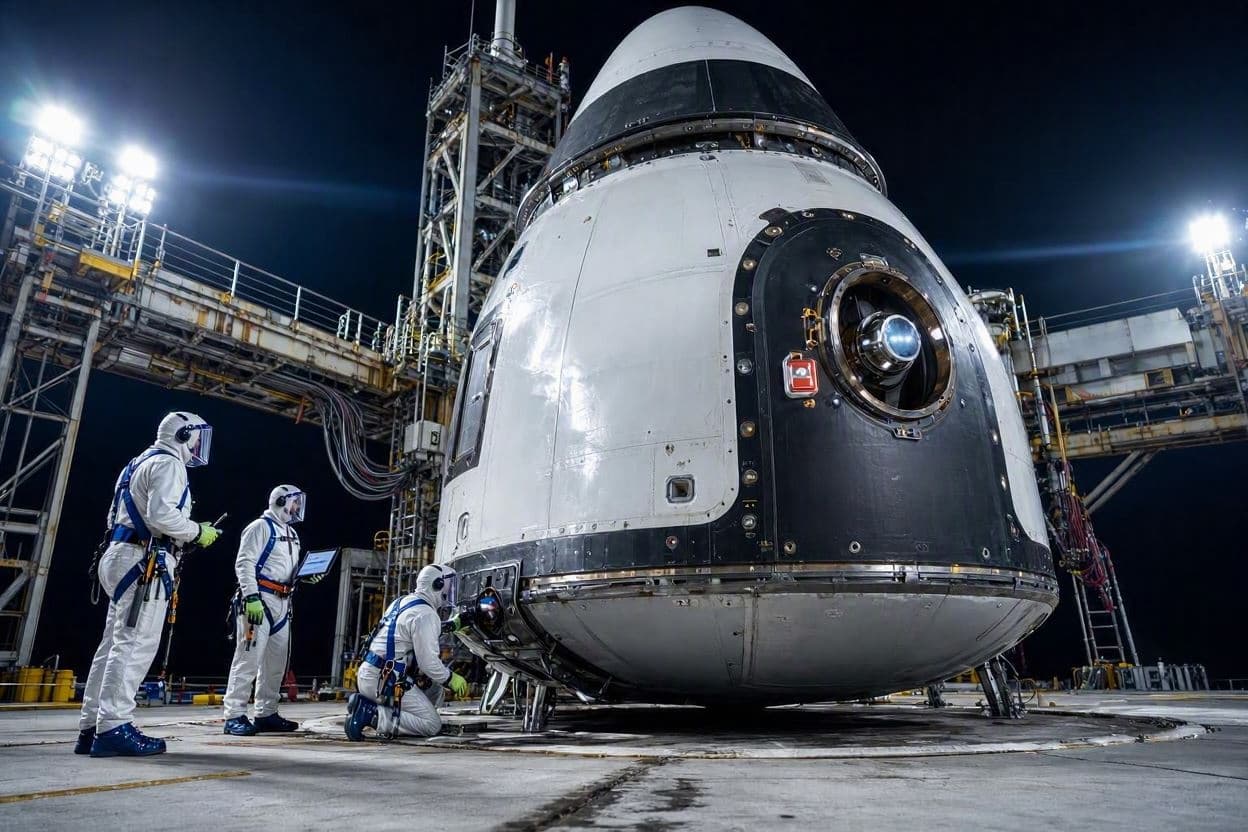
In the delicate ballet of space exploration, where precision is paramount and margins for error are razor-thin, patience is often the most valuable tool in the engineer’s kit. The partnership between NASA and SpaceX has redefined modern access to orbit, turning what was once a rare feat into a routine operation. Yet, even routine missions are subject to the unforgiving laws of physics. A recent decision to delay the next crewed launch to the International Space Station serves as a gentle reminder that safety, not schedule, remains the ultimate compass for human spaceflight.
The postponement stems from the detection of a minor propellant leak on the Crew Dragon spacecraft. While such anomalies can sound alarming to the public, they are a known variable in the complex machinery of rocketry. Engineers identified the issue during pre-launch preparations, triggering a standard protocol of inspection and repair. This proactive approach highlights the robust safety culture that has been cultivated over years of collaboration between the two agencies.
The leak, though small, required careful assessment to ensure it would not compromise the integrity of the mission or the safety of the astronauts onboard. In the vacuum of space, even a tiny breach can have significant consequences, making thorough verification essential. The decision to delay reflects a commitment to caution, prioritizing the well-being of the crew over the pressure of meeting a specific launch window.
This incident also underscores the iterative nature of space technology. Each flight provides data that helps refine systems, making them more reliable over time. The Crew Dragon has flown numerous successful missions, but each new journey presents unique challenges. Addressing these issues on the ground, rather than in orbit, is a testament to the maturity of the program and the diligence of its technical teams.
For the astronauts awaiting their turn, the delay is an inconvenience but also a reassurance. It signals that their safety is being guarded with meticulous attention to detail. The trust placed in these vehicles is built on transparency and rigorous testing, qualities that are essential for maintaining public confidence in commercial spaceflight.
Moreover, the flexibility of the launch schedule allows for these necessary pauses without derailing the broader mission objectives. The International Space Station continues to operate smoothly, and the crew rotation plan can be adjusted to accommodate the delay. This adaptability is a key strength of the current space architecture, allowing for resilience in the face of minor setbacks.
The collaboration between NASA and SpaceX continues to evolve, with each challenge offering an opportunity for learning and improvement. The ability to identify and resolve issues before launch demonstrates the effectiveness of their joint oversight mechanisms. It is a partnership defined not just by success, but by how it handles the inevitable hurdles of exploration.
As the team works to resolve the leak, the focus remains on ensuring that every component meets the highest standards. The delay is a temporary pause in a long journey, one that aims to sustain a continuous human presence in low Earth orbit. It is a moment of stillness in a dynamic field, allowing for reflection and refinement.
The delay of the next astronaut launch due to a propellant leak is a prudent measure that prioritizes safety above all else. It reflects the high standards maintained by NASA and SpaceX in their shared mission to explore space. As preparations continue, the commitment to crew safety remains the guiding principle of this enduring partnership.
AI Image Disclaimer: The visual representations accompanying this article are AI-generated interpretations designed to illustrate the Crew Dragon spacecraft and the meticulous nature of pre-launch inspections.
Sources: NASA Official Website SpaceNews The Verge
Published by Banx Network. This article is part of the Banx decentralized media programme, powered by the BXE token on the XRP Ledger.