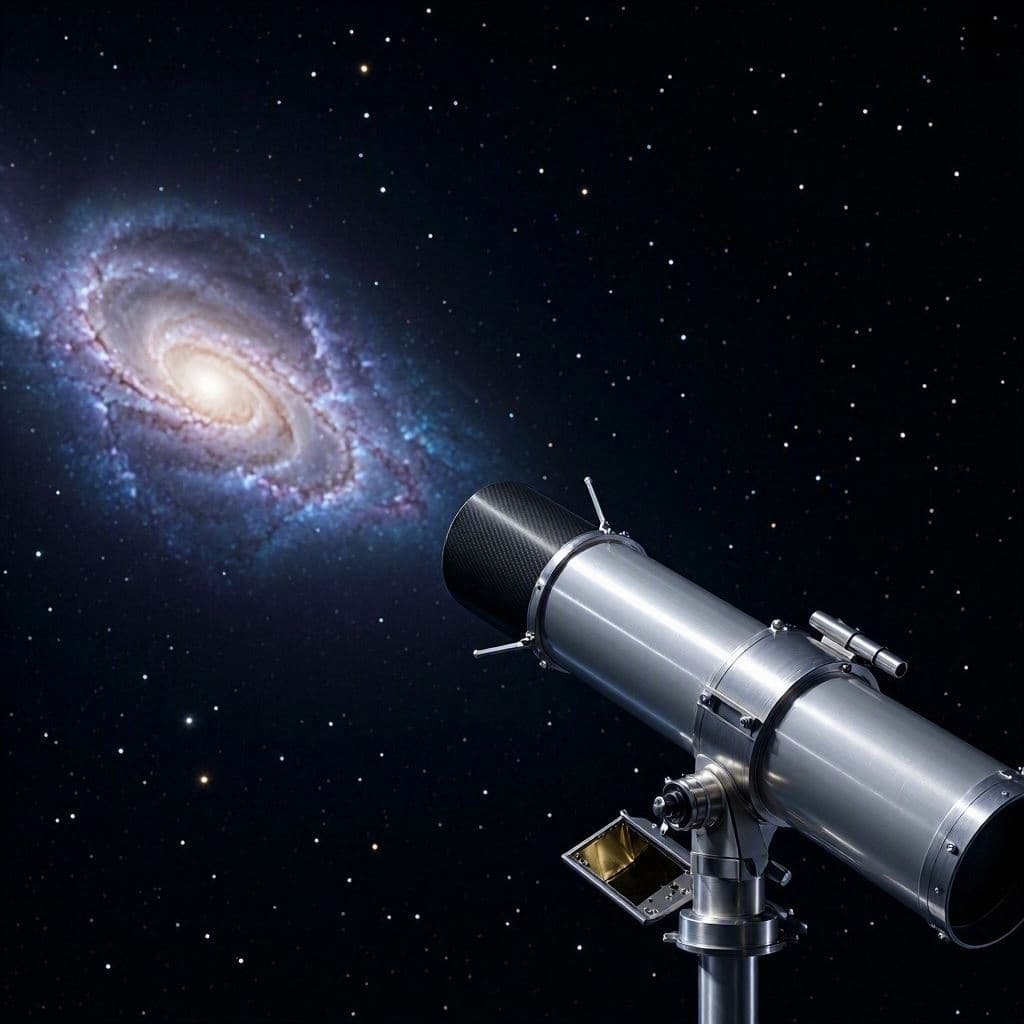
There is a profound humility in looking up at the night sky, recognizing that what we see is but a fraction of what exists. For decades, humanity has peered into the cosmos with increasingly powerful eyes, yet the universe remains largely shrouded in mystery. Now, with the launch of the Nancy Grace Roman Space Telescope, we take another gentle step toward understanding the invisible forces that shape our reality. It is a journey not just of discovery, but of deeper connection to the vastness around us.
The Roman Telescope, a marvel of modern engineering costing approximately 4.3 billion, is designed to explore some of the most enduring questions in astrophysics. Unlike its predecessors, this observatory focuses on two primary mysteries: dark energy and exoplanets. Dark energy, the elusive force driving the accelerated expansion of the universe, has long puzzled scientists. The Roman Telescope aims to map the distribution of matter across cosmic time, offering clues about how this mysterious energy influences the growth of structure in the cosmos.
In addition to studying dark energy, the telescope will conduct a wide-field survey to discover thousands of new exoplanets. Using a technique called microlensing, it can detect planets that are otherwise invisible to other methods, including those that roam freely without a host star. This capability expands our understanding of planetary systems, suggesting that worlds may be more common and diverse than we previously imagined. It invites us to reconsider our place in the galaxy.
The instrument’s wide field of view is its defining feature, allowing it to capture images of the sky with unprecedented breadth and clarity. While the Hubble Space Telescope offers deep, narrow views, Roman provides a panoramic perspective, akin to switching from a microscope to a wide-angle lens. This approach enables scientists to study large-scale structures and rare events simultaneously, creating a more comprehensive picture of the universe.
Launched into orbit, the telescope will operate in a stable environment far from Earth’s atmospheric interference. Its position allows for continuous observation, free from the day-night cycle that limits ground-based telescopes. This vantage point ensures that data collection is consistent and reliable, providing a steady stream of information that will fuel scientific inquiry for years to come.
The mission also represents a significant investment in international collaboration and technological innovation. Built by teams of engineers and scientists from across the globe, the Roman Telescope embodies the spirit of shared human curiosity. It stands as a testament to what can be achieved when diverse minds work together toward a common goal, transcending borders in the pursuit of knowledge.
As the telescope begins its operations, the scientific community waits with bated breath. The data it returns will likely challenge existing theories and open new avenues of research. It is a reminder that science is not a static body of facts but a dynamic process of questioning and learning. Each image captured is a new page in the story of the universe.
The launch of the Roman Telescope marks a new chapter in our exploration of the cosmos. It offers hope that the hidden secrets of the universe, from dark energy to distant worlds, may soon be revealed. In seeking these answers, we not only expand our scientific understanding but also deepen our sense of wonder and appreciation for the intricate beauty of existence.
AI Image Disclaimer: Please note that the visuals accompanying this article are AI-generated artistic interpretations of the Roman Space Telescope in orbit, intended to evoke the scale and purpose of the mission rather than depict actual photographic evidence.
Sources: NASA, Space.com, Scientific American, The Verge
Published by Banx Network. This article is part of the Banx decentralized media programme, powered by the BXE token on the XRP Ledger.