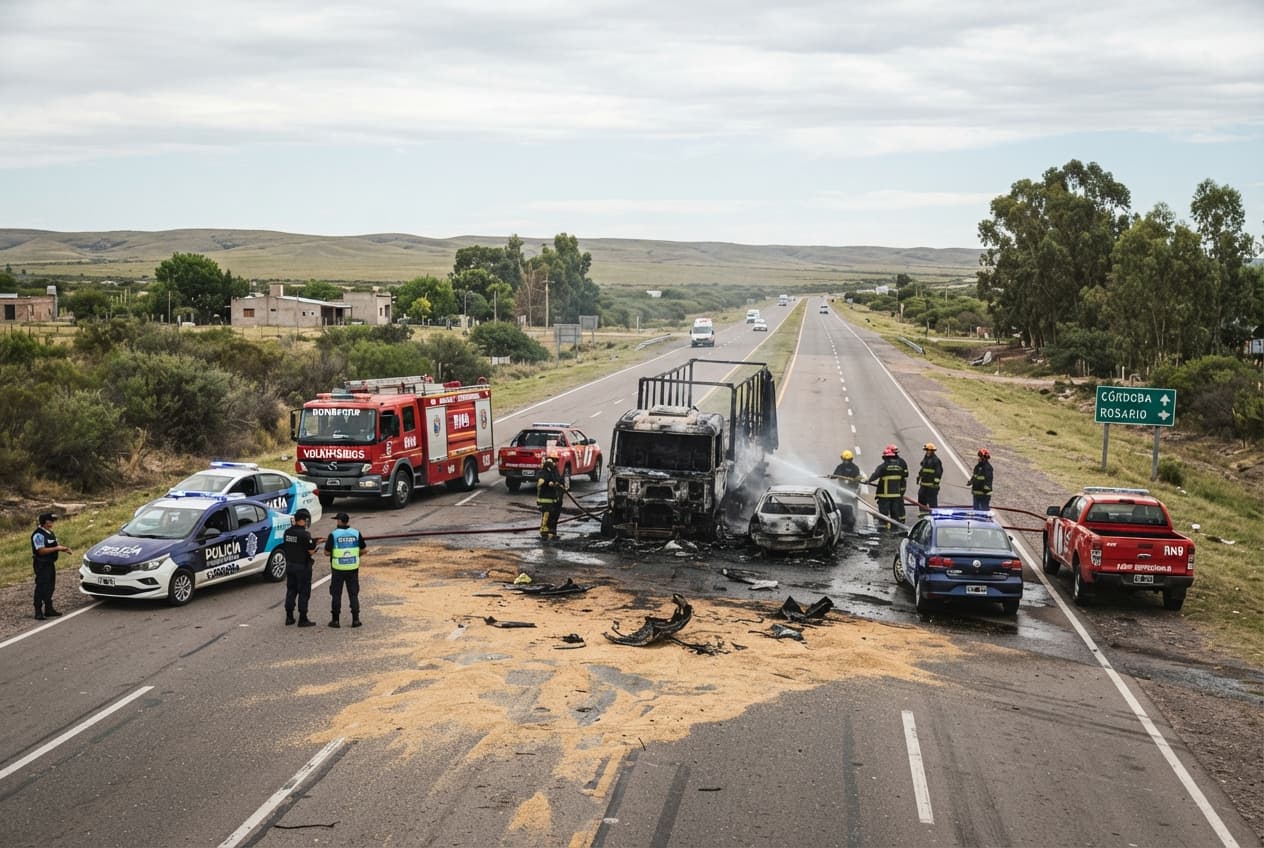
Buenos Aires, Argentina—A multi-vehicle highway pileup involving a heavily loaded grain truck blocked both southbound lanes of Ruta Nacional 9, triggering a catastrophic fire and leaving three motorists dead. Provincial highway police confirmed that three individuals trapped inside two passenger cars perished when the commercial truck jackknifed across the pavement. The accident occurred during a sudden patch of dense morning fog that severely reduced visibility along the busy transport corridor. Emergency dispatchers scrambled multiple fire suppression units, highway patrol cruisers, and trauma ambulances to the gridlocked scene.
The violent impact crushed the passenger sedans beneath tons of loose agricultural grain spilling from the ruptured trailer compartment. Flames erupted from the engine block of the semi-truck, threatening to consume the trapped vehicles before firefighters arrived with chemical foam lines. First responders utilized heavy hydraulic spreaders and thermal cutting torches to separate the mangled steel framework. Police officers cordoned off a multi-kilometer stretch of the highway, diverting light traffic onto parallel rural frontage roads.
Transport safety analysts and road user associations pointed to chronic overloads on commercial grain haulers and inadequate fog-warning infrastructure along the main export corridor. Despite heavy freight volumes connecting agricultural provinces to Buenos Aires ports, highway concessionaires routinely defer investments in automated lighting and electronic warning boards. Those ongoing administrative delays leave high-speed transit routes vulnerable to catastrophic multi-vehicle collisions during seasonal weather shifts. The tragedy renewed fierce debates over freight safety regulations.
Highway patrol inspector Carlos Giménez briefed journalists at the perimeter of the scorched asphalt zone. Visibility dropped below twenty meters moments before the initial collision occurred, Giménez stated. The commercial truck failed to reduce speed adequately for the prevailing atmospheric conditions. Accident reconstruction teams are downloading tachograph data from surviving transport units.
Paramedics established a mobile triage post on the emergency grass median, treating four other motorists for smoke inhalation, severe burns, and acute shock. Emergency medical helicopters landed on the northbound lanes to airlift critical burn victims to specialized trauma hospitals in the capital. Heavy recovery cranes arrived to lift the burnt grain trailer off the flattened automobiles and clear the blocked asphalt. Structural engineers inspected the roadway surface for heat damage.
State prosecutors initiated a formal criminal inquiry into vehicular homicide and commercial cargo compliance against the transport firm. Forensic examiners verified vehicle identification numbers and documented skid mark patterns before clearing the human remains. Maintenance crews deployed mechanical sweepers and asphalt patchers to repair the heat-damaged road surface. The highway clearance operation extended late into the evening before normal traffic flow resumed.
Published by Banx Network. This article is part of the Banx decentralized media programme, powered by the BXE token on the XRP Ledger.