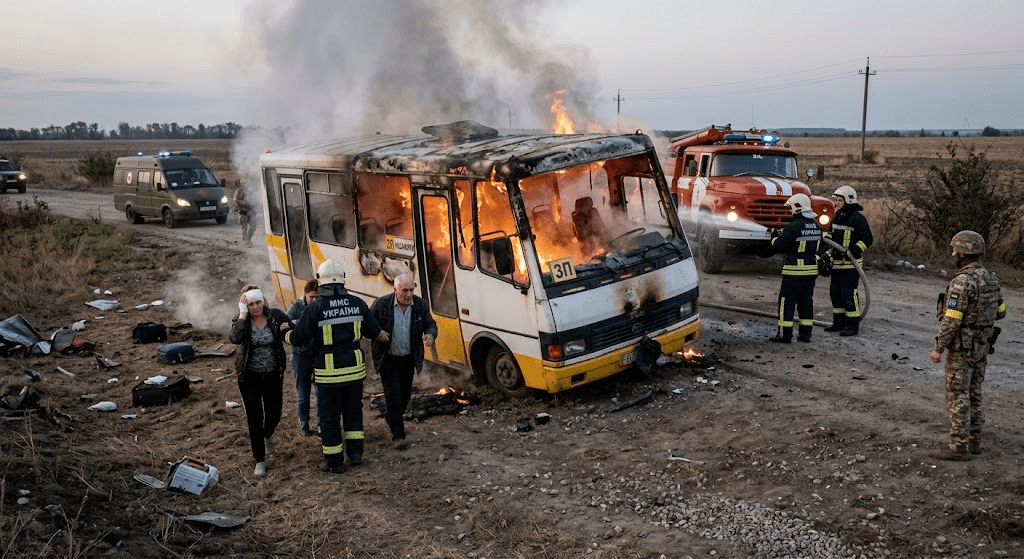
ZAPORIZHZHIA — At least five people were killed and seven others injured after a Russian drone targeted a passenger bus near the frontline in southeastern Ukraine, local officials reported.
The targeted strike against civilian transport highlights the escalating danger faced by residents remaining near active battle zones in the country's eastern and southern regions.
According to regional military authorities and emergency services, the passenger bus was traveling along a key transit route connecting frontline settlements when an explosive-laden drone struck the vehicle. The blast triggered a severe fire that quickly engulfed the bus, trapping several commuters inside before emergency crews could reach the remote area.
First responders and military medical units arrived shortly after the impact to manage the casualties. Five passengers died at the scene from blast injuries and secondary burns, while at least seven survivors sustained shrapnel wounds and severe trauma that required immediate emergency hospitalization. Paramedics stabilized the victims at the site before transferring them under heavy security to regional medical facilities.
Regional authorities condemned the deliberate attack on non-military infrastructure, noting that the bus was operating on a recognized civilian corridor used by local residents for evacuations and essential transit.
"Attacking a clearly marked civilian bus operating near the frontline is a blatant violation of international humanitarian law. Emergency medical teams faced significant risk navigating active drone activity to rescue the survivors." — Regional Military Administration Spokesperson
In the wake of the attack, regional security forces have restricted non-essential transit along high-risk frontline corridors. Local councils are urging residents in nearby settlements to utilize armored evacuation vehicles rather than standard civilian transport.
International human rights monitors and Ukrainian law enforcement agencies have initiated formal documentation of the strike, gathering physical evidence from the wreckage to add to ongoing war crimes investigations.
Community members and civil volunteer groups have begun coordinating direct relief efforts for the families of the victims, providing financial assistance, emergency housing, and psychological support in the immediate aftermath of the strike. With public transport heavily curtailed across the district, humanitarian organizations are stepping in to establish safer, decentralized distribution points for essential food and medical supplies, ensuring isolated residents are not cut off while authorities re-evaluate frontline security measures.
Published by Banx Network. This article is part of the Banx decentralized media programme, powered by the BXE token on the XRP Ledger.