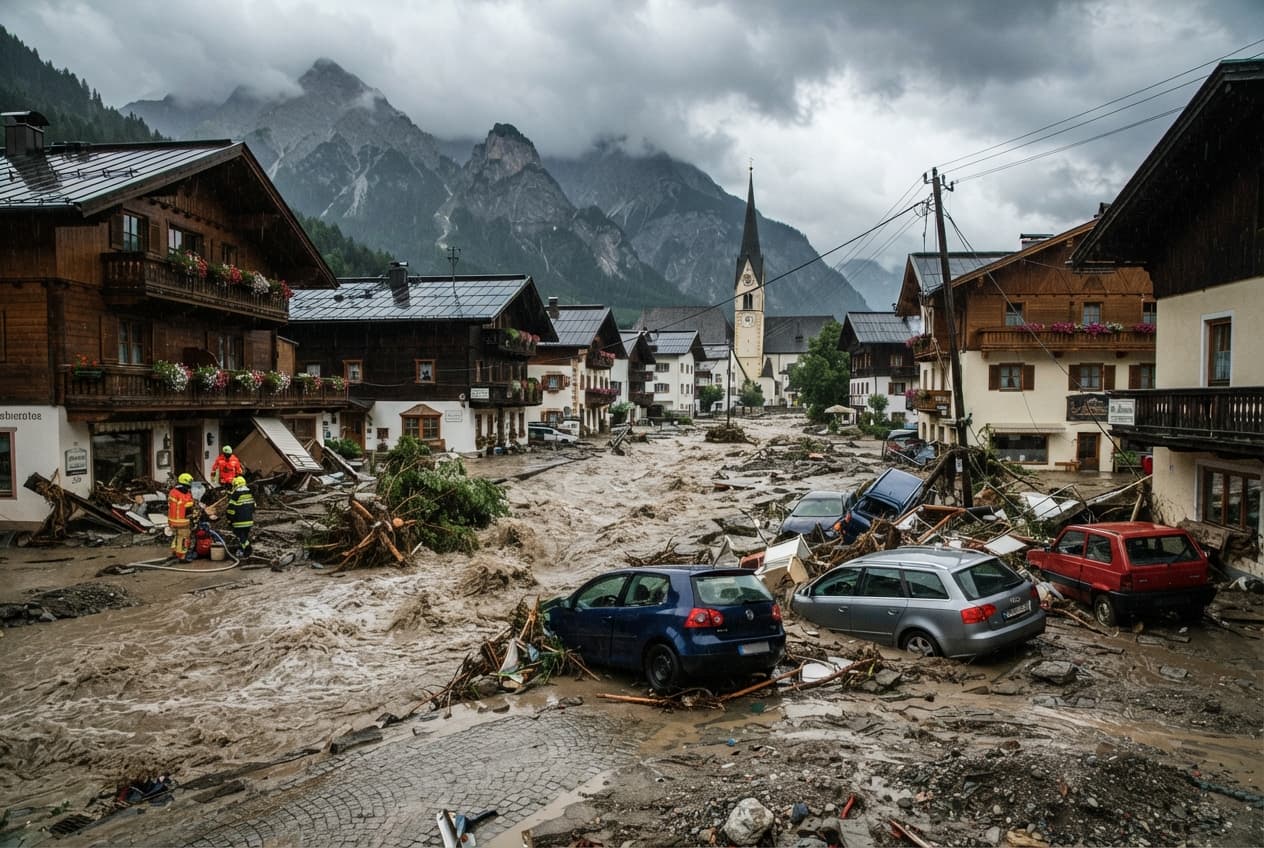
Innsbruck, Austria—A wall of water and debris roared down a narrow mountain gorge into a residential valley settlement. The flash flood materialized within minutes following a cloudburst over high alpine peaks. Roaring torrents tore asphalt off mountain roads and overturned parked passenger vehicles. Parked cars tumbled into the raging stream like matchsticks before crushing against wooden bridges. Rescuers confirmed that two motorists died inside vehicles swept away by the current.
Mountain rescue teams launched immediate search operations using specialized rope rigging across the rocky riverbed. Search dogs combed through massive piles of driftwood and boulders deposited by the receding flash flood. Helicopters fought turbulent wind gusts to drop paramedics into inaccessible sections of the gorge. Authorities evacuated dozens of hikers from alpine huts situated along threatened mountain streams. Local roads remained blocked by tons of mud, rock, and shattered timber debris.
Village mayors reported that municipal water supply systems sustained severe damage during the initial surge. Power poles snapped, plunging the entire valley into total darkness as evening temperatures dropped. Civil defense units established a command post inside the local community fire station. Emergency managers requested heavy excavation machinery from neighboring districts to clear blocked culverts. Residents used shovels to clear mud from doorways while listening for secondary flood warnings.
Meteorologists stated that rapid snowmelt combined with extreme rainfall totals caused the sudden mountain flash flood. Geological experts warned that surrounding slopes remained unstable and prone to secondary mudslides. Provincial officials announced immediate financial aid packages for affected mountain communities and homeowners. Rescue coordinators urged tourists to stay away from hiking trails across the regional alpine range. Insurance inspectors began documenting property damage across the devastated valley floor.
Emergency shelters opened at local ski resort hotels to accommodate stranded vacationers and residents. Medical personnel treated minor injuries ranging from broken bones to severe hypothermia among survivors. Utility crews worked under portable floodlights to restore electrical grid connections to critical infrastructure. Police restricted unauthorized tourist traffic from entering the disaster zone to keep roads clear. Volunteer fire units pumped water out of flooded hotel cellars and residential basements.
The valley remained sealed off from normal traffic as heavy machinery cleared the main highway. Mountain guides assisted police in accounting for all registered guests staying at local pensions. Provincial leaders promised a thorough review of early warning systems across vulnerable alpine corridors. Public anger surfaced over the lack of automated sirens along the narrow mountain river gorge. Technical teams inspected bridge abutments for structural cracks caused by boulder impacts.
Nighttime temperatures plummeted near freezing as rescue personnel maintained active search perimeters. Searchlights swept across the debris fields looking for any remaining unaccounted individuals. Villagers gathered in small groups outside the community center to share updates and comfort relatives. Municipal officials planned a formal briefing for daybreak regarding infrastructure repair timelines.
Heavy equipment operators await clearance before resuming debris clearance along the choked river channel.
Published by Banx Network. This article is part of the Banx decentralized media programme, powered by the BXE token on the XRP Ledger.