Mutare, Zimbabwe—A violent seasonal thunderstorm battered rural communities across Manicaland province early Thursday morning, causing structural collapse and taking two lives. The storm made landfall before dawn, packing gale-force winds and torrential rain that flattened dozens of traditional homesteads. Two children died inside their family dwelling when an exterior mud-brick wall caved in under extreme hydrostatic pressure.
The fatalities occurred in a remote village situated along the hilly terrain of Manicaland. Saturated by hours of relentless downpours, the unreinforced mud structure buckled inward onto a sleeping quarters. Family members tried to clear the heavy clay debris manually, but both victims succumbed to severe blunt trauma before aid arrived.
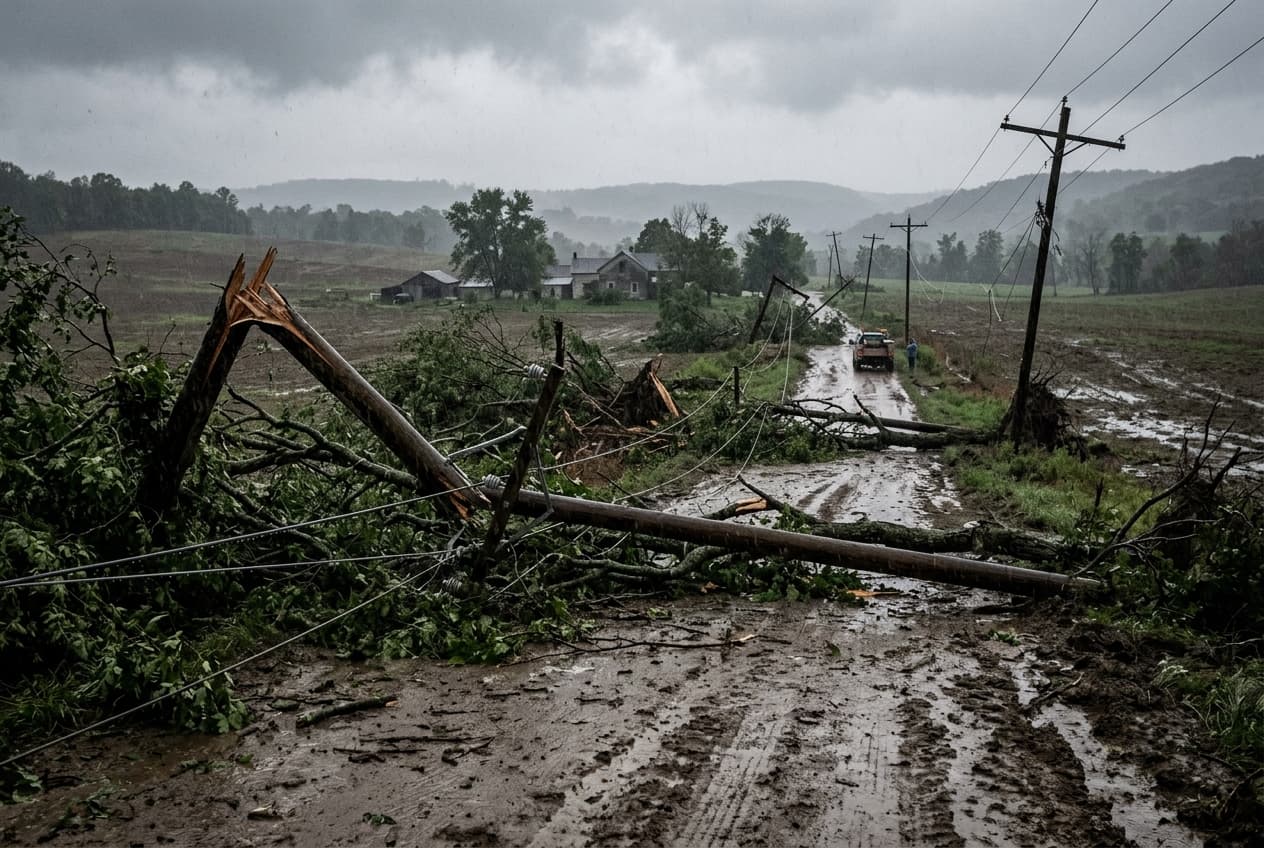
Emergency response teams faced major obstacles reaching the scene as flash floods washed out dirt access roads and felled power lines. Dozens of neighboring families spent the day salvaging personal belongings from ruined thatched structures. Local authorities confirmed that high winds ripped corrugated iron roofing off multiple schools and rural clinics across the district.
Provincial disaster management officials reported widespread property destruction across several rural wards. "The speed and sheer volume of rainfall overwhelmed localized drainage channels within minutes," stated Tendai Mukono, a civil defense officer assisting on the ground. "Standard pole-and-dagga structures cannot withstand this volume of water once foundation soil liquifies."
Districts across eastern Zimbabwe remain vulnerable to severe weather hazards every rainy season due to limited structural engineering resources. Rural households construct dwellings using unbaked earth bricks and clay mortar, materials that rapidly lose structural integrity during prolonged cloudbursts. Financial constraints prevent most rural residents from purchasing concrete blocks or reinforced cement.
Local government teams distributed emergency tarpaulins to displaced families seeking shelter in community halls. Water supplies in the village are currently contaminated by agricultural runoff, raising immediate sanitation concerns among health officers. Field medics set up temporary aid centers to treat residents suffering from minor injuries and storm exposure.
The Department of Meteorological Services had issued a general warning for localized rain, but small rural communities lacked immediate early-warning systems to prepare. Communication breakdowns during the storm delayed official emergency dispatch by several critical hours. Rural leaders continue to press central government agencies for permanent disaster mitigation funding.
Community members gathered in rain-soaked clearings this afternoon to rebuild temporary shelters using salvaged timber and thatch. The local clinic operates on backup generator power while utility crews attempt to clear fallen trees blocking main access roads.
District authorities remain on high alert as weather forecasts predict additional rainfall systems moving across eastern Zimbabwe through the weekend. Search and assessment teams continue evaluating isolated homesteads to verify total property losses and ensure no additional casualties remain buried beneath damaged structures
Published by Banx Network. This article is part of the Banx decentralized media programme, powered by the BXE token on the XRP Ledger.