Patna, India—The flash illuminated the flat green paddy fields a fraction of a second before the crack. Four farm workers bent over their crops had no time to drop their iron tools. A massive electrical discharge leaped from the heavy cumulonimbus clouds straight into the earth. The impact hurled the laborers backward into the standing water of the irrigation ditch. Villagers watching from the distant tree line ran through the mud shouting names. Heavy rain began falling immediately, washing away traces of dust and smoke.
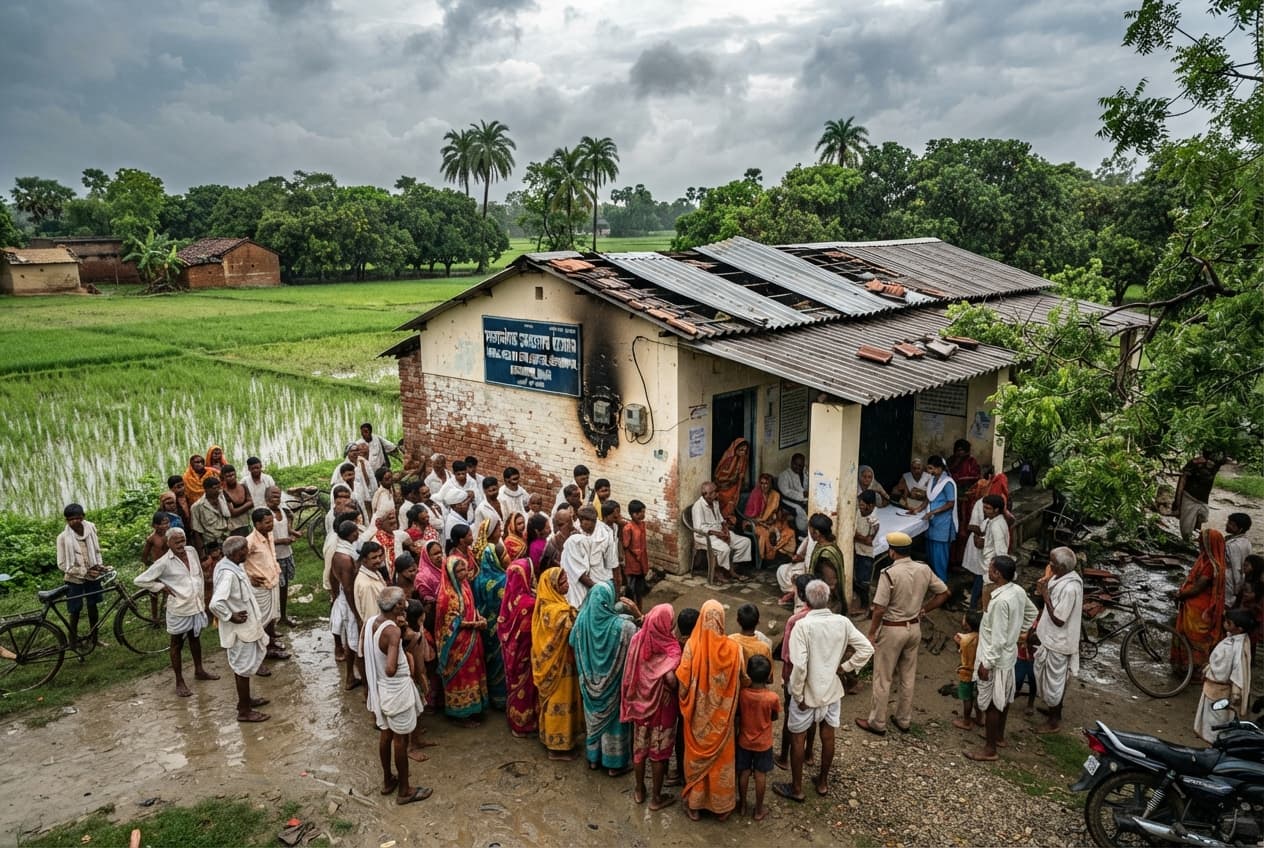
Local primary health centers received the casualties via tractor trailers and motorbikes over slick dirt tracks. Attending physicians pronounced four agricultural laborers dead upon arrival from massive cardiac arrest. Several other workers suffered severe burns and neurological shock, requiring transfer to district hospitals. Relatives crowded into the small antiseptic waiting rooms wailing in grief over the sudden loss. Local police officers recorded witness statements while completing mandatory legal documentation for the coroner.
State meteorological agencies had issued generalized thunderstorm warnings earlier that morning across the northern districts. Rural farming communities lack basic lightning shelter infrastructure or early-warning siren systems. Agricultural laborers continue working through approaching storm fronts out of economic necessity and daily wage pressures. Local politicians arrived at the medical centers offering standard compensation packages to the grieving families. Cynical villagers noted that protective sheds promised after previous tragedies were never constructed.
The storm system drifted eastward toward the river basin, leaving behind flooded fields and downed power lines. Local electricity boards cut power to several rural substations to prevent secondary transformer explosions. Agronomists surveyed the waterlogged paddies, noting minimal crop damage compared to the human cost. Community leaders called for mandatory lightning safety education programs across rural agricultural cooperatives. The tragedy underscores the lethal risks faced daily by unshielded outdoor laborers.
As evening approached, the humid air cooled beneath a lingering blanket of gray stratocumulus clouds. Families prepared funeral rites for the deceased laborers under kerosene lanterns and flashlights. The agricultural plains returned to a tense quiet, broken only by distant rumblings of receding thunder. Local authorities promised a review of rural safety protocols ahead of the next monsoon front. The fields remain open, exposed, and entirely vulnerable to the next atmospheric discharge.
Published by Banx Network. This article is part of the Banx decentralized media programme, powered by the BXE token on the XRP Ledger.