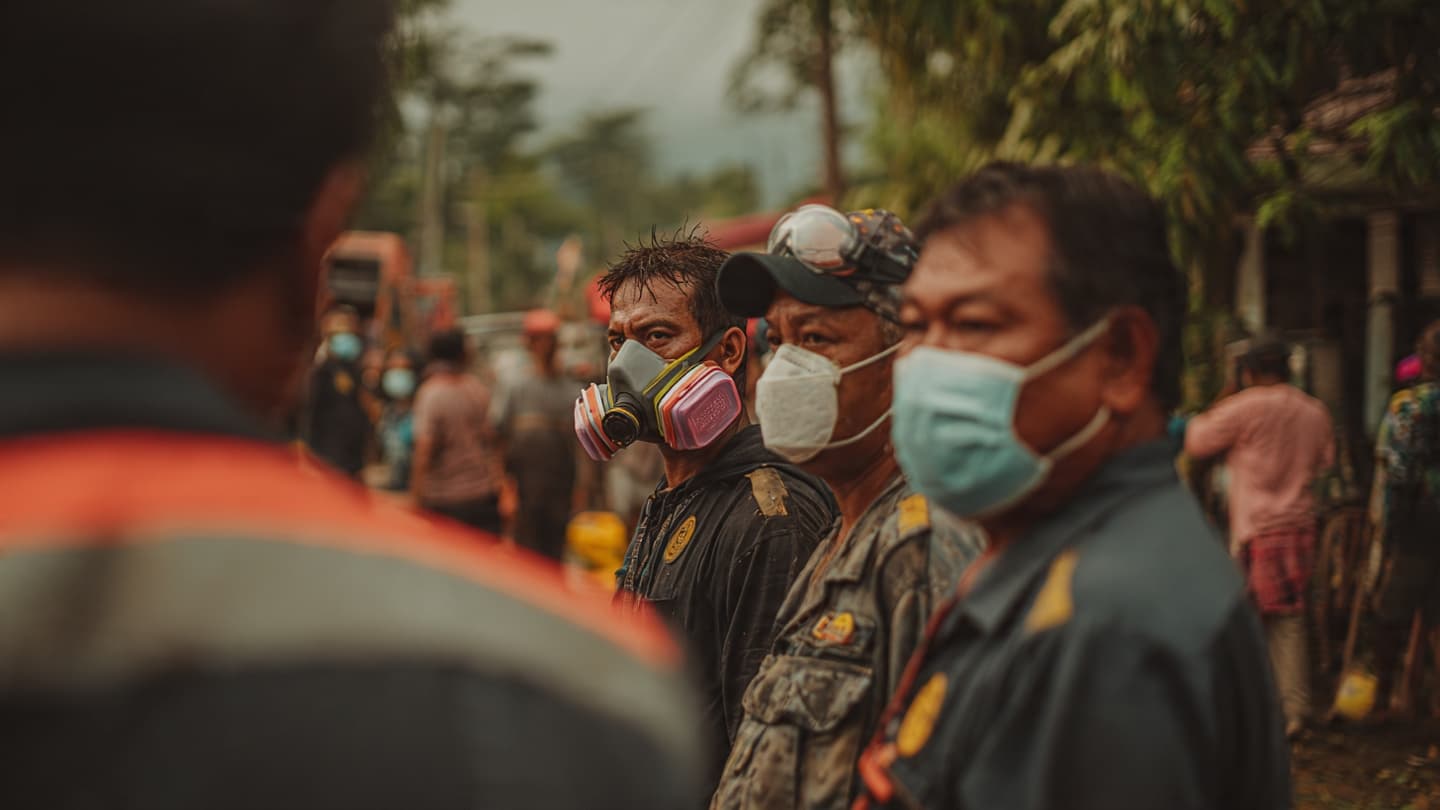
The landscape of Sarawak can change dramatically when smoke settles across Borneo. Roads become less distinct, distant hills disappear behind a gray veil and the ordinary movement of a community begins to slow. In early September, that haze became severe enough for authorities to declare an emergency in Serian district.
Malaysia declared the emergency on September 4 after the Air Pollution Index in Serian reached 519. The reading was significantly above Malaysia’s hazardous threshold of 300 and exceeded the 500 level used as the benchmark for emergency action.
The smoke was associated with forest and land fires in neighboring Indonesia, particularly on the Kalimantan side of Borneo. The haze moved across the border and affected several parts of Sarawak, demonstrating once again how seasonal fires can become a regional environmental issue.
The emergency covered Serian district within a radius of roughly 20 kilometers. Essential services such as supermarkets, petrol stations and banks were allowed to continue operating, while authorities focused on limiting the effects of the hazardous air conditions on residents.
Schools were among the institutions affected. The haze forced closures in some areas, while education authorities introduced measures intended to limit students’ exposure to unhealthy outdoor air.
Authorities also turned to cloud seeding as part of the response. The effort reflected the difficult conditions on the ground, where reducing smoke exposure depended partly on weather conditions capable of producing rainfall.
The haze developed as Indonesia faced a challenging dry season. Reuters reported that burned land in Indonesia had increased substantially during the first half of 2026, with authorities identifying several provinces across Sumatra and Kalimantan as priority areas for fire-control efforts.
The Indonesian government deployed dozens of helicopters and fixed-wing aircraft to fight fires and conduct weather-modification operations. But officials also acknowledged that cloud seeding can be difficult when suitable rain clouds are scarce.
For Sarawak, the episode showed how quickly environmental conditions can cross borders. The source of the smoke may be far away, but its effects are immediate for communities breathing the same atmosphere.
The emergency declaration was subsequently lifted when air quality improved, but the episode remained a reminder of the fragile relationship between dry-season fires, weather and regional air quality. Across Borneo, the smoke eventually thins, but the underlying challenge returns whenever fire and dry conditions meet again.
AI Image Disclaimer: The following visuals are AI-generated conceptual representations of the Sarawak haze emergency and do not depict exact locations or actual emergency-response photographs.
Sources: Reuters Malaysia Prime Minister’s Office Sarawak Disaster Management Committee Malaysia Department of Environment
Published by Banx Network. This article is part of the Banx decentralized media programme, powered by the BXE token on the XRP Ledger.

.jpg&w=3840&q=75 "Gunmen Kill 10 in Shootings at Jordan’s Karak Castle")