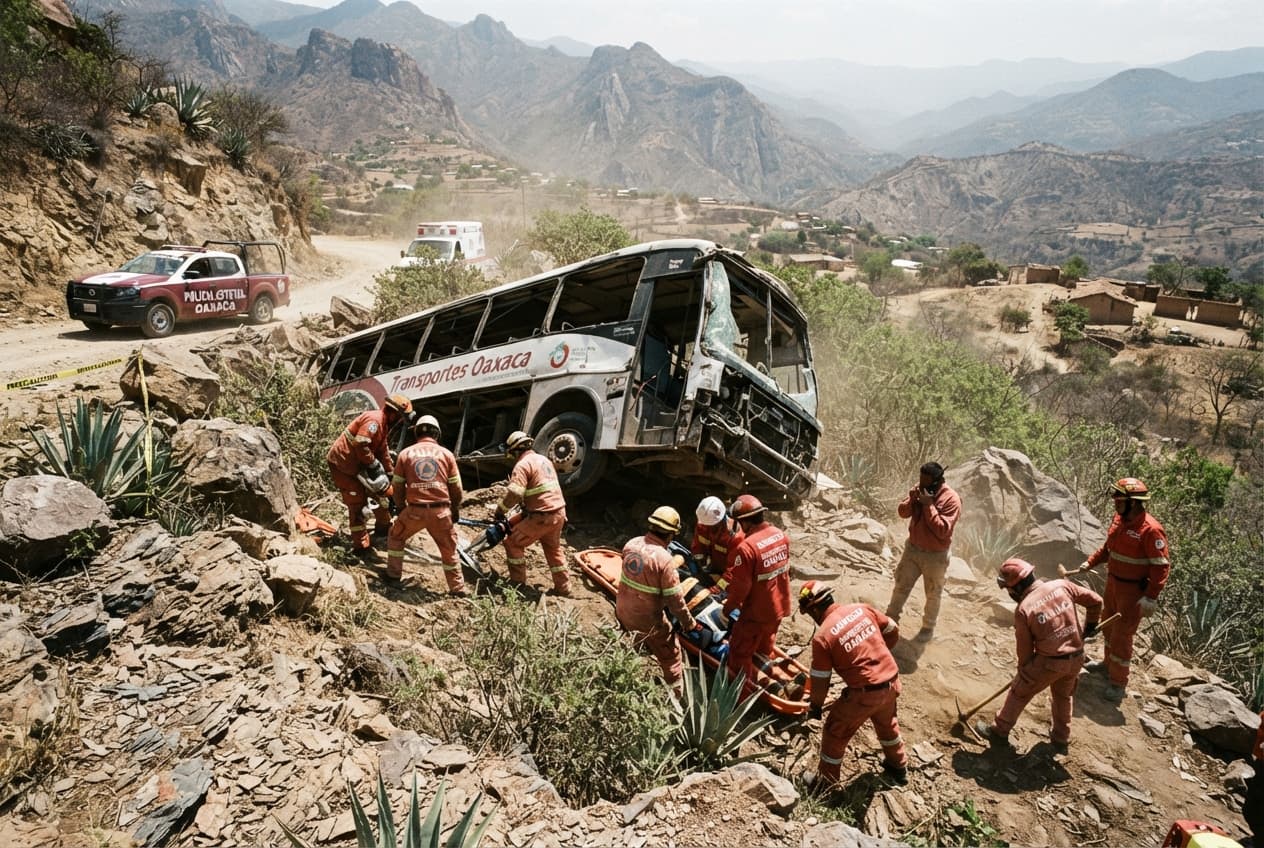
Oaxaca, Mexico—A passenger bus careened off a winding mountain highway and tumbled down a steep embankment early Monday morning, leaving twelve travelers dead and twenty others seriously injured. State civil protection officials reported that the commercial vehicle was traveling along a remote stretch of rural roadway when the driver lost control on a sharp, unlit curve. Rescue units, including local firefighters and national guard detachments, rappelled down the rocky slope to reach the overturned bus chassis resting among dense brush. Paramedics established a triage post near the roadside, treating dozens of bloodied passengers before airlifting the most critical cases to urban medical centers. Local authorities confirmed that the death toll climbed steadily as emergency workers extricated bodies trapped beneath the heavy structural framing of the vehicle.
Surviving passengers recounted that the bus had been moving at high speeds prior to the accident, prompting nervous complaints that went unheeded by the driver. State transport inspectors initiated a formal investigation into the operating license and mechanical service logs of the regional transit company. Heavy crane equipment arrived by midday to hoist the wrecked vehicle out of the ravine, temporarily shutting down local traffic in both directions. Federal police cordoned off the crash perimeter as forensic teams collected personal belongings scattered across the rocky hillside. Regional hospital administrators issued urgent appeals for blood donations to cope with the influx of trauma patients requiring immediate surgical intervention.
Municipal leaders in the nearby town convened an emergency council meeting to discuss the persistent dangers posed by unpaved shoulders and missing guardrails along rural transit routes. Families of the victims gathered outside the state forensic identification office, demanding swift answers regarding accountability and insurance coverage for the dead. Transport workers unions defended the driver, pointing to chronic infrastructure neglect and lack of warning signage on dangerous mountain passes. Federal inspectors examined the worn tread patterns on the bus tires and inspected the brake fluid lines retrieved from the wreckage. State governor representatives promised financial assistance for funeral arrangements while visiting injured survivors at the regional medical facility.
As daylight faded over the canyon, rescue operations concluded with the final recovery of personal belongings from the ravine floor. Traffic on the rural highway resumed under alternating single-lane restrictions controlled by national guard personnel. Road safety advocates renewed calls for comprehensive federal oversight of aging passenger fleets operating across rugged terrain. Local residents gathered at the roadside to place candles and flowers near the precipice where the vehicle plunged off the edge. Investigators continued processing mechanical fragments in an effort to establish whether brake failure or driver fatigue triggered the disaster. The remote community remained in profound shock as medical teams monitored the fragile condition of the remaining hospitalized survivors.
Published by Banx Network. This article is part of the Banx decentralized media programme, powered by the BXE token on the XRP Ledger.