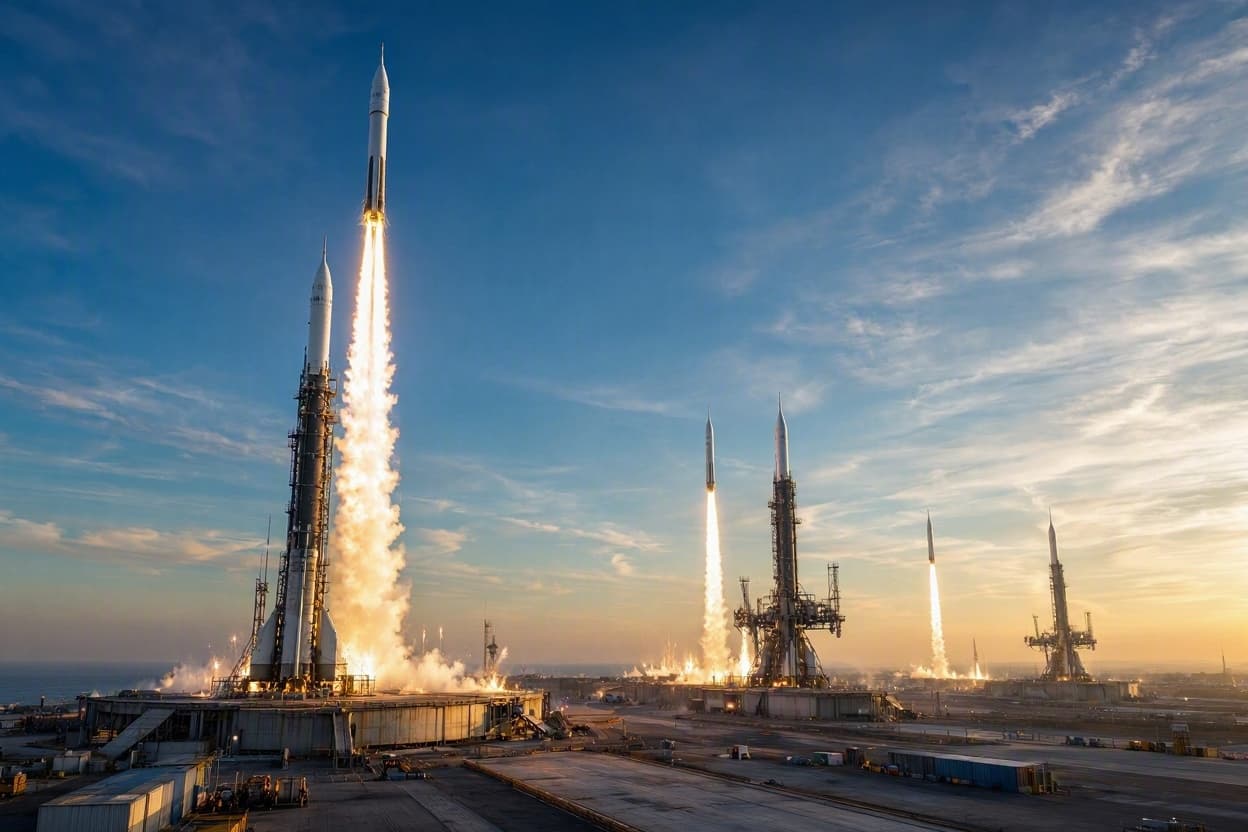
In the grand theater of human ambition, space has long been a stage for spectacular feats and national pride. Now, under a new policy directive, the United States aims to transform spaceflight from a rare spectacle into a routine occurrence. President Donald Trump has signed a National Space Transportation Policy that targets 1,000 launches and reentries annually by 2030, effectively aiming for nearly three launches per day. This ambitious goal seeks to cement American leadership in the commercial space industry and normalize access to the cosmos.
The policy, signed in August 2026, directs federal agencies to streamline regulations and expand infrastructure to support this surge in activity. By reducing bureaucratic hurdles and encouraging private sector innovation, the administration hopes to unleash the full potential of companies like SpaceX, Blue Origin, and others. The vision is one of a bustling space economy, where satellites, cargo, and eventually passengers move with the frequency of airline flights.
For the aerospace industry, this target is both exciting and challenging. Achieving three launches a day requires significant advancements in launch pad technology, air traffic management, and manufacturing capabilities. It demands a shift from bespoke, hand-built rockets to mass-produced, rapidly reusable systems. The policy encourages investment in these areas, promising a boom in jobs and technological breakthroughs.
However, the rapid increase in space traffic raises concerns about sustainability and safety. With more objects in orbit, the risk of collisions and debris grows. The policy includes provisions for improved space traffic management, ensuring that the skies remain safe for all users. International cooperation will be crucial, as space is a shared domain that requires global standards and coordination.
For the public, the normalization of spaceflight could mean greater access to services like global internet, earth observation, and perhaps even space tourism. It demystifies the cosmos, making it a part of everyday life rather than a distant dream. This cultural shift could inspire a new generation of scientists and engineers, driven by the possibility of regular interaction with space.
Critics argue that such aggressive targets may prioritize quantity over quality or safety. They urge careful oversight to ensure that environmental impacts, such as rocket emissions, are minimized. The administration maintains that innovation will address these challenges, pointing to the development of cleaner fuels and more efficient engines. The balance between progress and preservation will be a key topic of debate.
Internationally, the policy signals a strong commitment to maintaining U.S. superiority in space. It challenges other nations to accelerate their own programs, potentially sparking a new era of competition and collaboration. The geopolitical implications are significant, as space becomes increasingly central to national security and economic power.
In the end, the goal of three launches a day is a bold statement of intent. It reflects a belief in the power of American ingenuity and the limitless potential of space. For the nation, it is a journey toward a future where the stars are not just watched but visited. The path ahead is complex, but the destination is clear: a world where spaceflight is as common as flight itself.
AI Image Disclaimer: Images accompanying this report are AI-generated artistic interpretations of rocket launches and abstract symbols of space infrastructure, intended to visualize the context of the policy without depicting real proprietary spacecraft or specific launch facilities.
Sources: Fox News, Space.com, White House Press Release, AOL
Published by Banx Network. This article is part of the Banx decentralized media programme, powered by the BXE token on the XRP Ledger.