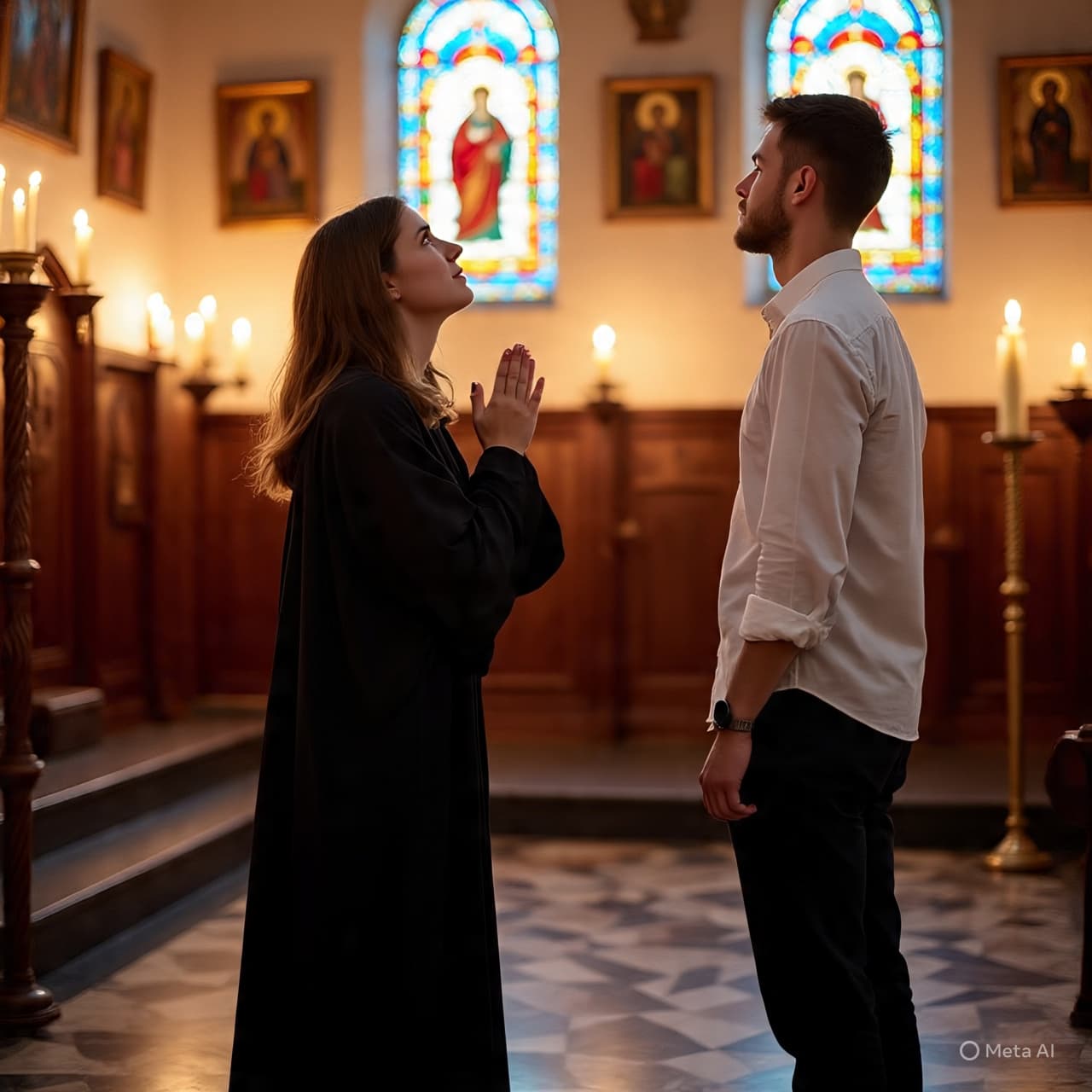
People in their late teens to thirties across the United States are increasingly turning their attention to Orthodox Christianity. Once largely confined to immigrant communities tied to Greece, Russia, the Middle East and Eastern Europe, Orthodox parishes report a surge in new converts and younger adherents who are American-born and not of traditional Orthodox background.
Several factors appear to be driving this shift. For many young adults, the appeal lies in a religious tradition that emphasizes continuity, ritual, sacrament, and a sense of rootedness in a world that often feels volatile and changeable. One clergy member noted that his parish has seen a dramatic uptick in interest from men in recent years, citing a rise of nearly eighty percent in conversion numbers in a single recent year compared to pre-pandemic levels.
Online culture is also playing a role: social-media conversations, blogs and podcasts exploring questions of meaning, identity and spirituality often point to Orthodox Christianity as a kind of corrective or antidote to what some see as the superficiality of modern religious offerings. The ritual richness of Orthodoxy—icons, chants, fasting, centuries-old liturgies—holds particular resonance for those seeking tangible, embodied faith rather than solely “feelings.”
However, this trend is not without its tensions. Some observers caution that motivations vary widely: for some converts the attraction is theological or spiritual, for others the appeal is cultural or aesthetic. In addition, traditional Orthodox communities sometimes express concern over whether newcomers fully grasp the depth of theology, language and practice that undergird the tradition. There is also a gender dimension: while many young men are drawn to Orthodoxy as an alternative framework, younger women in many faith contexts continue to decline in organized religious participation.
What matters most is this: the growth of Orthodoxy among young Americans represents more than a numerical uptick. It suggests a yearning for something stable, historic and transcendent at a time when many institutions feel unstable or ephemeral. For these young converts, Orthodoxy offers not only a place of belonging but also a way of life grounded in mystery, community and tradition.
Published by Banx Network. This article is part of the Banx decentralized media programme, powered by the BXE token on the XRP Ledger.