Lukolela, Democratic Republic of the Congo— Two commercial passenger vessels collided at night on October 24, 2026 near Lukolela, killing at least 30 people and leaving dozens missing in the dark waters of the Congo River, in one of the deadliest river accidents this year.
The crash happened around 10:15 p.m. between Lukolela and the Équateur Province capital Mbandaka, a stretch where wooden motorized boats, known as baleinières, carry hundreds with no lights, no manifest, and no life jackets. Local officials said one vessel heading upstream struck the other broadside. Both capsized. Screams were heard from the bank.
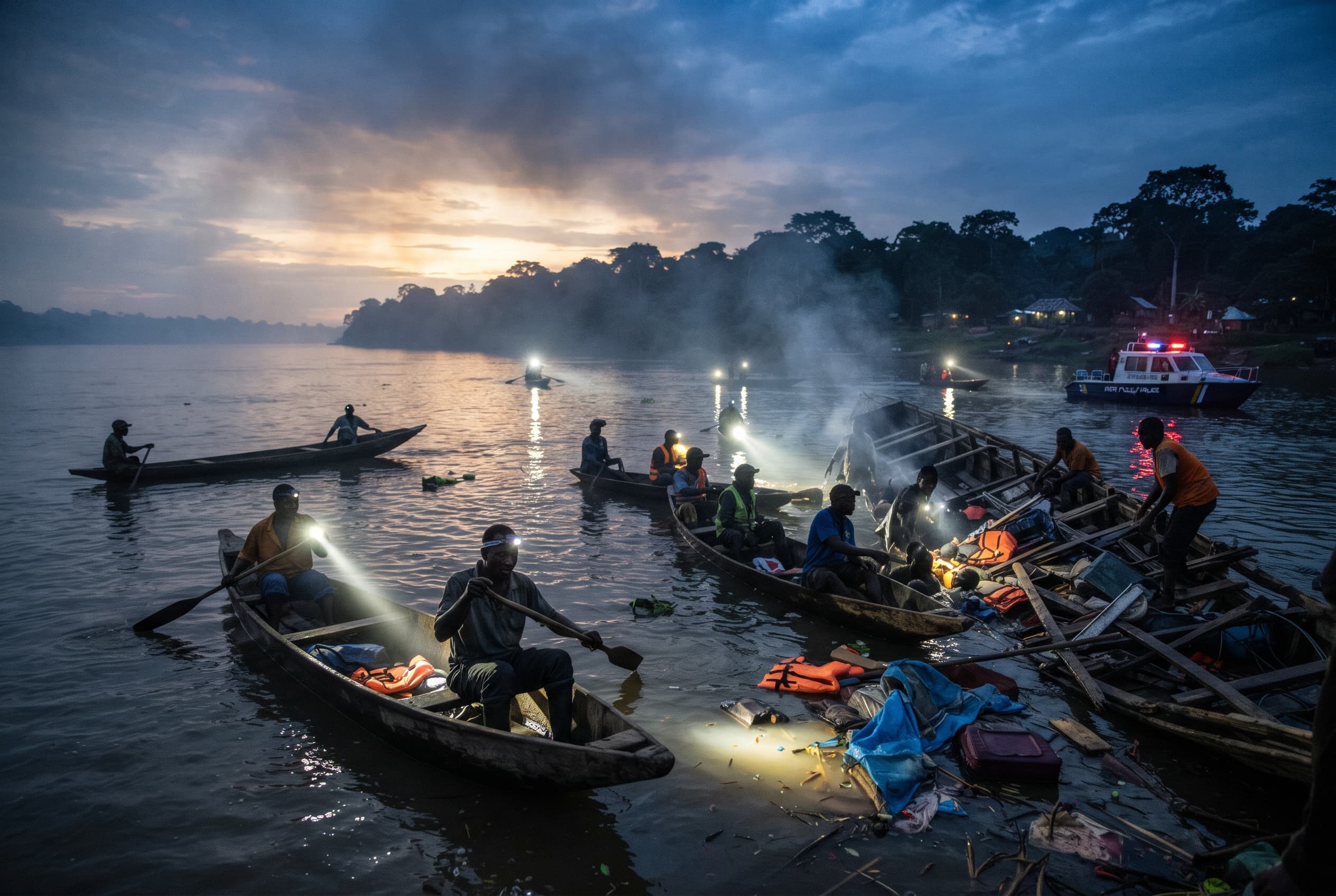
Thirty bodies had been pulled from the water by dawn, according to the provincial river commissioner. At least 60 others were listed as missing, based on family reports at the port. Survivors clung to fuel drums and planks. Fishermen in pirogues were first on scene, using headlamps and phone lights to find people.
"It was pitch black. No navigation lights on either boat. We heard the engines, then a loud crack," a fisherman who helped rescue seven people said. "People were in the water calling for help. The current took many away fast." He said most passengers were women returning from market day in Lukolela.
River transport is the backbone of Equateur, where roads are impassable for months. Boats are routinely overloaded three or four times capacity. Night travel is banned on paper, but operators run anyway to avoid river patrols and to meet market schedules. Neither vessel had a passenger list. Officials said at least one was carrying more than 200 people, including cargo.
"The conditions are unacceptable. No life vests, no lights, no communication," a local civil society coordinator said. "We warned the authorities last month after another accident nearby. Nothing changed. Now we count bodies again." The commissioner said both captains were missing and presumed dead. One vessel was reportedly operating without a license.
The Congo River, Africa's second longest, is treacherous after sunset. Floating logs, sandbanks and sudden fog make navigation difficult even for experienced pilots. In Lukolela, families crowded the riverbank, calling names and showing photos of relatives. A makeshift morgue was set up at the health center. Power was out.
Provincial authorities ordered a ban on night departures from Lukolela and said three boats that left the same night were turned back. They requested fuel and boats from Kinshasa to support the search. The river is wide and fast here, more than two kilometers across, which makes diving dangerous.
Survivors said many passengers were trapped under cargo sacks of cassava and charcoal. Some swam more than 300 meters to reach shore. By noon, officials said the death toll was expected to rise as search teams expanded downstream.
Rescue canoes were still moving along the banks at last light, with volunteers shouting into reeds for any response.
Published by Banx Network. This article is part of the Banx decentralized media programme, powered by the BXE token on the XRP Ledger.