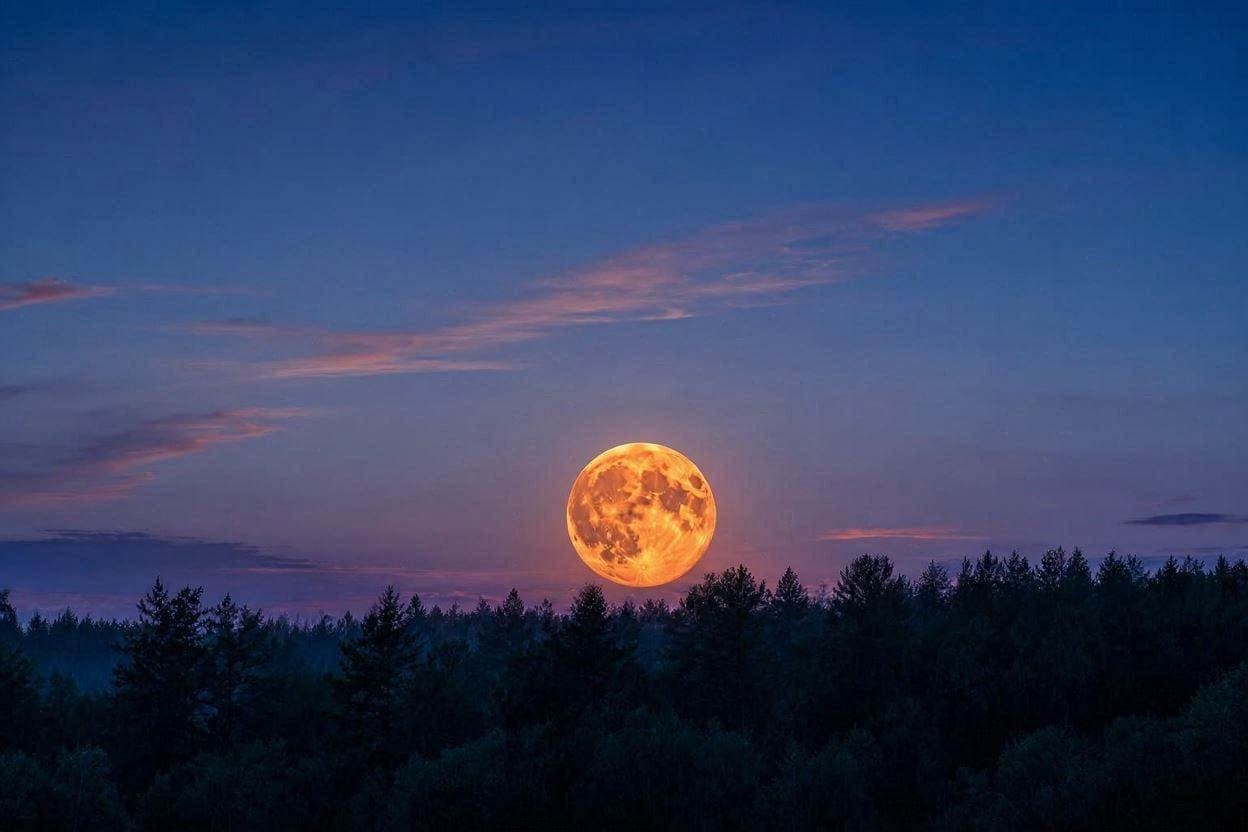
As summer reaches its zenith, the night sky offers a luminous spectacle that has guided humans for millennia. July’s full moon, known traditionally as the Buck Moon, rises with a golden hue, marking the time when new antlers begin to grow on male deer. This celestial event is more than just an astronomical occurrence; it is a connection to the rhythms of nature and the cycles of life. For observers across North America and beyond, it provides a moment of pause, inviting us to look up and appreciate the quiet beauty of the cosmos.
The Buck Moon’s name, rooted in Indigenous and colonial traditions, reflects a deep observation of the natural world. It reminds us that even in our modern lives, we remain tied to the seasons and the creatures that share our planet.
Body: The Buck Moon will reach its peak illumination on Wednesday, July 29, at 10:36 a.m. Eastern Time. However, the best viewing opportunities occur in the evening hours, shortly after sunset, when the moon rises above the horizon. At this time, atmospheric scattering gives it a warm, orange glow, enhancing its visual appeal and making it a favorite subject for photographers.
To catch the moonrise, find a location with a clear view of the southeastern sky. Elevated spots, open fields, or coastlines offer unobstructed vistas, allowing the moon to appear large and dramatic as it climbs. Urban observers may need to seek out parks or rooftops to escape the glare of city lights.
Unlike solar eclipses, which require special equipment, viewing the full moon is safe and accessible to everyone. No telescopes are needed, though binoculars can reveal intricate details of craters and maria, the dark plains on the lunar surface. This simplicity makes it an ideal activity for families and amateur astronomers alike.
The term "Buck Moon" originates from the Algonquin tribes, who tracked time by the seasonal changes in wildlife. July is when buck deer begin to shed their old antlers and grow new ones, a process that will continue through the summer. Other cultures have different names, such as the Thunder Moon or Hay Moon, reflecting local agricultural and weather patterns.
Beyond its cultural significance, the full moon influences tides and nocturnal animal behavior. Its bright light can affect sleep patterns for some people, a phenomenon known as the "lunar effect." While scientific evidence is mixed, many report feeling more alert or restless during this phase.
For photographers, the Buck Moon presents a unique challenge and opportunity. Using a tripod and a telephoto lens can capture sharp images, while foreground elements like trees or buildings add scale and context. Experimenting with exposure settings can highlight the moon’s texture and color.
As the night progresses, the moon climbs higher, losing its orange tint and becoming a brilliant white orb. It casts long shadows and illuminates the landscape, creating a serene and almost magical atmosphere. This transformation is a reminder of the dynamic nature of our closest celestial neighbor.
Whether viewed alone or with others, the Buck Moon offers a chance to disconnect from digital distractions and reconnect with the natural world. It is a simple pleasure that requires only time and attention.
Closing: July’s full Buck Moon is a beautiful astronomical event that connects us to natural cycles. It invites observers to step outside and enjoy the timeless beauty of the night sky.
AI Image Disclaimer: Images used in this report are AI-generated depictions intended to illustrate the themes of lunar observation and natural beauty.
Sources: The Old Farmer’s Almanac Space.com NASA Fox Weather
Published by Banx Network. This article is part of the Banx decentralized media programme, powered by the BXE token on the XRP Ledger.