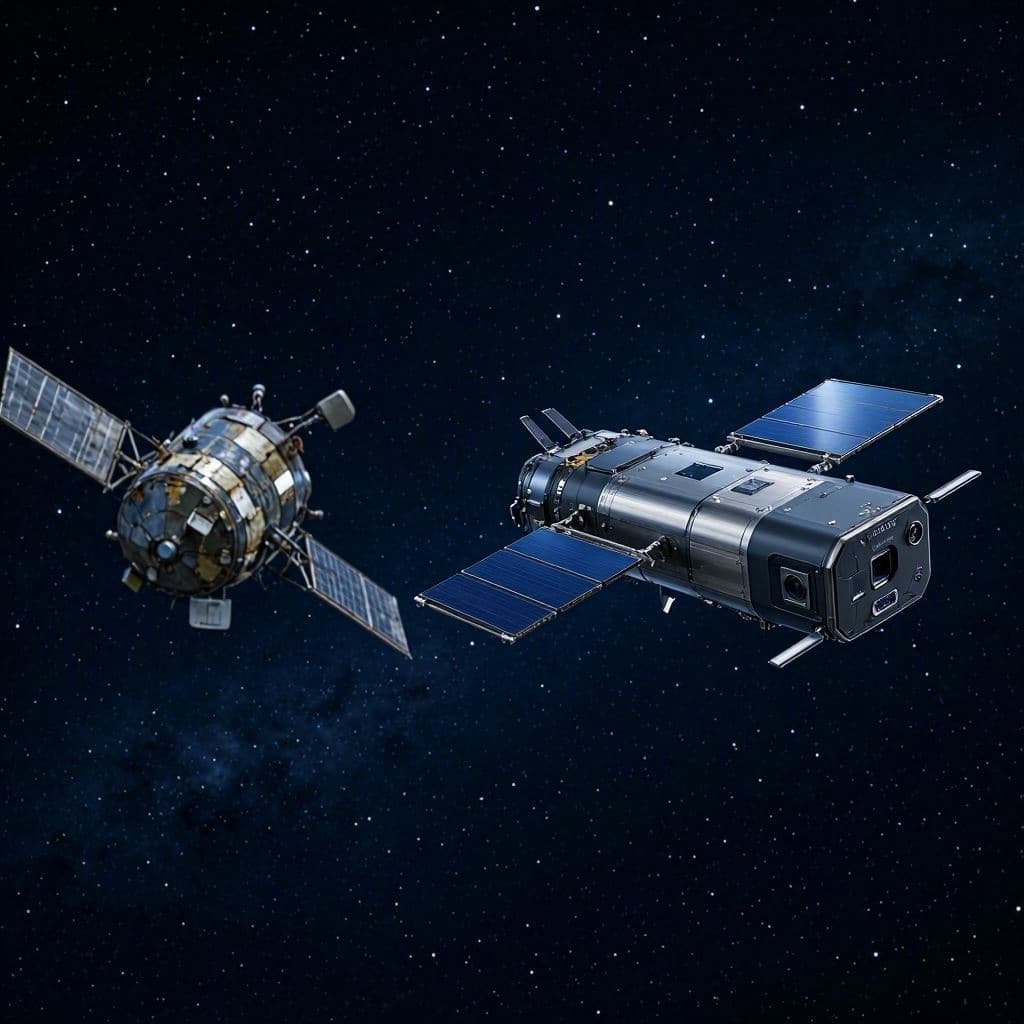
In the silent vacuum of space, where distances are measured in light-years and silence is absolute, a poignant encounter recently unfolded. A rescue satellite, launched with hope and ingenuity, drifted close to a NASA telescope that had long since ceased its scientific duties. Though the mission could not revive the aging instrument, the proximity itself served as a testament to human ambition and the enduring desire to mend what is broken. It was a moment of quiet reverence, marking the end of an era for one machine and the beginning of a new chapter for orbital servicing technology.
The telescope, once a window into the deepest corners of the universe, had succumbed to the harsh realities of space exposure and mechanical fatigue. Its instruments, which had captured breathtaking images of distant galaxies and nebulae, were no longer responsive to commands from Earth. The decision to attempt a rescue was bold, driven by the belief that even in failure, there is value in learning how to approach and interact with defunct hardware. The rescue satellite, equipped with advanced navigation systems, navigated the delicate dance of orbital mechanics to reach its target.
As the two spacecraft drew nearer, the tension was palpable among the engineers and scientists monitoring the operation from ground control. Every adjustment, every thruster firing, was calculated with precision to avoid a collision that could create dangerous debris. The approach was slow and methodical, a choreography of metal and code performed millions of miles from home. Although the physical connection needed to repair or refuel the telescope was not achieved, the successful rendezvous proved that such maneuvers are possible.
This mission highlights the growing field of on-orbit servicing, a crucial capability for the future of space exploration. As more satellites are launched, the ability to repair, refuel, or deorbit them becomes essential for sustainability. The lessons learned from this near-miss will inform future designs, making spacecraft more modular and accessible. It shifts the paradigm from disposable technology to maintainable infrastructure, reducing waste and extending the lifespan of valuable assets.
For the team behind the telescope, the outcome was bittersweet. They had hoped to restore the instrument’s vision, to give it one last chance to gaze upon the stars. Instead, they gained something else: proof of concept. The data collected during the approach provides invaluable insights into the behavior of tumbling objects and the challenges of docking with non-cooperative targets. These insights are worth their weight in gold for future missions.
The doomed telescope now continues its silent journey, a relic of past achievements drifting in the void. It serves as a memorial to the discoveries it enabled and the curiosity it satisfied. While it will no longer send back images, its legacy remains intact, preserved in the archives of science and the memories of those who studied its data. The rescue satellite, having completed its duty, moves on to other tasks, carrying the knowledge gained from this unique interaction.
In the grand scheme of cosmic exploration, this event may seem minor, a small step in a vast frontier. Yet, it represents a significant evolution in how humanity interacts with its tools in space. It is a reminder that even when we cannot save everything, the effort to try brings us closer to mastering our environment. The dance in the dark was not in vain; it was a rehearsal for a future where nothing is truly lost.
Although the rescue satellite could not revive the dormant NASA telescope, the successful close approach marks a significant milestone in on-orbit servicing capabilities, paving the way for sustainable space operations.
AI Image Disclaimer: Please note that any accompanying visuals for this report are artificially generated representations intended for illustrative purposes only.
Sources: NASA SpaceNews The Verge Scientific American
Published by Banx Network. This article is part of the Banx decentralized media programme, powered by the BXE token on the XRP Ledger.