On a small, remote island painted red by iron-rich stone, the earth seemed unlikely to whisper secrets of a time when dinosaurs roamed — yet there, in the heart of that iron-clad world, palaeontologists made a discovery that felt like listening to a forgotten tale. Port Island, or Chek Chau as the locals call it, does not immediately seem like a cradle of prehistoric life. Its rusty cliffs and volcanic echoes suggest heat and fire, not the soft sedimentary beds where fossils usually hide.
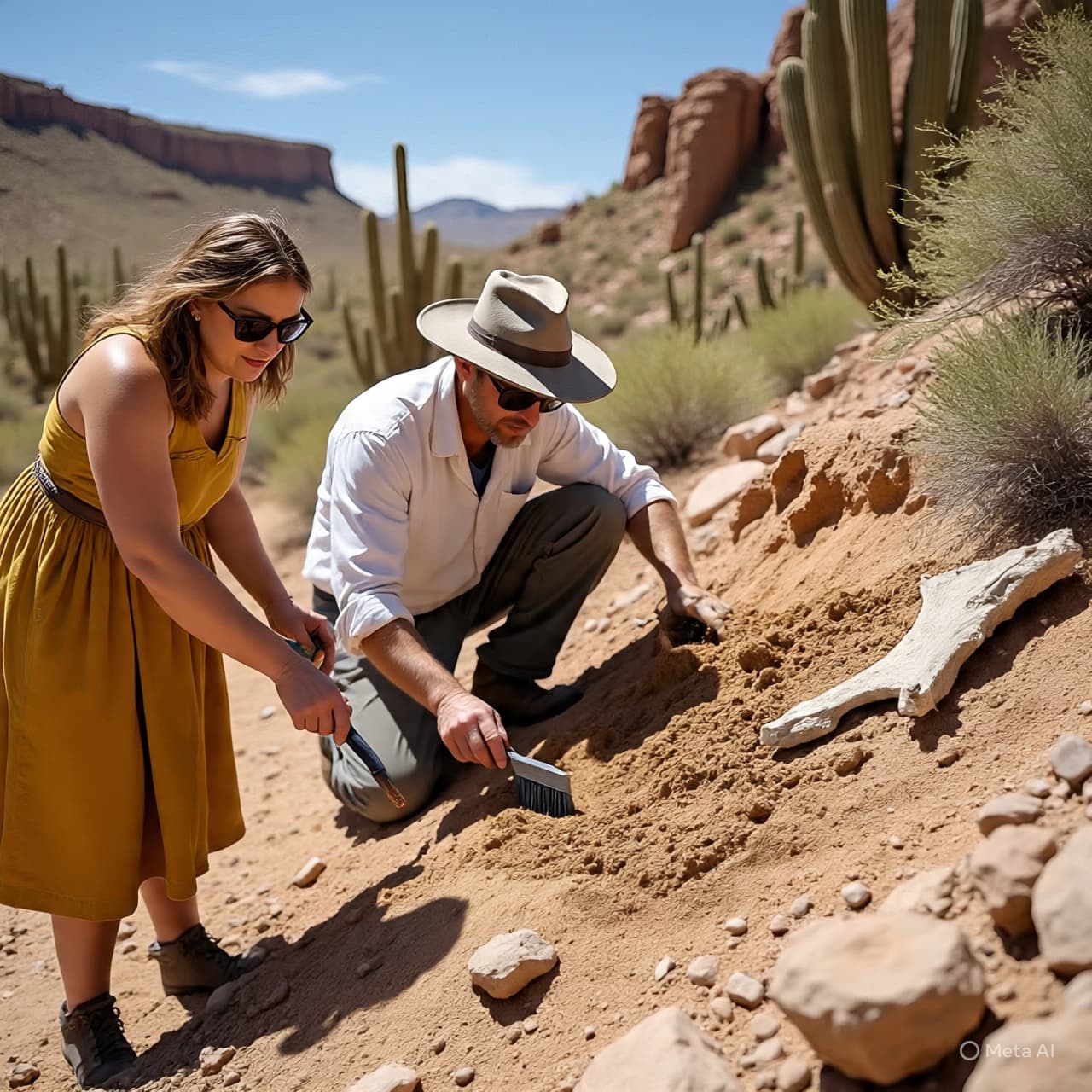
But nature, ever the poet, sometimes hides its stories in unlikely places. In October 2024, experts confirmed that dinosaur bones — quite possibly from a large Cretaceous dinosaur — lay embedded in the iron-red stone of Chek Chau. For a region famed more for its modern skyline than its prehistoric past, the find was quietly historic.
It might seem contradictory: why would delicate bone remain in hard, volcanic-sounding terrain? The explanation lies in geology’s patient storytelling. Though most of Hong Kong’s bedrock is volcanic and inhospitable to fossils, this particular outcrop on Port Island is made of red sedimentary rock — the kind that can cradle ancient remains. Experts believe the dinosaur died, and its body was first buried in sand and gravel. Over time, a flood may have washed parts of its remains to the surface, and then they were buried again, preserved by layers of sediments.
The discovery also underlines how lucky — but also how scientifically astute — this find was. Paleontologists note that most of Hong Kong’s exposed geology is volcanic: lava flows and igneous rock typically do not preserve fossils well. In other words, finding dinosaur bones there was not just about being in the right place — it was being in the right rare pocket of rock.
This island, once quiet and uninhabited, now holds a bridge to deep time. The bones have been placed on display at the Hong Kong Heritage Discovery Centre, allowing the public to touch a piece of the distant past. Meanwhile, experts from both Hong Kong and mainland China are collaborating on further excavations, eager to learn more about what species this dinosaur might have been.
In the soft rust hues of Chek Chau’s cliffs, the past whispered its story — not in the roar of lava, but in the gentle layering of sand, gravel, and time. This is a reminder that even in places that seem geologically “wrong,” nature may hide reminders of its most ancient chapters.
AI Image Disclaimer: Illustrations in this article are generated with AI tools and serve as conceptual depictions, not real photographs.
Sources Smithsonian Magazine South China Morning Post The Independent Hong Kong Free Press The Asahi Shimbun
Published by Banx Network. This article is part of the Banx decentralized media programme, powered by the BXE token on the XRP Ledger.