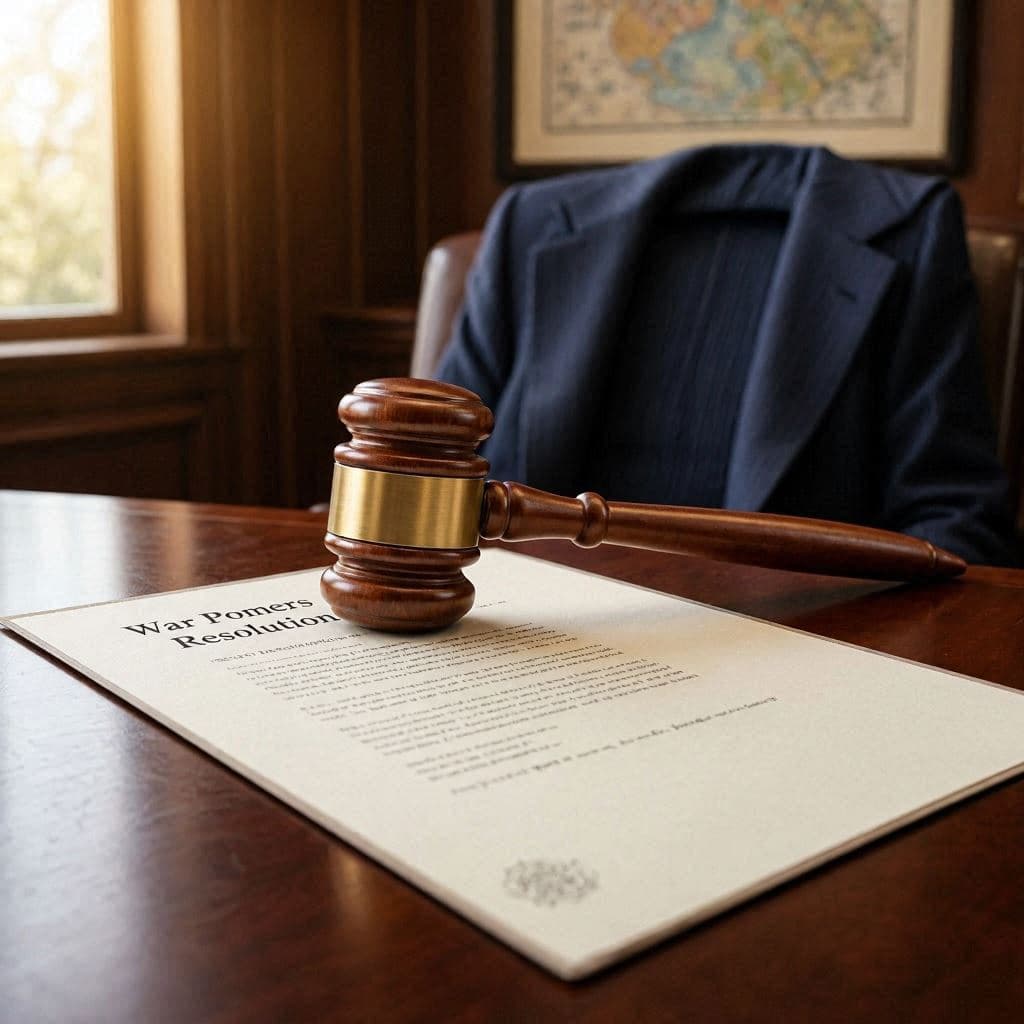
The balance of power in a democracy is often tested not in times of peace, but in moments of geopolitical tension. In the United States, the Constitution grants Congress the authority to declare war, yet modern history has seen this power increasingly ceded to the executive branch. Recently, the House of Representatives took a significant step to reclaim that constitutional role by passing a war powers resolution aimed at limiting military engagement with Iran. This legislative move is more than a procedural vote; it is a profound statement on the desire for diplomatic restraint and congressional oversight in matters of life and death. It invites us to reflect on the delicate interplay between national security and democratic accountability.
Body: The resolution directs the President to withdraw U.S. forces from hostilities against Iran unless specifically authorized by Congress or necessary for immediate self-defense. This measure comes amid heightened tensions in the Middle East, where miscalculations can quickly escalate into broader conflicts. By asserting its authority, the House is signaling that open-ended military engagements without clear legislative approval are no longer acceptable to a significant portion of the electorate and their representatives. It is a call for transparency and deliberate decision-making in foreign policy.
Supporters of the resolution argue that it serves as a crucial check on executive power. They contend that decisions to go to war should involve broad consensus and public debate, rather than being made unilaterally. This perspective emphasizes the importance of involving the people’s representatives in choices that carry such grave consequences. For many lawmakers, the vote was an act of fidelity to the Constitution, ensuring that the branches of government remain balanced.
Opponents, however, view the resolution as a constraint on the President’s ability to respond swiftly to threats. They argue that in a volatile region, flexibility is essential for protecting national interests and allies. The debate highlights the perennial tension between security and liberty, between the need for rapid action and the value of deliberative process. Both sides agree on the goal of stability, but differ on the best path to achieve it.
The passage of the resolution also reflects growing public fatigue with endless conflicts. After decades of involvement in the Middle East, many Americans are wary of new entanglements that lack clear objectives or exit strategies. This sentiment has influenced political discourse, pushing leaders to prioritize diplomacy and de-escalation over military intervention. The House vote can be seen as a response to this shifting public mood.
Internationally, the resolution sends a message about the internal dynamics of U.S. foreign policy. It demonstrates that American actions are subject to domestic scrutiny and debate. While it may not immediately change conditions on the ground, it influences the strategic calculus of adversaries and allies alike. It underscores that U.S. commitment is not unconditional but rooted in democratic principles.
As the resolution moves to the Senate, the outcome remains uncertain. However, its passage in the House marks a pivotal moment in the ongoing dialogue about war powers. It reinvigorates the conversation about how the nation should engage with the world, balancing strength with prudence.
Closing: The House’s decision to pass the war powers resolution is a testament to the enduring relevance of congressional oversight. It reminds us that in a democracy, the power to wage war is a shared responsibility. As the legislative process continues, the focus remains on ensuring that any military action is justified, limited, and supported by the will of the people.
AI Image Disclaimer: The images accompanying this article are AI-generated conceptual illustrations of the U.S. Capitol and diplomatic symbols, designed to visualize the themes of legislative authority and international relations.
Sources: The Hill NPR Associated Press Reuters
Published by Banx Network. This article is part of the Banx decentralized media programme, powered by the BXE token on the XRP Ledger.